
Slovakia has 20 public higher education institutions, 3 state ones (the military and police academies and the Slovak Medical University), 10 private institutions and 7 foreign institutions licensed to teach in the country. Most international applicants end up choosing among the public universities of Bratislava and Košice: Comenius University, the Slovak University of Technology (STU), the University of Economics in Bratislava (EUBA), Pavol Jozef Šafárik University (UPJŠ) and the Technical University of Košice (TUKE). Full-time study in Slovak is free at all of them, while English-taught programmes in 2026/27 range from free at EUBA to $16,546 (€14,500) a year for dentistry at Comenius University. Comenius is also Slovakia's highest-ranked university, placed 662nd in the QS World University Rankings 2027.
Below: how the system works, a comparison of the main universities, short profiles, rankings, admission rules, housing and what non-EU applicants should plan for. Amounts are in US dollars with euros in brackets, at the ECB rate of 23 September 2026 (€1 = $1.1411).
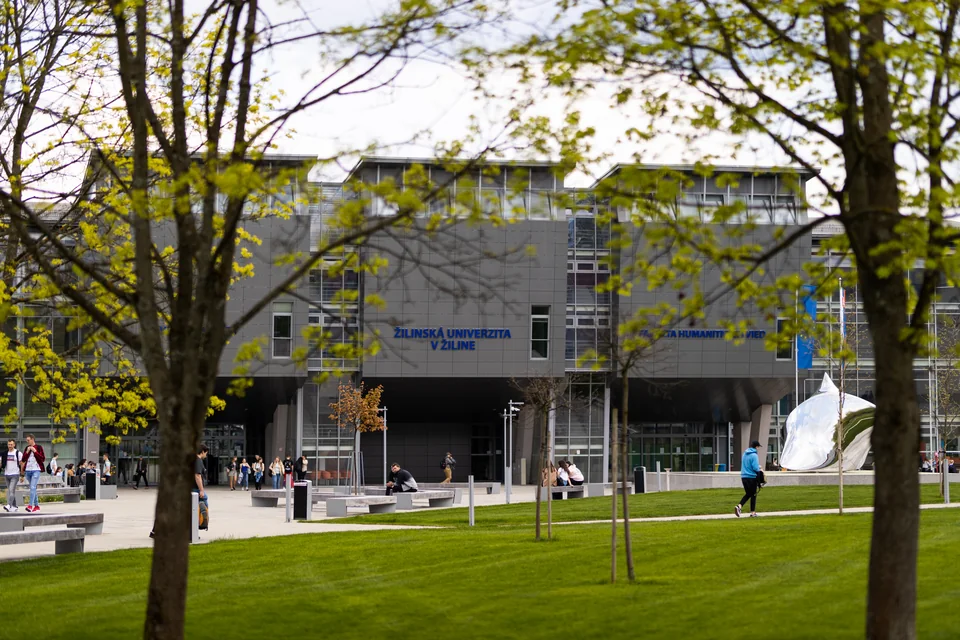
How Slovak higher education is organised
Types of institution. Public universities are established by law and are self-governing; state institutions report to a ministry (defence, interior or health); private institutions operate with government approval. The official Portal VŠ lists every institution and programme, and it is the place to check accreditation before applying to a private one.
Degrees and titles. The system follows the Bologna structure:
| Level | Typical length | Title |
|---|---|---|
| Bachelor's | 3 years | Bc. |
| Master's | 2 years | Mgr. (humanities and sciences) or Ing. (engineering and economics) |
| Integrated programmes | 5–6 years | MUDr. (general medicine), MDDr. (dentistry), Mgr. (pharmacy) |
| Doctoral | 3–4 years | PhD. |
Academic year. September to June, split into a winter and a summer semester; each university publishes its own calendar.
Legal framework. A new Higher Education Act (No. 300/2025) took effect in two stages in 2026, on 1 March and 1 September, and universities already set their 2026/27 fees under it. The core rule is unchanged: full-time study in the state language at public and state institutions is free, fees apply for exceeding the standard length or studying two programmes in parallel, and each university prices its foreign-language programmes itself.
The main universities compared
| University | City | Profile | English-taught options | English fees, 2026/27 | QS 2027 |
|---|---|---|---|---|---|
| Comenius University (UK) | Bratislava, Martin | comprehensive: medicine, law, sciences, humanities, informatics, management | medicine, dentistry, pharmacy, management, law, psychology, biochemistry, physics and computing master's | $0 to $16,546 (€14,500) | 662 |
| Slovak University of Technology (STU) | Bratislava, Trnava | engineering, architecture, IT, chemistry | civil and mechanical engineering, architecture, informatics, electrical engineering, management | $2,282–7,988 (€2,000–7,000) | 951–1000 |
| University of Economics in Bratislava (EUBA) | Bratislava, Košice | economics, finance, business, international relations | bachelor's and master's in economics, finance, management, marketing, diplomacy | no fee within the standard length | — |
| Pavol Jozef Šafárik University (UPJŠ) | Košice | comprehensive: medicine, sciences, law, public administration, humanities | medicine, dentistry, science programmes, law, psychology, European public administration | $3,423–15,405 (€3,000–13,500) | 1001–1200 |
| Technical University of Košice (TUKE) | Košice | engineering, IT, metallurgy, aviation | see the university website | per TUKE's fee directive | 1001–1200 |
| Slovak Medical University (SZU) | Bratislava | medicine and health professions | General Medicine | $11,411 (€10,000) | — |
| University of Veterinary Medicine and Pharmacy (UVLF) | Košice | veterinary medicine, pharmacy, food hygiene | see the university website | per UVLF | — |
A dash in the QS column means the QS website shows no position for the university in the overall 2027 table. That says little about a specific programme: EUBA, for example, is unranked, yet in 2026/27 it teaches economics in English free of charge.
Short profiles
Comenius University is the oldest university in the country (founded 1919) and has the widest choice of programmes, with 13 faculties and 731 programmes: two medical faculties (Bratislava and Martin), pharmacy, law, arts, natural sciences, mathematics, physics and informatics, management, and social and economic sciences. Some English programmes are free (Biological Chemistry, Environmental Studies); others start at $1,712 (€1,500) a year. See our Comenius University profile.
STU is Slovakia's leading technical university, with seven faculties and an Institute of Management; the materials science faculty is in Trnava. It traces its roots to the Mining Academy founded in Banská Štiavnica in 1762. In QS 2027 it moved up to the 951–1000 band, and it reports the best employer reputation among Slovak universities. See our STU profile.
EUBA has taught economics since 1940 across seven faculties, six in Bratislava and one in Košice. The headline for international students: in 2026/27 its English-taught bachelor's and master's programmes are free within the standard length, with only a $103 (€90) application fee. See our EUBA profile.
UPJŠ was founded in 1959, although its Košice medical faculty dates from 1949. It has five faculties (medicine, science, law, public administration, arts) plus an institute of physical education and sport, and holds the designation of a research university. English-taught medicine costs $14,834 (€13,000), and Košice dormitories are among the cheapest in the country. See our UPJŠ profile.
TUKE is a major technical university in eastern Slovakia, in the same QS 2027 band as UPJŠ, and suits students who want engineering with lower living costs than the capital.
Medical and veterinary institutions. Besides the UK and UPJŠ medical faculties, the state-run Slovak Medical University in Bratislava trains doctors, and UVLF in Košice trains vets and pharmacists. Our medicine in Slovakia guide compares faculties, exams and fees.
Regional universities include the University of Žilina (UNIZA), the Slovak University of Agriculture and Constantine the Philosopher University in Nitra, Matej Bel University in Banská Bystrica, the University of Prešov, Alexander Dubček University in Trenčín, and Trnava University and the University of Ss. Cyril and Methodius in Trnava. They offer fewer English-taught programmes, but housing costs less than in Bratislava.
Arts academies include the Academy of Performing Arts (VŠMU) and the Academy of Fine Arts and Design (VŠVU) in Bratislava and the Academy of Arts in Banská Bystrica. All admit through talent exams, with earlier deadlines than comprehensive universities.
Private institutions such as the Pan-European University (Paneurópska vysoká škola) or the Vysoká škola ekonómie a manažmentu in Bratislava charge tuition even for Slovak-taught study. Check on Portal VŠ that your specific programme is accredited.
Matching the university to your goal
| Goal | Start with | Watch out for |
|---|---|---|
| Medicine in English | LF UK (Bratislava), JLF UK (Martin), UPJŠ Faculty of Medicine (Košice), SZU (Bratislava) | biology and chemistry exam; $11,411–16,546 a year |
| Free medicine | the same faculties, Slovak-taught | Slovak at B2; you sit the exam with Slovak applicants |
| IT and engineering | STU (FIIT, FEI), TUKE | FIIT and FEI hold entrance exams |
| Economics in English on a tight budget | EUBA | online test for bachelor's applicants; $103 fee |
| Law, psychology, humanities | UK, UPJŠ | some UPJŠ programmes admit on school results |
| Lowest living costs | Košice and regional universities | UPJŠ dormitory from $72 a month against $82–199 at UK |
| English-taught master's | UK (physics, computing, law, management), STU, EUBA | the university itself recognises your bachelor's degree |
What the rankings say
| University | QS World University Rankings 2027 |
|---|---|
| Comenius University | 662 (684 in 2026) |
| Slovak University of Technology | 951–1000 (1001–1200 in 2026) |
| Pavol Jozef Šafárik University | 1001–1200 |
| Technical University of Košice | 1001–1200 |
Rankings capture overall reputation but say little about a given programme. It is more useful to check whether the programme includes company placements, a double degree, a lab in your field and which language is used in the later years.
How admission works
- You apply to a faculty, not through a national system, using its online form (e-prihláška). Each programme has its own fee, from $17 (€15) at UK's Faculty of Mathematics, Physics and Informatics to $113 (€99) at UK's Faculty of Medicine.
- Faculties set deadlines. Slovak-taught programmes usually close in winter or early spring: medicine by the end of February, many others by March or April. Arts faculties start earlier: STU's architecture faculty closed applications on 30 November 2025 for 2026/27 and held its exam in January. Some faculties open summer rounds.
- Not every programme has an exam. In 2026/27 STU's civil engineering and materials science faculties admitted Slovak-taught bachelor's students without an exam, while FEI, FIIT and the Institute of Management tested applicants and the chemistry faculty checked Slovak. UPJŠ admits to several programmes in science, law, public administration and arts on school results.
- Recognition of your school certificate is needed by enrolment. Some countries' certificates are covered by recognition agreements (a $8 or €7 fee, for example for Russia); others go through full nostrification for $46 (€40). See our guide to recognition of school certificates.
- After the decision, apply for residence, a dormitory place and pay tuition if the programme is fee-paying.
A month-by-month plan is in our guide to applying to universities in Slovakia.
Language requirements
For Slovak-taught study, Comenius University requires no formal certificate but recommends B2; other universities may test Slovak at an exam or interview, as STU's chemistry faculty does. For programmes in English, German or French, Comenius asks for a language certificate, except in medicine, where the test itself checks your English. EUBA tests English online. If you have neither language yet, plan a preparatory year; see Slovak language preparatory courses.
Bratislava, Košice or a regional city
Bratislava offers the widest choice of programmes, employers and English-taught master's, but housing costs more: a UK dormitory bed costs $82–199 (€72–174) a month, and STU puts private rooms at $342–913 (€300–800). Košice is the second university hub, strong in medicine, sciences and engineering, with UPJŠ dormitory beds at $72–76 (€63–67). Regional cities offer fewer options at lower prices. Full budgets are in our cost of studying in Slovakia guide.
Dormitories at the major universities, 2026/27
| University | Per bed per month | Allocation |
|---|---|---|
| Comenius University | $82–199 (€72–174) at Mlyny, $131–191 (€115–167) at Družba | the university offers a place to every first-year student |
| STU | $80–171 (€70–150) | faculty committee; typically first-year students living more than 20 km away |
| EUBA | $97–183 (€85–160) in Bratislava, $80 (€70) in Košice | EUBA allocation rules; first payment due by 11 August |
| UPJŠ | $72–76 (€63–67); fee-paying students in the international block pay $99–265 (€87–232) | rectorate committee, by points |
You apply for a dormitory separately from your university application, usually in summer, and the window is short.
What non-EU applicants should plan for
- Residence permit. You need temporary residence for the purpose of study, applied for at the Slovak embassy accredited to your country of citizenship or residence (the embassy in Moscow, for example, accepts applications from Russian citizens). Since 15 July 2026 the police may take up to 90 days to decide. See our guide to the student residence permit.
- Work. University students with this permit may work up to 80 hours a month without a separate permit, and graduates may extend residence for nine months to look for work or start a business.
- Travel for exams. In-person exams require a Schengen visa, which Russian citizens now find harder to obtain than before 2022. Where travel is uncertain, prefer programmes with online tests or no exam.
- Payments. Universities accept only euro transfers to their own accounts. Applicants paying from Russia should use only lawful routes, as explained in our guide on paying for studies abroad from Russia.
Checklist before you apply
- You have 3–5 programmes, each with language, fee for your intake year and closing date.
- You know whether each has an exam and whether it is online or in person.
- You have ordered an apostille on your certificate and know whether you need nostrification or a recognition statement.
- You have assessed your language level: Slovak B2 for free study or English for a paid programme.
- You have a full annual budget including dormitory, insurance and fees.
- You know when the dormitory application window opens.
Common mistakes
- Choosing by ranking rather than by programme, language and fee for your intake year.
- Confusing a free Slovak-taught programme with a paid English one of the same name.
- Missing the early deadlines of arts and medical faculties.
- Applying to a private institution without checking programme accreditation on Portal VŠ.
- Leaving certificate recognition until summer.
FAQ
According to Portal VŠ, there are 20 public, 3 state and 10 private institutions, and 7 foreign institutions are licensed to teach their own programmes in Slovakia.
By QS 2027, Comenius University (662nd). STU and TUKE are stronger picks for engineering and IT, and EUBA for economics. Choose by programme rather than overall position.
Yes, full-time in Slovak at a public or state institution within the standard length. In English, all EUBA programmes are free in 2026/27, as are some Comenius programmes. Another option is the government scholarship for talented international students: $5,706 (€5,000) a year on selected programmes, with an SAT score of 1100+ or SCIO results; see our cost guide.
Comenius University and STU offer the most English-taught programmes, EUBA has a full range of economics bachelor's and master's, and UPJŠ offers medicine, law, psychology and sciences. Check the list for your intake year on the faculty website.
It depends on the faculty. Medicine, architecture, some IT programmes and EUBA bachelor's degrees have exams; many science, law and humanities programmes admit on school results.
Slovak universities follow the Bologna system, and their degrees are recognised in the EU under general rules. Regulated professions in another country require that country's licensing procedure.
Under an agreement with StudyU, we shortlist universities and programmes to fit your goals and budget, check faculty requirements for your intake year, prepare documents and support the application and residence permit. The university's faculty decides on admission, and the Slovak Foreign Police, as the residence authority, decides on residence. See our overview of studying in Slovakia.
Sources
- Portal VŠ: Slovak higher education institutions by type — checked 24.09.2026
- Eurydice (European Commission): higher education funding in Slovakia and types of institutions — checked 24.09.2026
- Slov-Lex: Act No. 300/2025 on Higher Education — checked 24.09.2026
- Comenius University: about, programmes in English and fees, information for Russian-speaking applicants — checked 24.09.2026
- STU: about, QS 2027 news, 2026/27 admission schedule (PDF), 2026/27 fees — checked 24.09.2026
- EUBA: English-programme admission and 2026/27 fees — checked 24.09.2026
- UPJŠ: history, admissions, 2026/27 fees (PDF) — checked 24.09.2026
- QS World University Rankings 2027: Comenius University, UPJŠ, TUKE — checked 24.09.2026
- IOM Migration Information Centre: temporary residence for study and changes from 15.07.2026 — checked 24.09.2026
- Slovak Embassy in Moscow: residence of foreigners — checked 24.09.2026
- Slovak Medical University: fees for English-taught students (PDF) and Ministry of Education: scholarships for talented international students — checked 24.09.2026
- Slov-Lex: Act No. 5/2004, Section 23a (students may work up to 80 hours a month) — checked 24.09.2026
- Exchange rate: ECB reference rate of 23.09.2026, €1 = $1.1411
Next steps
- Studying Medicine in Slovakia: Faculties, Entrance Exams, 2026/27 Fees and 2027/28 Dates
- Recognition of School Certificates in Slovakia: Recognition Statement, RÚŠS and Timelines
- Slovak Language Preparatory Courses Before University: Options, Costs and Immigration Status
- Applying to Universities in Slovakia: Deadlines, Documents and Entrance Exams for 2027/28
- How to Pay for Studies Abroad from Russia: What Works in 2026
- Studying in Slovakia for international applicants
