
You apply to a Slovak public university directly: choose a faculty and programme, submit an online application, pay the faculty's application fee ($17–114, i.e. €15–100, at Comenius University in 2026/27) and show that your school-leaving certificate is recognised in Slovakia. Most faculties close their first round between late February and late April; medicine closes at the end of February, architecture and the arts as early as November–January, and some programmes reopen for a summer round. Since 1 September 2026 a new Higher Education Act (No. 300/2025) applies: it makes the ministry's central online system the application channel and allows conditional admission when a document only becomes available by enrolment day. Full-time study in Slovak within the standard length of study is tuition-free for international students too; English-taught programmes are usually paid.
Below: a 2027/28 calendar with real deadlines, the application steps, documents, entrance exams, costs, and what differs for applicants from Russia, Kazakhstan, Uzbekistan and Belarus. For a country overview, see our page on studying in Slovakia.
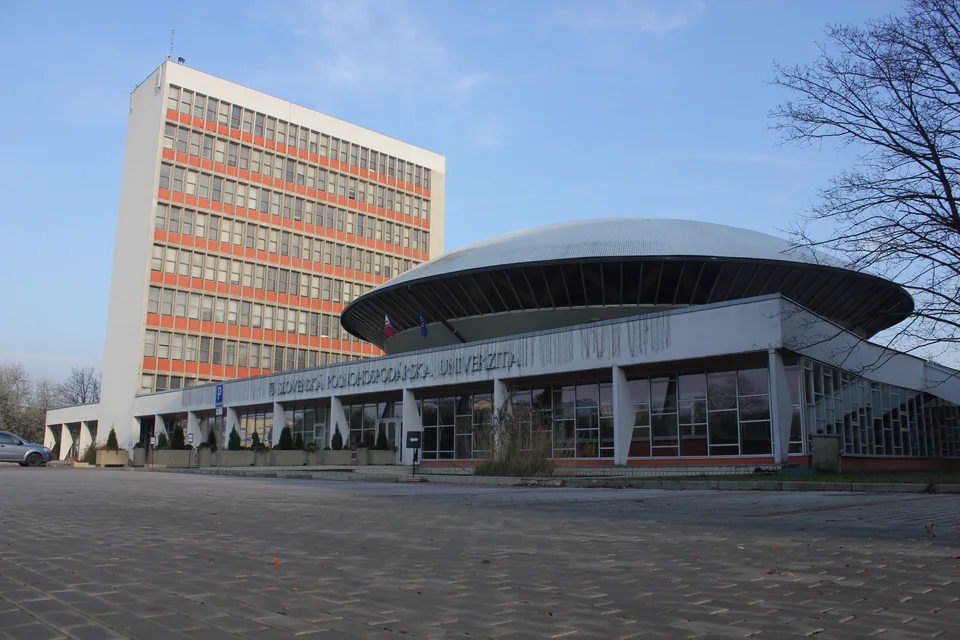
How admission works at a glance
| Question | Answer | Who decides |
|---|---|---|
| Where to apply | To a specific faculty, via the central online system (Portál VŠ) or the university's own system while it is still permitted | Faculty or university |
| How many applications | No limit on universities; each application carries its own fee | You |
| First round | Usually by 31 March or 30 April; medicine by the end of February; arts and architecture November–January | Faculty publishes it at least two months ahead |
| Entrance exams | Depend on the programme: grades, SCIO test, faculty exam, talent test | Faculty |
| Language | Slovak programmes usually expect B1–B2; English programmes require a certificate | Faculty |
| Certificate recognition | Russia: automatic "recognition statement"; Kazakhstan, Uzbekistan, Belarus: decision of a regional school administration office | Ministry or RÚŠS |
| Decision | In writing within 30 days of checking the conditions | Dean or rector |
Portál VŠ currently lists 40 higher education institutions, 117 faculties and 5,056 programmes. Each programme shows its language of instruction, and the deadlines section lists application and exam dates by faculty. It is the first place to check dates.
Slovak or English: decide before you apply
The language of instruction drives your budget, timeline and document set, so settle it before choosing universities.
| Slovak-taught programme | English-taught programme | |
|---|---|---|
| Tuition | None for full-time study within the standard length | Set by the university. At Comenius University in 2026/27 from $2,054 to $16,546 (€1,800–14,500) a year, although the university describes some English-taught science programmes as free |
| Language at admission | Faculties expect B1–B2; not all require a certificate | English certificate required |
| Time to start | Often a year of language preparation first | You can apply straight from school |
| After graduation | Easier to work in Slovakia | Better if you plan to move on |
Our guide to free university education in Slovakia explains exactly when study is free and what everyone pays. If you do not speak Slovak yet, start with the Slovak language preparatory courses: their calendar decides which year you can realistically apply.
Calendar: when to apply for 2027/28
Faculties publish admission conditions for the next year in autumn and winter; the law requires this at least two months before the application deadline. The table shows deadlines already published for 2027/28 and last cycle's (2026/27) dates as a benchmark: universities rarely move them by more than a couple of weeks.
| Faculty and programme | Application window | Exam | Cycle |
|---|---|---|---|
| STU, Faculty of Architecture and Design: architecture, design | 1 Oct – 30 Nov 2026 | Talent test per faculty schedule | 2027/28 |
| Comenius, Jessenius Faculty of Medicine (Martin): general medicine and dentistry in Slovak | 1 Dec 2026 – 28 Feb 2027 | 20 Mar – 22 May 2027 | 2027/28 |
| Comenius, Jessenius Faculty of Medicine: nursing | 1 Dec 2026 – 28 Feb 2027 | 1 Mar – 15 May 2027 | 2027/28 |
| Comenius, Faculty of Physical Education and Sport: coaching | 4 Jan – 16 Mar 2027 | 27–30 Apr 2027 | 2027/28 |
| Comenius, Faculty of Medicine (Bratislava): general medicine in Slovak | 1 Dec 2025 – 28 Feb 2026 | 9–10 May 2026 | 2026/27 |
| UPJŠ, Faculty of Medicine (Košice): general medicine in Slovak | 1 Jan – 28 Feb 2026 | 24 Apr – 12 Jun 2026 | 2026/27 |
| STU, Faculty of Informatics (FIIT) | 12 Dec 2025 – 31 Mar 2026 | Per faculty conditions | 2026/27 |
| Comenius, Faculty of Mathematics, Physics and Informatics (FMFI) | By 31 Mar 2026; additional round 7 Jul – 20 Aug 2026 | No exam: grades or SCIO test | 2026/27 |
| EUBA, economics programmes in Slovak | By 30 Apr 2026 | 15–19 Jun 2026 | 2026/27 |
| TUKE, Faculty of Economics | Slovak programmes by 31 Mar 2026; English programmes by 30 Jun 2026 | Per faculty conditions | 2026/27 |
A working plan for a student finishing school in summer 2027:
- September–October 2026. Choose the language of study and 3–5 programmes; check requirements and fees.
- November 2026. Apply to talent-based programmes (architecture, design, arts).
- December 2026 – January 2027. Start certificate recognition if it requires an application; order official translations.
- By end of February 2027. Apply to medicine, dentistry, pharmacy and nursing.
- By 31 March – 30 April 2027. Main wave of applications for other programmes.
- April–June 2027. Exams and tests; faculty decisions.
- June–July 2027. Confirm your place; apply for residence and a dormitory.
- July–August 2027. Additional rounds if plan A fails.
- September 2027. Enrolment (zápis) and start of classes.
How to apply: step by step
- Find the programme on Portál VŠ and open the faculty's admission conditions (podmienky prijatia): deadline, exam, planned intake, fee and how letters are delivered.
- Register in the central online system. Under the new Act the admission procedure starts when your application arrives through the ministry's system, and universities must accept an online application even without an electronic signature. They may keep their own channels for the last time for 2028/29 entry, but cannot reject an application sent through the central system.
- Complete the form. International applicants give their passport number instead of a Slovak personal number, plus citizenship, permanent address and education details with grades.
- Choose programmes. Some faculties accept several programmes in one application. At Comenius FMFI you can list up to three in order of priority and pay one fee.
- Pay the fee with the correct variable symbol. Unpaid applications are not processed. Refund rules are in the admission conditions: FMFI, for example, does not refund the fee after the application deadline.
- Attach documents listed in the conditions or send them by the stated date.
- Track the status and your mailbox: decisions arrive in writing, at some faculties only through the system.
Comenius University states that applicants can complete admission on their own and that it does not work with agencies. Submit applications, payments and correspondence in your own name; that is the safest approach at any university.
Documents
The faculty sets the exact list. A typical bachelor's package:
| Document | What to check |
|---|---|
| Online application | Name in Latin letters exactly as in the passport |
| School-leaving certificate with transcript | If you have not graduated yet: a school letter confirming final-year status with current grades |
| Certificate recognition | Russia: printed recognition statement plus the original or a certified copy; other countries: RÚŠS decision. Details in our guide to recognition of school certificates |
| Slovak translation | Comenius University requires all education documents in Slovak; an official translation by a translator on the Slovak Ministry of Justice register is the safest option |
| Proof of fee payment | Receipt or status in the system |
| Language certificate | Mandatory for English programmes; for Slovak programmes if the faculty requires or recommends one |
| Motivation letter, CV | More common for English programmes and master's |
| Portfolio | Architecture, design, arts |
| Medical certificate | Where the programme checks health: medicine, sport, some teaching programmes |
Not everything must be ready on application day. Act No. 300/2025 allows conditional admission: a missing condition, such as recognition or the certificate itself, must be proven no later than the enrolment day. This is an option for the university, not an obligation, so check which documents your faculty wants by which date.
Entrance exams and selection criteria
There is no national exam. Each faculty chooses its method and publishes the form and outline of any exam in advance.
- Admission on grades. Many technical, science and teaching programmes admit on school grades while places remain.
- SCIO test. At Comenius FMFI, applicants who finished school outside the EU are admitted on their SCIO mathematics percentile; thresholds ranged from 40 to 80 by programme in 2026/27.
- Faculty exam. Medicine, dentistry and veterinary medicine run entrance tests, usually in biology and chemistry.
- Talent test. Architecture, design, sport and the arts: portfolio, drawing, fitness tests.
- Slovak check. FMFI treats B1 as a basic prerequisite for Slovak programmes and recommends a certificate if you did not take Slovak or Czech in your school-leaving exam. Comenius overall recommends B2 without requiring a certificate. EUBA runs a paid Slovak level test for admission interviews: $97 (€85).
If you are rejected, the law gives you eight days from delivery to request a review, and the faculty replies within 30 days. A review checks whether rules were followed; it does not add points. The real fallback is an additional round on another programme.
What the application stage costs
| Item | Amount | Note |
|---|---|---|
| Application fee, Comenius University 2026/27 | From $17 (€15, FMFI online) to $114 (€100, dentistry at the Jessenius Faculty of Medicine) | Faculty of Arts: $23 (€20) online, $46 (€40) on paper |
| Legal cap on the fee | $223 (€195) for 2026/27, $247 (€216.25) for 2027/28 | 25% of the base published yearly by the ministry |
| Certificate recognition at RÚŠS | $8 (€7) for treaty countries, $46 (€40) otherwise | Free for Russian certificates with a recognition statement |
| Official translations | Translator's rates | A certificate with transcript is several pages |
| Slovak level test (EUBA) | $97 (€85) | Only if your programme needs it |
| National visa to apply for residence in Slovakia | $103 (€90) | Only if you do not apply through an embassy |
| Residence card | $11 (€10) | The study residence application itself is free |
Five applications across universities cost roughly $100–400 in fees alone. A missed deadline costs more: the next attempt is a year later.
After an admission decision
- Tell the faculty you will enrol. If asked and you do not reply by the deadline, you lose the right to enrol and the place goes to the next candidate.
- Apply for a dormitory. Comenius University states that every first-year student who applies right after admission gets a place; other universities make no such commitment.
- Apply for study residence. Since 15 July 2026 the police have up to 90 days to decide, so do not wait until August. Documents and timing are in our guide to the student residence permit in Slovakia.
- Meet the conditions of conditional admission by enrolment day: recognition, originals, translations.
- Attend enrolment (zápis) in person on the date in the faculty's letter.
What differs by citizenship
| Russia | Kazakhstan | Uzbekistan | Belarus | |
|---|---|---|---|---|
| Certificate recognition | Recognition statement for the "Attestat o srednem obshchem obrazovanii" and the vocational (SPO) diploma; no application | RÚŠS, $46 (€40) | RÚŠS, $46 (€40) | RÚŠS, $46 (€40) |
| Where to apply for residence | Slovak Embassy in Moscow (booking by email) or the embassy accredited for your country of residence | Embassy in Astana | Embassy in Tashkent, appointments only | Embassy in Minsk, by appointment |
| Travel for exams | Schengen visa; since November 2025 the EU as a rule issues Russian nationals single-entry visas only | Schengen visa | Schengen visa | Schengen visa |
| Paying fees | Russian-issued cards do not work abroad; arrange a legal channel early | Usually straightforward | Usually straightforward | Check with your bank |
Legal ways to pay fees or tuition from Russia are covered in our guide to paying for studies abroad from Russia.
Common mistakes
- Assuming "end of March" for every programme. Medicine closes in February, architecture in November.
- Starting recognition after applying. RÚŠS has up to two months to decide after a complete file.
- Sending documents without a Slovak translation. Faculties expect Slovak; a home-made translation may be questioned.
- Submitting a single application. For popular programmes keep 2–3 options at different universities.
- Not answering the faculty about enrolment. The place moves to the next applicant.
- Leaving residence until August. Since 15 July 2026 processing takes up to 90 days.
FAQ
Yes, many programmes admit on school grades while places remain. Faculties may set a separate criterion for applicants schooled outside the EU; Comenius FMFI, for example, uses the SCIO mathematics test.
Usually B1–B2. FMFI names B1 as a basic prerequisite; Comenius overall recommends B2 without requiring a certificate. Check the programme's conditions: language may be tested or discussed at an interview.
Yes. Final-year students apply in spring with a school letter and bring the certificate and its recognition later. The new Act allows conditional admission if the condition is met by enrolment day.
The faculty sets the fee: at Comenius in 2026/27 from $17 to $114 (€15–100). By law it cannot exceed 25% of the base, i.e. $247 (€216.25) for 2027/28.
The faculty issues a written decision within 30 days of checking whether you meet the conditions. For programmes with exams this is usually May–July.
Yes. The Higher Education Act does not restrict admission by citizenship, and the Foreigners' Residence Act does not single out Russian nationals among study-residence applicants. You apply at the Slovak embassy in Moscow or at the embassy accredited for the country where you live. The difficulties are practical: embassy appointments, single-entry Schengen visas for exam trips and paying from Russia.
Under a contract, we check programme requirements, build a timeline, and help with documents, translations, certificate recognition and the residence file. You submit the application and payment from your own account; the faculty decides on admission and the Slovak police on residence.
Sources
- Act No. 300/2025 on Higher Education, version from 1 September 2026 — §§ 68–70 (conditions, central application, conditional admission, decision and review), §§ 96–97 (tuition and fees), § 145 (transition until 2028/29) — checked 24 Sep 2026
- Portál VŠ: application deadlines, central online application and home page — checked 24 Sep 2026
- Comenius FMFI: bachelor's admission conditions 2026/27 — checked 24 Sep 2026
- Comenius University: information for Russian-speaking applicants — checked 24 Sep 2026
- Comenius University: tuition and fees 2026/27 — checked 24 Sep 2026
- Ministry of Education: base for tuition and fees — checked 24 Sep 2026
- EUBA: Slovak language level test — checked 24 Sep 2026
- Ministry recognition portal: using the recognition statement and recognition of secondary education — checked 24 Sep 2026
- Act No. 404/2011 on Residence of Foreigners, version in force from 15 July 2026 — § 31 (where to apply), § 33 (90-day decision) — checked 24 Sep 2026
- IOM Migration Information Centre: temporary residence for study — checked 24 Sep 2026
- European Commission: visa measures for Russian nationals — checked 24 Sep 2026
- Exchange rate: ECB reference rate of 23 Sep 2026, €1 = $1.1411
Next steps
- Free University Education in Slovakia: Conditions for International Students and What You Still Pay
- Slovak Language Preparatory Courses Before University: Options, Costs and Immigration Status
- Recognition of School Certificates in Slovakia: Recognition Statement, RÚŠS and Timelines
- Student Residence Permit in Slovakia: Documents, Timelines, Funds and Visas in 2026
- Studying in Slovakia for international applicants
- How to Pay for Studies Abroad from Russia: What Works in 2026
