
A year-long Slovak course at a university makes sense if you want tuition-free study on a Slovak-taught programme but do not speak the language yet. For 2026/27, the clearest option with published terms is the programme at the Bratislava University of Economics and Business (EUBA): 610 hours from 22 October 2026 to 31 August 2027 for $3,960 (€3,490), targeting level B2.1. For speakers of another Slavic language, EUBA also runs a 380-hour intensive from February to August. The Slovak University of Technology (STU) offers modules to B1 and B2, and Comenius University's Studia Academica Slovaca runs a summer school. Comenius University's former language and academic preparation unit for foreigners and expatriate Slovaks (ÚJOP), still mentioned on many websites, closed on 31 August 2023.
The type of course also determines your status in Slovakia. Language or academic preparation organised by a Slovak university qualifies for a study residence permit. A classroom course at a language school with at least 25 hours a week qualifies for a national visa until 31 July. Online courses and evening classes give no status at all.
If you are reading this in autumn 2026, it is too late for the 2026/27 year courses: EUBA took payment until 16 September, and STU registration ran from January to June. A realistic target is a 2027/28 course and university entry in 2028/29, with online study before the course starts. Universities have not yet published 2027/28 course terms, so the figures below are a guide based on the current cycle.
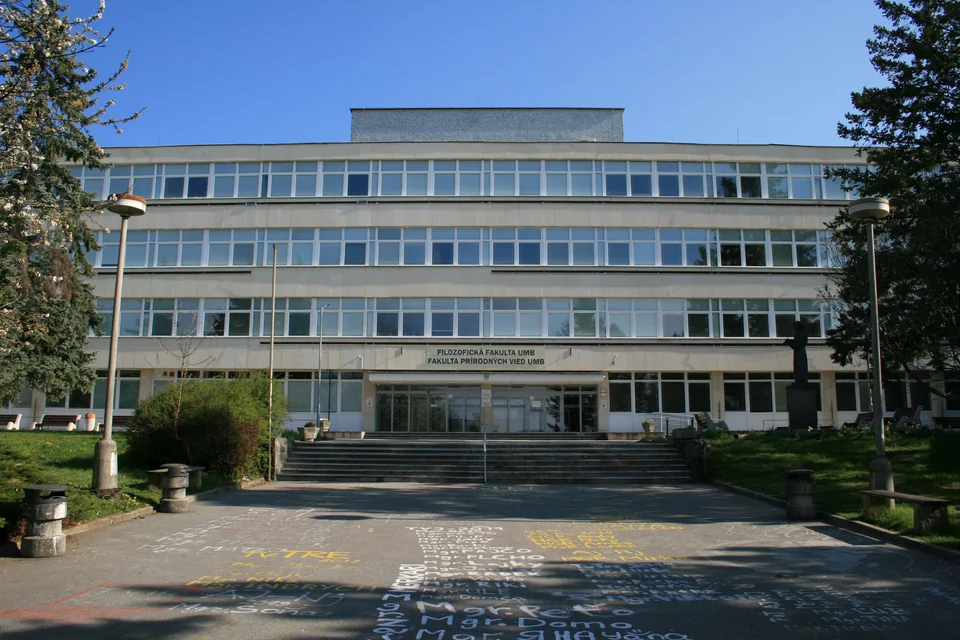
What level of Slovak you need
| Who | Requirement |
|---|---|
| Comenius FMFI | B1 is a basic prerequisite for Slovak programmes; a certificate is recommended if you did not take Slovak or Czech in your school-leaving exam |
| Comenius University overall | No official certificate required; recommended level B2 |
| EUBA | Runs a paid Slovak level test for admission interviews: $95 (€85) |
| University year programmes | Lead to B2 or B2.1 |
B1 gets you in, but B2 makes the first semester easier. The Technical University of Košice teaches Slovak free of charge to admitted international students on Slovak programmes during their first one or two semesters, so for technical fields "enter with B1, finish the language at university" can be realistic.
Options for 2026/27 compared
| Programme | Format and hours | Dates | Price | Status in Slovakia |
|---|---|---|---|---|
| EUBA, Language and Academic Preparation for Foreigners | 200 hours of language + 410 hours of language and economics subjects, 610 in total | 22 Oct 2026 – 31 Aug 2027; apply by 26 Sep 2026, pay by 16 Sep 2026 (both deadlines for this intake have passed) | $3,960 (€3,490) + $55 (€50) exam and certificate | EUBA issues its admission decision as a supporting document for a national D visa; by law, university-organised preparation also qualifies for study residence |
| EUBA, intensive for Slavic-language speakers | 6 hours a day, 380 hours: 268 language + 112 subject | 2026 intake: 2 Feb – 31 Aug 2026, apply and pay by 15 Jan 2026; 2027 dates not yet published | $2,370 (€2,090) + $55 (€50) exam | Same D-visa document; you can join online via MS Teams while your visa is pending |
| STU, Slovak module A1–B1 | 640 hours, two semesters of 320 | 1 Oct – 31 Aug; registration January–June | STU's 2020 price list, still the one on its website: $2,540 (€2,240); ask for your year's price | University-organised preparation |
| STU, Slovak module A1–B2 | 1,000 hours, two semesters of 500 | 1 Oct – 31 Aug; registration January–June | STU price list: $3,970 (€3,500); ask for your year's price | University-organised preparation |
| Studia Academica Slovaca, summer school | Three weeks, levels A1.1 to C2 | 27 Jul – 14 Aug 2026; apply by June | $1,140 (€1,000) + $55 (€50) administration fee | Short visit |
| Studia Academica Slovaca, public courses | 44 lessons, 2 × 90 minutes a week | 6 Oct – 17 Dec 2026; apply by 30 Sep 2026 | $285 (€250) including the textbook and a $55 (€50) administration fee; runs only with at least eight participants | Only for people aged 17+ who already hold a visa or residence; explicitly not a preparatory course |
| Private language school | From online groups to year-long classroom courses | Usually starts September–October or February | By contract | Visa only for a classroom course of 25+ hours a week at a language school recognised under Slovak school law (jazyková škola) |
STU also offers subject modules for technical programmes (mathematics, physics, chemistry, computing, statics) that can be combined with language. STU states that it does not work with intermediaries: send your application directly to its language centre and pay from your own account to STU's account.
How the type of course affects visa and residence
| Type of preparation | Legal basis | What it gives | Limits |
|---|---|---|---|
| Language or academic preparation organised by a Slovak university | § 24 of the Foreigners' Residence Act: residence for study | Temporary residence for study | University confirmation needed; police decide within up to 90 days |
| Classroom course at a language school, 25+ hours a week, age 15+ | § 15: national visa | D visa until 31 July of the school year | Accommodation proof and a statement from a bank account in Slovakia showing $65 (€56) per day of stay; with this visa you can apply for study residence inside Slovakia |
| Online course, evening classes, public courses | None | Nothing | You can only visit on a 90-day Schengen visa |
The $65 (€56)-per-day requirement for funds in a Slovak bank account and the accommodation proof come from the Slovak Embassy in Moscow's national visa page (updated 1 April 2024). Residence documents and timing are covered in our guide to the student residence permit in Slovakia.
Do you need a preparatory year?
| Your situation | What usually makes sense |
|---|---|
| No Slovak; aiming for a free Slovak-taught programme, especially medicine or law | A university year course: it supports a visa or residence and includes subject preparation |
| Already A2–B1, good grades, aiming for an engineering programme | Apply directly to a programme that asks for B1 and finish the language at university; Košice teaches admitted students for free |
| You want an English-taught programme and do not need Slovak for work later | Skip the preparatory year: compare English tuition with the cost of a course year plus living |
| You want to test whether the language suits you | Start online at home and try the SAS summer school, then decide on a year course |
Cheap or free ways to build your Slovak
- Technical University of Košice teaches Slovak free of charge to admitted international students on Slovak programmes in their first one or two semesters.
- IOM Migration Information Centre runs free online Slovak courses at A1–B2 for foreign nationals. Its page dated 19 January 2026 said registration was closed because courses were full; ask the centre about eligibility.
- Studia Academica Slovaca helps prepare standardised A2–C1 tests and posts sample tests on slovak-language.sk, useful for checking your level before you apply.
Fitting a course around admission
The main difficulty with a year-long course is the calendar. It runs October to August, while most programmes close their first round between February and April. You apply mid-course, before reaching your final level.
- Spring–summer of year N. Choose a course. University programmes require payment before the start, and only then issue the admission decision for your visa. For EUBA 2026/27: pay by 16 September, apply by 26 September.
- Right after payment. Apply for a national D visa. The Interior Ministry gives its opinion within 30 days and the Foreign Ministry decides within 10 working days after that, so allow about six weeks. If you apply for residence based on the course, the police have up to 90 days. That is why EUBA's option to start online while waiting for a visa matters.
- October–January. Reach A2–B1 and shortlist programmes; handle certificate recognition in parallel (a recognition statement for Russia, RÚŠS for Kazakhstan, Uzbekistan and Belarus). See our guide to recognition of school certificates.
- February–April. Apply to universities; medicine by the end of February.
- May–June. Exams, Slovak level tests where required, admission decisions.
- July–August. Finish the course, get your certificate, apply for residence to study at university.
If you need the language by spring and starting from zero in October is too late, there are two ways out: begin online at home six months before the classroom course, or target programmes that require B1 and finish the language in your first semester.
What a preparatory year costs in total
The course fee is less than half of the year's cost. Using EUBA 2026/27 as the example:
| Item | Amount |
|---|---|
| Course | $3,960 (€3,490) |
| Exam and certificate | $55 (€50) |
| EUBA dormitory | $100–140 (€90–125) a month if places are available; not guaranteed for 2026/27 |
| Living costs | Minimum about $395 (€350), comfortable $570–795 (€500–700) a month (European Commission estimate) |
| Funds for a police check | At least $335 (€295.22) per remaining month of residence, up to $4,020 (€3,542.64) a year |
| Insurance, residence card, translations | Insurance at insurer's rate; card $11.35 (€10) |
A preparatory year costs roughly $8,000–14,000 including living. Compare that with the tuition for an English-taught programme: sometimes going straight into one is faster and not more expensive. Both scenarios are calculated in our guide to free university education in Slovakia.
Checklist for choosing a course
- Who issues the visa or residence document? If neither a university nor a language school recognised under Slovak school law runs the course, there is no basis for a long stay.
- How many hours, to what level? 200–400 hours suit students who already speak a Slavic language; from zero to B2, plan on 600–1,000 hours.
- Is there subject preparation? For economics, medicine and engineering, subjects and Slovak terminology matter.
- When does it start and when do you pay? University programmes require payment before the course and before your visa, so the risk of a visa refusal is yours; ask about refunds.
- Is housing available? EUBA does not guarantee dormitory places for 2026/27.
- What certificate do you get? A course certificate does not override faculty requirements: each faculty decides what proof of Slovak it accepts.
Common mistakes
- Looking for Comenius University's ÚJOP. The unit closed on 31 August 2023.
- Buying an online course "with a visa." Online study gives neither a visa nor residence.
- Assuming any school's certificate is accepted everywhere. The faculty sets the language requirement.
- Paying through third parties. STU explicitly asks for payment only to its account, from your own.
- Applying for residence in August. The police may take up to 90 days, and the course start will slip.
- Ignoring living costs. A year in Bratislava usually costs more than the course itself.
FAQ
From zero, university programmes plan 600–1,000 hours, which is most of an intensive academic year. Russian speakers usually find it easier, yet even EUBA's intensive for Slavic-language speakers is 380 hours at 6 hours a day.
Yes, if a Slovak university organises the language or academic preparation for university study; the law names this as a ground for study residence. A classroom course at a language school with 25+ hours a week can get you a national visa until 31 July.
No. The language and academic preparation unit for foreigners and expatriate Slovaks (ÚJOP) at Comenius University's Centre for Continuing Education closed on 31 August 2023. Studia Academica Slovaca continues to operate, but it offers a summer school and semester courses, not pre-university preparation.
There are no free year-long courses for applicants. The Technical University of Košice teaches Slovak free of charge to admitted international students in their first semesters, and the IOM Migration Information Centre periodically enrols foreign nationals in free online A1–B2 courses.
Yes, if the faculty accepts your way of proving the language: a certificate, a test or an interview. You will need a Schengen visa for the trip; since November 2025 the EU as a rule issues Russian nationals single-entry visas only.
Under a contract, we compare courses against your target programmes and deadlines, check what status each course gives and build it into your admission and residence plan. You apply for and pay for the course directly with the university or school.
Sources
- EUBA: Language and Academic Preparation for Foreigners 2026/27 and intensive for Slavic-language speakers — checked 24 Sep 2026
- EUBA: Slovak language level test — checked 24 Sep 2026
- STU: Slovak courses and modules, modules and prices (PDF) and notice on working without intermediaries — checked 24 Sep 2026
- Studia Academica Slovaca: summer school 2026 and public courses 2026/27 — checked 24 Sep 2026
- Comenius University Centre for Continuing Education: closure of ÚJOP — checked 24 Sep 2026
- Comenius FMFI: admission conditions 2026/27 and Comenius University for Russian-speaking applicants — checked 24 Sep 2026
- Technical University of Košice: Slovak course — checked 24 Sep 2026
- Act No. 404/2011 on Residence of Foreigners, version in force from 15 July 2026, §§ 15 and 24 — checked 24 Sep 2026
- IOM Migration Information Centre: free online Slovak courses — checked 24 Sep 2026
- Studia Academica Slovaca: standardised testing A2–C1 — checked 24 Sep 2026
- Slovak Embassy in Moscow: national visas — checked 24 Sep 2026
- IOM Migration Information Centre: residence for study and changes from 15 July 2026, national visa timing — checked 24 Sep 2026
- European Commission: Slovakia country profile — checked 24 Sep 2026
- Exchange rate: ECB reference rate of 29 Sep 2026, €1 = $1.1355
Next steps
- Student Residence Permit in Slovakia: Documents, Timelines, Funds and Visas in 2026
- Recognition of School Certificates in Slovakia: Recognition Statement, RÚŠS and Timelines
- Free University Education in Slovakia: Conditions for International Students and What You Still Pay
- Studying Medicine in Slovakia: Faculties, Entrance Exams, 2026/27 Fees and 2027/28 Dates
- Applying to Universities in Slovakia: Deadlines, Documents and Entrance Exams for 2027/28
- Cost of Studying in Slovakia: 2026/27 Tuition, Dormitories and a First-Year Budget
