
International students can study medicine in English in Cyprus at two private medical schools in Nicosia: the University of Nicosia (UNIC) and European University Cyprus (EUC). Both run a six-year Doctor of Medicine (MD, 360 ECTS) for school leavers, costing $27,250 (€24,000) a year at UNIC and $26,120 (€23,000) at EUC in 2026/27. UNIC also offers a five-year graduate-entry MD at $28,390 (€25,000) a year. School leavers sit no biology or chemistry entrance exam: selection is based on school grades (around 90% of the maximum), English (IELTS 6.5 at UNIC) and an interview. Clinical training in Cyprus requires Greek, and recognition of the degree for practice outside the EU is a separate process.
| At a glance | Details |
|---|---|
| Where to study in English | University of Nicosia Medical School, European University Cyprus School of Medicine (Nicosia) |
| Programmes | 6-year MD for school leavers; 5-year graduate-entry MD (UNIC only) |
| Fees 2026/27 | UNIC $27,250 (€24,000) per year, graduate entry $28,390 (€25,000); EUC $26,120 (€23,000) |
| School-leaver selection | about 90% overall, biology plus chemistry, physics or maths; English; interview |
| English | UNIC: IELTS 6.5 with 6.5 in writing; EUC: B2 or higher |
| Living in Nicosia | at least $13,630 (€12,000) for a full year (UNIC Medical School estimate) |
| Accreditation | programmes accredited by CYQAA, which holds WFME recognition status |
| Public medical school | University of Cyprus: public-university admission with Greek |
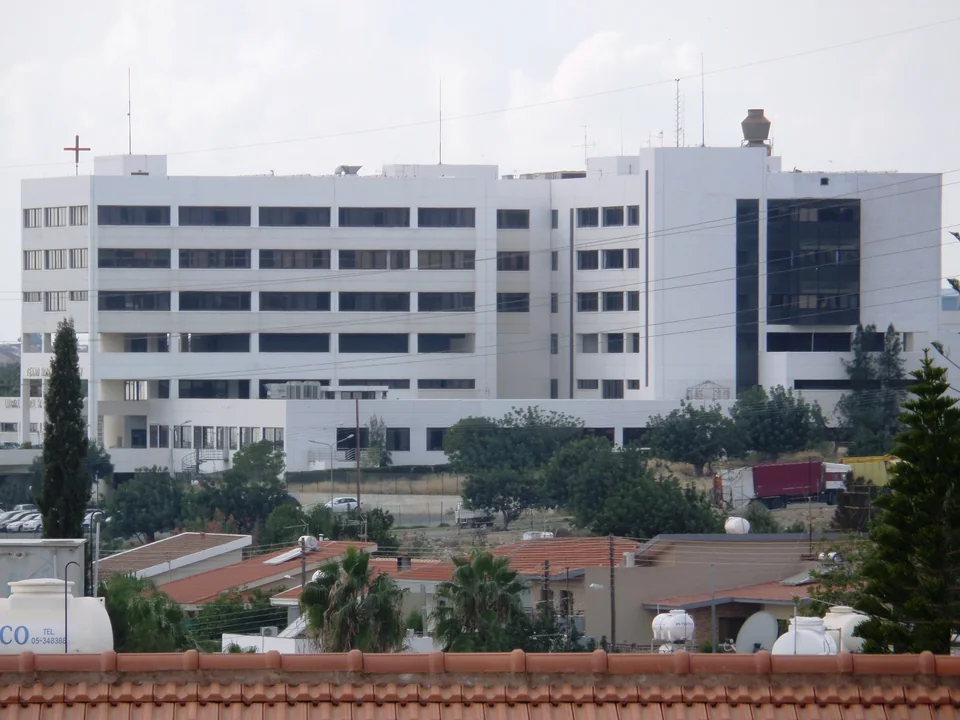
Where medicine is taught in English
English-taught medicine for international students is offered only by private universities in Nicosia. The public University of Cyprus also trains doctors, but public undergraduate and integrated programmes require good Greek and admission through the Pancyprian exams or special quotas.
| Criterion | UNIC, 6-year MD | UNIC, 5-year graduate-entry MD | EUC, 6-year MD |
|---|---|---|---|
| Credits | 360 ECTS, 12 semesters | 300 ECTS, 10 semesters | 360 ECTS |
| Fee per year, 2026/27 | $27,250 (€24,000) | $28,390 (€25,000) | $26,120 (€23,000) |
| Academic entry | about 90% overall with similar grades in biology and one of chemistry, physics or maths | a bachelor's in any field (UK 2.2 or equivalent) plus MCAT 498+, GAMSAT 55+ or UCAT for life-science graduates | 90% average or equivalent, biology plus chemistry, maths or physics |
| English | IELTS 6.5 (6.5 writing, 6.0 elsewhere) | IELTS 6.5 or TOEFL iBT 79 | B2 or above; an international certificate for the visa |
| Interview | online | online | by invitation, online if needed |
| Clinical training | Cyprus hospitals and partners abroad; +$6,810 (€6,000) a year for UK/US placements, +$3,410 (€3,000) for Switzerland and Germany | same, in years 4–5 | hospitals in Cyprus, Greece, Germany and the US; +$6,810 (€6,000) a year for US clinical years |
Both schools also run related degrees. At EUC, dentistry (BDS, 5 years) costs $26,120 (€23,000) a year plus $1,020 (€900) for dental technology and practical training, and veterinary medicine (DVM, 5 years) $23,850 (€21,000). UNIC's DVM also costs $23,850 (€21,000) a year. See our profiles of European University Cyprus and the University of Nicosia.
In June 2025 Neapolis University Pafos signed an agreement with Greece's Democritus University of Thrace on a joint English-taught medical programme for international students: four years in Paphos and two clinical years at the University General Hospital of Alexandroupolis. Before considering it, check that the programme is accredited by CYQAA and open for admission.
How to get in after school
- School grades: around 90% overall and strong results in biology plus chemistry, physics or maths. UNIC reviews all grades holistically.
- English: IELTS 6.5 with 6.5 in writing at UNIC; B2 or above at EUC. An international certificate is required for the entry permit anyway.
- Application: EUC accepts applications after the first term of the final school year and issues conditional offers, confirmed once final grades arrive. Volunteering in hospitals, care settings or charities counts in your favour.
- Interview: questions on motivation, schoolwork, general knowledge and interests.
- Confirming your place: EUC asks you to accept within a week with a down payment; UNIC charges a $1,700 (€1,500) administrative fee and a $3,970 (€3,500) seat deposit, both credited to first-semester tuition, with the seat deposit refundable if you decide not to enrol.
- Entry permit: the university files your application with the Migration Department; see the Cyprus student visa guide.
If your science grades are not yet at the required level, EUC runs an online foundation programme for future medicine, dentistry and veterinary students covering biology, chemistry, physics, mathematics, English for health sciences and academic skills. It runs every spring semester, from February to mid-June; admission to the MD afterwards is still the university's decision.
The general school-leaver timeline, including the problem of late-issued school certificates, is in applying to Cypriot universities.
How the programme works, and why Greek matters
UNIC's MD has pre-clinical years 1–3, a transitional fourth year with a research project, and clinical years 5–6 spent almost entirely in hospitals, with skills assessed through objective structured clinical examinations (OSCEs) involving real and simulated patients. EUC runs clinical rotations in public and private hospitals in Cyprus, Greece, Germany and the US and offers summer externships abroad. Patients in Cyprus speak Greek: UNIC states that students doing clinical training in Cyprus need adequate Greek and provides Greek lessons throughout the programme. If you do not plan to learn Greek, find out where your clinical years will take place and what placements abroad cost.
Recognition: EU, US, Russia and Kazakhstan
EU: UNIC designed its MD to meet Directive 2005/36/EC on the recognition of professional qualifications, which EU, EEA and Swiss nationals can rely on, although each country decides at what training stage graduates enter and what else they must show. Third-country nationals, including Russian and Kazakh citizens, gain no automatic right to practise in the EU; they need a work permit, the language and national procedures.
US: EUC states that its medical school is approved by ECFMG, so students and graduates can take the USMLE; UNIC also prepares students for USMLE and residency applications.
Russia: the 2016 Russia–Cyprus agreement on mutual recognition of education, qualifications and academic degrees is on the Russian Ministry's list of recognition treaties. Rosobrnadzor explains that a document covered by such a treaty is recognised under its terms, while a separate recognition procedure (state fee 6,500 roubles) applies when a document falls outside it. Either way, practising medicine in Russia requires specialist accreditation under Russian rules.
Kazakhstan and other CIS countries apply their own recognition and licensing procedures; check them before enrolling if you plan to return home.
The cost of six years
Tuition alone is $163,510 (€144,000) at UNIC and $156,700 (€138,000) at EUC at 2026/27 rates. UNIC's medical school puts living costs in Nicosia at a minimum of $13,630 (€12,000) a year, or $81,760 (€72,000) over six years. Add malpractice insurance — at UNIC $340 (€300) a year early on and $680–1,420 (€600–1,250) in clinical years — health insurance, migration fees and supplements for placements abroad. UNIC offers need-based scholarships of up to 20% once you hold an offer; its grade-based scholarships do not apply to medicine. For the first-year budget see the cost of studying in Cyprus; for payments from Russia see how to pay for studies abroad from Russia.
Cyprus or elsewhere?
Cyprus costs more than public medical faculties in Central and Eastern Europe but has no subject entrance exam for school leavers, an English-speaking environment and student status in an EU country. Compare medicine in Serbia, Hungary and Czechia, where fees are lower but biology and chemistry exams apply, and see the medicine programme overview.
Medical schools in the north of the island are a separate framework
Institutions in the northern part of Cyprus also offer English-taught medicine and are often listed alongside UNIC and EUC. They operate outside the Republic of Cyprus higher education system, and the Republic's Ministry of Education does not recognise them or their qualifications, which directly affects degree recognition and access to the profession. See studying in Northern Cyprus.
Common mistakes
- Counting on the public medical school without Greek.
- Overlooking separate grade requirements for biology and chemistry.
- Taking IELTS after applying; without it the entry permit cannot be filed.
- Ignoring Greek for clinical years in Cyprus or the cost of placements abroad.
- Assuming an EU degree automatically lets you practise anywhere.
- Mixing up Republic of Cyprus medical schools with institutions in the north.
How StudyU helps
Profile assessment, programme selection, interview preparation, documents, applications and entry permit support are provided under an agreement with StudyU. The medical school decides on admission, the Migration Department on entry, and the competent authority of the country where you will work on recognition. See the study in Cyprus overview.
FAQ
In 2026/27 the six-year MD costs $27,250 (€24,000) a year at UNIC and $26,120 (€23,000) at EUC; UNIC's graduate-entry MD costs $28,390 (€25,000) a year. Six years of tuition come to $156,700–163,510 (€138,000–144,000), plus at least $13,630 (€12,000) a year for living in Nicosia.
School leavers sit no subject exams: decisions rest on grades (around 90%, strong biology and chemistry, physics or maths), English and an interview. UNIC's graduate-entry MD requires an MCAT, GAMSAT or UCAT score.
Yes, at UNIC and EUC. For clinical training in Cyprus you also need Greek, which UNIC teaches throughout the programme. Neither school teaches medicine in Russian.
Russia and Cyprus signed a mutual recognition agreement in 2016: a diploma covered by it needs no separate recognition procedure at Rosobrnadzor, otherwise the procedure applies with a 6,500-rouble state fee. Practising medicine in Russia additionally requires specialist accreditation.
Yes. The six-year MD programmes at UNIC and EUC are designed for school leavers and accept national school certificates, provided you have high grades, strong science results, IELTS 6.5 (UNIC) or B2 (EUC) and a successful interview.
The public University of Cyprus has a medical school, but public undergraduate admission goes through the Pancyprian exams or special quotas and requires good Greek, so it is not an option for most international applicants.
Sources
- UNIC Medical School: 6-year MD, graduate-entry MD, financial information, checked 29 September 2026
- University of Nicosia: non-EU fees 2026/27 (PDF)
- European University Cyprus: MD programme and fees 2026/27 (PDF)
- Neapolis University Pafos: agreement with Democritus University of Thrace
- CYQAA: accredited programmes
- Eurydice: how Cypriot public universities admit first-cycle students
- Cyprus Department of Higher Education: position on institutions in the north
- Russian Ministry of Science and Higher Education: list of mutual recognition treaties
- Rosobrnadzor: recognition of foreign education
- ECB rate of 29.09.2026: €1 = $1.1355. Rounding step: $1 below $100, otherwise $10.
During the free initial consultation, we clarify your goal, profile, timing, and budget and identify the next realistic step. Apply
Next steps
- Studying in Northern Cyprus: Universities, Fees and Degree Recognition
- Applying to Cypriot Universities: Requirements, Documents and Deadlines for School Leavers
- Cost of Studying in Cyprus in 2026/27: Tuition, Fees and Living Costs
- Cyprus Student Visa: Entry Permit, Documents and Residence Permit
- How to Pay for Studies Abroad from Russia: What Works in 2026
- Studying Medicine in Czechia: Free in Czech or Paid in English — Faculties, Exams, Fees and Degree Recognition
