
Four public medical faculties in Serbia admit international students to Medicine: Belgrade, Novi Sad, Niš and Kragujevac. The degree takes six years (360 ECTS) and is taught in English or Serbian. For 2026/27, the English-taught programme costs $6,820 (€6,000) a year in Niš and Kragujevac and up to $9,090 (€8,000) in Belgrade. The Serbian-taught version is much cheaper: $2,840 (€2,500) a year for a foreign student in Belgrade under the 2026/27 call, but you need a Serbian language certificate. Every route includes a biology and chemistry entrance test, and your school-leaving certificate has to be recognised by Serbia's Qualifications Agency.
| At a glance | Details |
|---|---|
| English-taught medicine | Belgrade, Novi Sad, Niš, Kragujevac (all public universities) |
| Length | 6 years, 360 ECTS, integrated bachelor's and master's |
| Tuition in English, 2026/27 | $6,820–9,090 (€6,000–8,000) per year |
| Serbian-taught medicine, foreign student | Belgrade: $2,840 (€2,500) per year, 2026/27 rate |
| Entrance exam | biology and chemistry tests; Belgrade and Kragujevac add an interview |
| Recognition of your school certificate | Qualifications Agency (ENIC/NARIC centre), Belgrade |
| Staying in Serbia | temporary residence on the basis of study; visa rules depend on your passport |
| Practising in Serbia after graduation | six-month internship, state professional exam, licence and Serbian language |
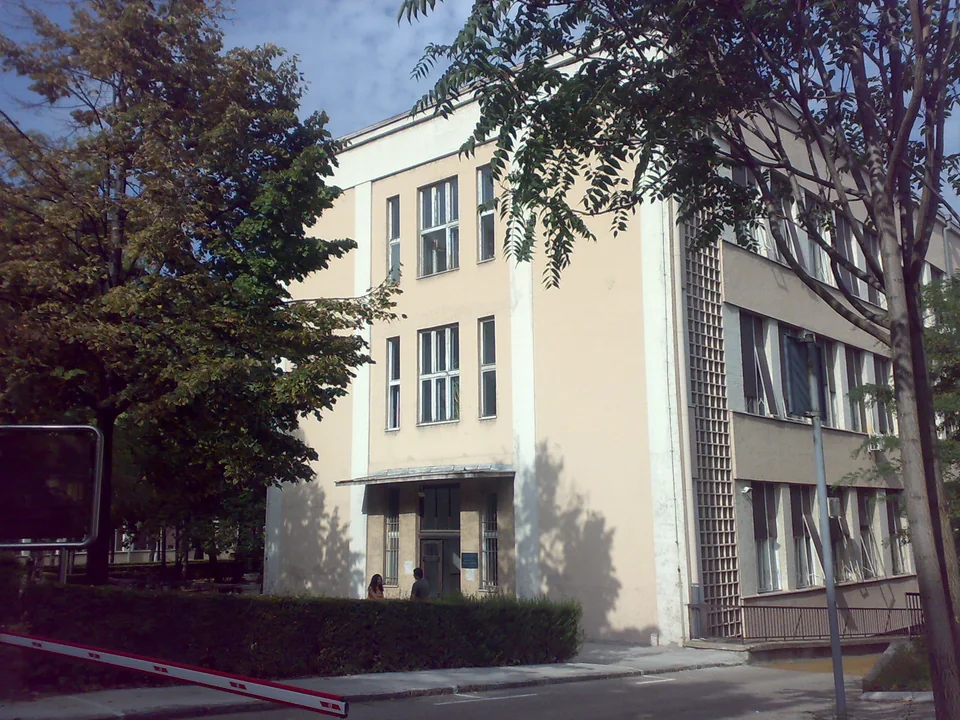
Where you can study medicine in English
All four faculties are public and award the same degree: Doctor of Medicine, 360 ECTS. They differ in price, number of places, exam format and city.
| Faculty | English-taught programmes | Tuition per year | Exam/application fee | Places in the latest 2026 round |
|---|---|---|---|---|
| University of Belgrade, Faculty of Medicine | Medicine | $9,090 (€8,000), paid in two $4,540 (€4,000) instalments | $159 (€140) | set per round by the faculty |
| University of Novi Sad, Faculty of Medicine | Medicine, Dental Medicine | $7,960 (€7,000) each; includes online library and e-textbooks | $63 (€55 or RSD 6,600) | 15 Medicine, 13 Dental (second round) |
| University of Niš, Faculty of Medicine | Medicine, Dental Medicine, applied bachelor's in Nursing | Medicine $6,820 (€6,000), Dental $8,180 (€7,200), Nursing $3,980 (€3,500) | $57 (€50) | 41 Medicine, 8 Dental, 30 Nursing (second round) |
| University of Kragujevac, Faculty of Medical Sciences | Medicine, Pharmacy | Medicine $6,820 (€6,000), Pharmacy $3,410 (€3,000) | $114 (€100) | 39 Medicine, 1 Pharmacy (fourth round) |
The University of Belgrade also teaches three other integrated programmes in English at separate faculties: Dental Medicine at $5,680 (€5,000) a year, Pharmacy at $3,980 (€3,500) and Veterinary Medicine at $5,680 (€5,000). These figures come from the university's 2025/26 fee table; confirm the 2026/27 rate with the faculty's admissions office.
All figures are tuition for self-funded students only. Accommodation, insurance, translations and administrative fees are extra. English-taught programmes have no state-funded places: every 2026 call lists them as self-funded only.
English or Serbian programme?
The Serbian-taught route wins on price and on patient contact in the local language; the English route lets you start immediately. The choice comes down to whether you can invest a year in Serbian.
| Criterion | English-taught | Serbian-taught |
|---|---|---|
| Tuition per year (Belgrade) | $9,090 (€8,000) | $2,840 (€2,500) for a foreign student, 2026/27 |
| Language requirement | English: Belgrade accepts any language-school certificate, Kragujevac asks for B2 | Serbian certificate: without it a foreign applicant cannot enrol |
| Entrance exam | in English | in Serbian, competing with Serbian school leavers |
| Realistic start | the year you finish school | usually a year later, after a language course |
| Patients | you still need Serbian on clinical rotations and to work in Serbia | language in place from year one |
The rule sits in the University of Belgrade Enrolment Rulebook (Article 5): a foreign national enrols under the same conditions as a Serbian citizen once the foreign school document is recognised, the applicant proves the language of instruction and has health insurance. The same article states that foreign students pay tuition for the whole course unless an international agreement provides otherwise.
The Centre for Serbian as a Foreign Language at the University of Belgrade's Faculty of Philology charges $682 (€600) per semester of its intensive course and $171 (€150) per exam. It runs exams at all levels from A1 to C2 in January and July, plus an extra late-August session (A1–B1) for applicants who need a certificate to study in Serbia. The level you need is stated in the faculty's call. The Faculty of Philosophy in Novi Sad runs a similar centre.
How the entrance exam works
Every faculty tests secondary-school biology and chemistry, but scoring differs. Past questions and topic lists are published on faculty websites.
Belgrade. Two 20-question multiple-choice tests (biology; general and organic chemistry) with one correct answer out of four. The chemistry test includes calculations on solution concentration, reaction energetics, the ionic product of water, pH and pOH. A 20-point interview in English assesses motivation, communication and language. The exam gives up to 60 points and your school GPA up to 40. You need at least 31 of 60 to pass, and passing is not enough: places go to the highest totals. In the September round the threshold can change with the number of free places. The faculty sells online preparation courses in biology and chemistry that mirror the exam.
Novi Sad. Biology and chemistry tests are taken online, or on site if you tell the secretariat in advance. Applicants without an English certificate (IELTS, TOEFL or similar) take a language check the same day. An online preparation course offers 45 hours per subject at $682 (€600) per subject.
Niš. Written tests in biology and chemistry only, three hours in total. The pass mark is 21 of 60 for Medicine and 14 of 60 for Dental Medicine. Ranking is by exam score.
Kragujevac. Online tests of 20 questions each in chemistry and biology plus an interview worth up to 20 points. Your school GPA is doubled (up to 40 points). You can enrol with at least 30 of 100 points. Winners of the top three places in national or international biology or chemistry competitions in the last two years of secondary school are exempt from that subject's test and get full marks for it.
Documents and recognition of your school certificate
The core set is similar at every faculty:
- school-leaving certificate and transcripts for all years of secondary school, translated into Serbian by a court interpreter in Serbia;
- birth certificate with the same kind of translation;
- copy of the passport photo page;
- proof of English: any language-school certificate in Belgrade, IELTS/TOEFL or an on-site check in Novi Sad, B2 or a previous degree taught in English in Kragujevac;
- proof that your documents are under recognition at the Qualifications Agency;
- exam fee receipt;
- in Kragujevac, a medical certificate.
Recognition. Foreign school documents are recognised by the ENIC/NARIC centre of Serbia's Qualifications Agency (Agencija za kvalifikacije) in Belgrade, online or in person. The fee for a secondary-school document is $86 (RSD 8,900), and the Agency must decide within 60 days of receiving a complete file. Start before you apply to the faculty: Belgrade asks you to lodge originals and two certified copies at the Agency first and bring a third copy with confirmation that recognition is under way. The final decision can follow later; Novi Sad set 31 October as the 2026 deadline. If recognition is refused, enrolment is cancelled.
Apostille and legalisation. Documents normally need an apostille (or full legalisation) from the issuing country. The Agency lists countries exempt under bilateral treaties, including Russia, Belarus, Ukraine, Austria, France, Poland, Czechia and several neighbours. The step-by-step procedure is in our guide to school certificate recognition in Serbia.
When to apply
Each faculty runs several admission rounds. The first take place in summer; by September faculties fill only the remaining places. Autumn 2026 looked like this:
| Faculty | Applications | Exam | Enrolment |
|---|---|---|---|
| Novi Sad | until 4 September 2026, 13:00 CET | 8 September | by 17 September: first instalment of at least $1,990 (€1,750; 25% of the annual fee) |
| Niš | 1–4 September 2026, online | 11 September | 16–18 September |
| Belgrade | third round, September 2026 | September | 22–23 September, first-semester payment of $4,540 (€4,000) |
| Kragujevac | 23–25 September 2026 | 29 September, online | per faculty schedule |
Dates for 2027/28 appear on faculty websites closer to summer 2027. Plan for a summer round: September has fewer places, and recognition plus translations take weeks.
In Novi Sad, paying the first instalment triggers a certificate of enrolment and an invitation letter for visa purposes. That instalment is non-refundable if you withdraw after the enrolment deadline, and exam fees are never refunded.
What six years cost
Tuition is the biggest item. The table shows tuition only, at the published rate for the current intake:
| Faculty and programme | Per year | 6 years |
|---|---|---|
| Belgrade, Medicine in English | $9,090 (€8,000) | $54,560 (€48,000) |
| Novi Sad, Medicine or Dental Medicine in English | $7,960 (€7,000) | $47,740 (€42,000) |
| Niš, Dental Medicine in English | $8,180 (€7,200) | $49,110 (€43,200) |
| Niš or Kragujevac, Medicine in English | $6,820 (€6,000) | $40,920 (€36,000) |
| Belgrade, Medicine in Serbian (2026/27 rate) | $2,840 (€2,500) | $17,050 (€15,000) |
Faculties do not promise a fixed rate for six years; Belgrade states the fee may change. Budget for repeats: Belgrade charges $133 (€117) per ECTS for repeated courses, Niš charges $2,270 (€2,000) for a repeat year. Enrolment also brings small registration fees ($53, RSD 5,500, in Novi Sad) plus the student record book and registration form.
Living costs in Belgrade, Novi Sad and Niš, dormitories versus renting, are covered in the cost of studying in Serbia. If you are paying from Russia, see how to pay for studies abroad from Russia.
Residence and accommodation
Entry rules depend on your passport: citizens of Russia, Kazakhstan and Belarus can enter visa-free for up to 30 days, while others (for example Uzbekistan) need a visa. For the degree you need temporary residence on the basis of study, applied for with the Ministry of the Interior in person or online at welcometoserbia.gov.rs, including from abroad if you do not need a long-stay visa. The key document is the certificate of enrolment from an accredited institution, plus proof of funds, health insurance and an address. Residence is granted for up to three years, or for the length of the programme if shorter. Full details: student residence permit in Serbia.
Kragujevac asks for a residence certificate from the Ministry of the Interior and health insurance at enrolment, issued by the foreign-insurance office or a private insurer.
Do not count on a public dormitory if you pay tuition. The Welcome to Serbia portal says foreign students are entitled to student-centre accommodation, but places are allocated through the Ministry of Education's annual call, and under the 2026/27 call only state-funded students with Serbian or regional citizenship are eligible; English-taught medicine has no state-funded places at all. Foreign students who do live in dormitories are mostly exchange students or government scholarship holders. For scale: Students' Centre Belgrade has about 10,500 places in 14 dormitories; Novi Sad city has 2,713 places in eight dormitories (3,064 for Student Centre Novi Sad including Zrenjanin and Sombor); Niš has 958. Budget for rent from the start: many medical students share flats with classmates. If you want to try for a room directly, ask the student centre in your city whether it has places for fee-paying students.
After graduation
Practising in Serbia. The Serbian Law on Health Care (Articles 153 and 165) requires a six-month internship, a state professional exam and a licence. Foreign nationals must also speak Serbian well enough to communicate with patients, so start learning it in year one even on the English programme.
Practising at home. A foreign medical degree is recognised under the rules of the country where you plan to work, followed by that country's licensing step. Check the requirements with your national regulator before you enrol, not after graduation.
European Union. Serbia is an EU candidate, not a member, so automatic recognition of medical degrees between EU states does not apply to Serbian diplomas. Each country assesses them through its own procedure, often with an exam and a language requirement.
Common mistakes
- Applying to the faculty before starting recognition. Without the Agency's confirmation your application is incomplete, and the procedure can take 60 days.
- Treating the September round as the main one. Autumn fills leftover places: Novi Sad's second 2026 round had 15 places in Medicine.
- Choosing the Serbian programme for the price with no time for the language. Without a Serbian certificate you cannot enrol.
- Budgeting one year instead of six. Belgrade medicine in English is $54,560 (€48,000) in tuition alone, and repeats are charged separately.
- Using a translator outside Serbia. Faculties and the Agency expect translations by court interpreters working in Serbia.
- Postponing Serbian. You need it for a Serbian licence and for patient contact during clinical years.
FAQ
Yes, on the English-taught programmes in Belgrade, Novi Sad, Niš or Kragujevac. You need proof of English and must pass the biology and chemistry exam in English. Serbian becomes necessary later, in clinical training and for a Serbian licence.
English-taught programmes have no state-funded places. The government's "World in Serbia" (Svet u Srbiji) scholarship covers tuition, housing and a stipend for citizens of Non-Aligned Movement member and observer states in Africa, Asia and Latin America; it requires studying in Serbian after a language course. Russian citizens have a separate route: 30 Serbian government scholarships under the bilateral agreement for 2026/27, for bachelor's, master's, doctoral study and training; candidates are nominated by the competent Russian authority. See free education in Serbia.
No. The biology and chemistry exam is compulsory at all four faculties. Your school GPA usually counts too: in Belgrade and Kragujevac it gives up to 40 of 100 points.
Six years, 360 ECTS, as an integrated programme combining bachelor's and master's levels. Niš's English-taught applied bachelor's in Nursing takes three years.
Yes, case by case. In Belgrade eligibility is assessed by a university commission and recognition can take up to six months. Niš charges $45 (€40) for a preliminary assessment. Each faculty publishes its own transfer rules.
Usually yes, unless your country is on the Qualifications Agency's list of bilateral exemptions (Russia, Belarus and Ukraine are). Translations must be done by a court interpreter in Serbia.
For the lowest price, Niš or Kragujevac ($6,820 a year). For Dental Medicine in English, Novi Sad, Niš or Belgrade. Belgrade is the most expensive and has the most demanding exam, but it is in the capital with the largest hospital network. For a wider comparison see universities in Serbia.
Sources
- University of Belgrade Faculty of Medicine, Studies in English: fees, admission, entrance exam — https://studiesinenglish.med.bg.ac.rs/studies-in-english/fees, https://studiesinenglish.med.bg.ac.rs/studies-in-english/applying-to-ubfm, https://studiesinenglish.med.bg.ac.rs/studies-in-english/entrance-exam
- University of Belgrade, tuition fees 2025/26 — https://www.bg.ac.rs/wp-content/uploads/2025/12/skolarine-tabela-2025-26.pdf
- University of Belgrade Enrolment Rulebook (Articles 5–6) — https://www.bg.ac.rs/wp-content/uploads/2024/02/pravilnik_o_upisu_na_studijske_programe_oktobar_2024.pdf
- Faculty of Medicine Novi Sad, admission 2026/27 — https://www3.mf.uns.ac.rs/En/Admission.php
- Faculty of Medicine Niš, call and fees 2026/27 — https://www.medfak.ni.ac.rs/index.php/en/admissions-en, https://www.medfak.ni.ac.rs/index.php/en/fees-en
- Faculty of Medical Sciences Kragujevac, call 2026/27 — https://medf.kg.ac.rs/en/
- Qualifications Agency of Serbia, ENIC/NARIC centre — https://azk.gov.rs/stranica.php?id=95
- Centre for Serbian as a Foreign Language, Belgrade — https://learnserbian.fil.bg.ac.rs/
- Ministry of Foreign Affairs of Serbia, visa regime — https://www.mfa.gov.rs/en/citizens/travel-serbia/visa-regime
- Serbian Law on Health Care, Articles 153 and 165 — https://www.paragraf.rs/propisi/zakon_o_zdravstvenoj_zastiti.html
- Welcome to Serbia portal: scholarships; living conditions during studies — https://welcometoserbia.gov.rs/scholarships, https://welcometoserbia.gov.rs/living-conditions-during-studies
- Ministry of Education, student dormitory call 2026/27; University of Novi Sad, dormitory places by city — https://www.scns.rs/wp-content/uploads/2026/05/Konkurs-2026-2027.pdf, https://www.uns.ac.rs/index.php/studije/stud-servisi/stud-centar
- University of Belgrade Faculty of Medicine, 2026/27 call for Serbian-taught medicine (foreign-student fee $2,840 (€2,500)) — https://med.bg.ac.rs/wp-content/uploads/2026/05/MFUB-KONKURS-26-27.pdf
Prices converted at the ECB rate of 29.09.2026 (€1 = $1.1355); dinar amounts via the National Bank of Serbia middle rate on the same date (€1 = RSD 117.5386).
During the free initial consultation, we clarify your goal, profile, timing, and budget and identify the next realistic step.
Next steps
- School Certificate and Diploma Recognition in Serbia: How Nostrification Works
- Student Residence Permit in Serbia: How to Get Temporary Residence for Study
- Cost of Studying in Serbia for International Students in 2026/27: Tuition, Living Costs and First-Year Budget
- Free Education in Serbia for International Students: Who Qualifies and How to Get a Scholarship
- Study in Serbia for international students
- How to Pay for Studies Abroad from Russia: What Works in 2026
