
Dalian University of Technology (大连理工大学, DUT) is one of the leading engineering universities in north-east China: a 211 and 985 institution and, since 2017, a Category A "Double First-Class" university. International students can take a bachelor's degree in Chinese (about 40 majors) or in English (10 programmes), and a master's degree in 26 English-taught fields among others. Chinese-taught bachelor's tuition is $2,910–3,730 (CNY 19,500–25,000) a year and English-taught tuition $3,800 (CNY 25,500). Bachelor's applicants need a CSCA score and HSK 4 or 5; English-taught programmes ask for IELTS 5.5, TOEFL 80 or Duolingo 100. In the 2026 cycle autumn applications ran from 1 November to June; the 2027 bachelor's notice has not yet appeared, while 2027 master's applications open on 1 November 2026.
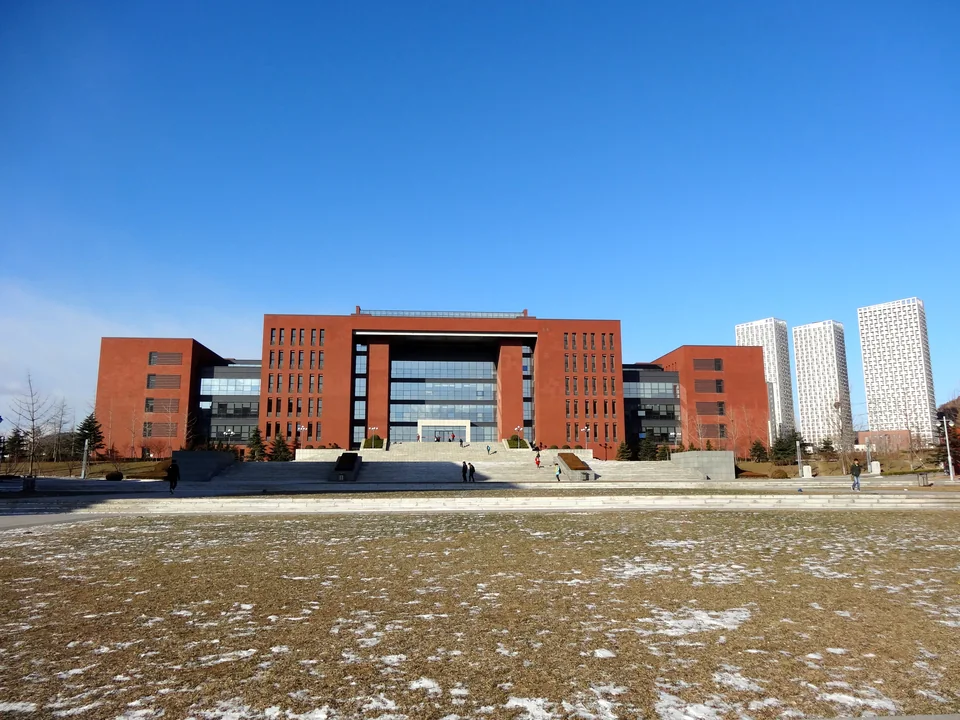
| At a glance | Details |
|---|---|
| Location | Dalian, Liaoning Province; main campus at 2 Linggong Road, Ganjingzi District, plus campuses in Dalian's Development Zone and in Panjin |
| Founded | 1949 as the engineering college of Dalian University; current name since 1988 |
| Status | Ministry of Education university; 211, 985 and Category A Double First-Class |
| Students | about 49,600, including 25,500 undergraduates |
| Ranking | THE World University Rankings 2027: 326–350 band |
| Bachelor's tuition | Chinese-taught $2,910–3,730 (CNY 19,500–25,000); English-taught $3,800 (CNY 25,500) |
| Master's tuition | Chinese-taught $3,430–4,250 (CNY 23,000–28,500); English-taught $4,180–4,400 (CNY 28,000–29,500) |
| Language | HSK 4 (180) for science, engineering, economics and management, HSK 5 (180) for humanities; TOEFL 80, IELTS 5.5 or Duolingo 100 for English-taught programmes |
| Housing | $90–270 (CNY 600–1,800) per bed per month |
Who DUT suits
DUT is a classic Ministry of Education polytechnic: mechanics, mechanical and chemical engineering, civil and hydraulic engineering, energy, materials and computing. Architecture, design, economics and management are also taught, but the engineering schools carry the university's reputation. For international students, three things stand out:
- English-taught bachelor's options, including mechanical engineering, intelligent construction, applied physics and programmes of the Leicester International Institute run with the University of Leicester;
- a broad English-taught master's offer, 26 fields from mechanics and naval architecture to chemistry, environmental engineering, software engineering and integrated circuits;
- a structured foundation year, after which students with the required CSCA scores get priority admission and a tuition discount.
Choose another university if you want medicine (DUT offers only biomedical engineering) or a humanities degree taught in English. For languages and translation, the specialist Dalian University of Foreign Languages is in the same city. If you are drawn to naval engineering and acoustics, compare DUT with Harbin Engineering University. More profiles are on our study in China page.
Ten English-taught bachelor's programmes
| Institute | Programme | Campus | CSCA papers |
|---|---|---|---|
| School of Mechanical Engineering | mechanical design, manufacturing and automation | Dalian | mathematics and physics in English |
| School of Infrastructure Engineering | intelligent construction (international class) | Dalian | mathematics and physics in English |
| DUT–Belarusian State University Joint Institute | applied physics; engineering mechanics | Dalian | mathematics and physics in English |
| Leicester International Institute | process equipment and control engineering; foundations of mathematical science | Panjin | mathematics and physics in English |
| applied chemistry; environmental and ecological engineering; pharmacy | Panjin | mathematics and chemistry in English | |
| School of Bioengineering | bioengineering (international class with BGI) | Dalian | mathematics and chemistry in English |
English-taught applicants do not sit Professional Chinese; they take mathematics plus physics or chemistry in the English version of the CSCA. The joint institute with Belarusian State University runs two English-taught bachelor's programmes and a master's in condensed matter physics. Panjin is a separate city in Liaoning, not a district of Dalian, so choosing a Leicester programme means living and studying there.
Chinese-taught bachelor's programmes
The 2026 CSCA list contains 41 Chinese-taught majors, grouped by test subjects:
| Group | Example majors | CSCA papers |
|---|---|---|
| Humanities, economics, architecture, design, sport | Chinese language and literature, philosophy, radio and television, public service administration, architecture, urban and rural planning, industrial design, business administration, finance (English intensive), English, Japanese, translation, Chinese language, sports training | Humanities Chinese, mathematics |
| Science and engineering | mathematics, applied physics, mechanical engineering (including a Japanese-intensive track), energy and power, electrical engineering, automation, electronic information, computer science, artificial intelligence, civil engineering, intelligent construction, hydropower, port and coastal engineering, engineering mechanics, aircraft design, opto-electronics, metallic materials | Science Chinese, mathematics, physics |
| Materials, biology, medical technology | material processing, functional materials, biological engineering, biomedical engineering | Science Chinese, mathematics, chemistry |
DUT's subject list names the Chinese version of the mathematics, physics and chemistry papers for Chinese-taught programmes and the English version for English-taught ones; a paper in the other language may not be accepted. The HSK requirement is level 4 with 180 points for science, engineering, economics and management, and level 5 with 180 points for humanities and languages; scores are valid for two years.
Chinese Language at the School of International Education
DUT also runs a Chinese Language bachelor's programme for international students with two tracks: business and economics (HSK 4, 180+) and international Chinese education (HSK 4, 210+, plus HSKK intermediate 60+). Applicants with the required HSK 4 are exempt from Humanities Chinese in the CSCA. The business track is the only DUT programme accepting transfers: after half a year at another university and an entrance test with HSK 4 of 200+, students can join the first-year spring semester; after a year of study with HSK 4 of 220+, they can enter the second year. Tuition is $2,910 (CNY 19,500) a year. How Chinese bachelor's degrees work in general is explained in bachelor's degrees in China.
Bachelor's requirements and documents
- non-Chinese citizenship and age 18–25; applicants under 18 need a guardian in Dalian with notarised documents;
- school certificate and transcripts for every high-school year; current final-year students submit a pre-graduation certificate and must obtain the diploma before enrolment;
- CSCA score report and language certificate;
- a personal statement and study plan in English or Chinese of at least 600 words;
- a recommendation letter from the head teacher or a teacher, with their email and phone number;
- the Foreigner Physical Examination Form plus a separate blood test for HIV, syphilis and hepatitis B and C;
- a passport valid beyond September of the entry year, with a copy of a blank visa page;
- a criminal record certificate valid for six months; at the application stage a signed DUT undertaking can stand in for it temporarily;
- proof of funds: a bank statement in the applicant's name showing at least $7,460 (CNY 50,000) for self-funded students;
- for art majors, two original works.
Anything issued in another language must come with a notarised translation. Everything is uploaded to iso.dlut.edu.cn; admitted students receive an admission letter and JW202 form, which they use to apply for an X1 study visa, as explained in our China student visa guide. See also applying to Chinese universities and the CSCA exam guide.
DUT Foundation Programme
The foundation programme is for school leavers who want a DUT bachelor's degree but do not yet speak Chinese or are not ready for the CSCA. It has two streams: science and engineering (Chinese, technical Chinese, mathematics, physics and optional chemistry) and Chinese language and arts (Chinese, Chinese for the arts, mathematics and liberal arts). Students have 34–37 hours of classes a week plus eight hours of evening study.
| Item | Rule |
|---|---|
| Eligibility | age 17–34 with a secondary-school certificate |
| September intake | one year from zero Chinese, $4,180 (CNY 28,000) |
| March intake | one semester for students with HSK 3, $2,240 (CNY 15,000); includes an interview |
| Application fee | $120 (CNY 800), not charged again for a DUT bachelor's application |
| Completion | HSK 4 plus the programme's final exams |
| Benefits | priority admission with the required CSCA scores, a 10% discount on the Chinese Language bachelor's or 5% on other programmes, scholarship recommendation for top students |
Our guide to the foundation year in China compares this format with language years elsewhere.
Chinese language courses
DUT's Chinese Language Training Center places students in seven levels from beginner to advanced; semesters last 16 weeks and start in March and September. Electives include business Chinese, HSK preparation, calligraphy, tai chi and Chinese cooking. Applicants must be 16 to 60 with a secondary-school certificate, and students with HSK 3 can join a class at any time.
| Length | Tuition | Application fee |
|---|---|---|
| One month | $580 (CNY 3,900) | $60 (CNY 400) |
| One semester | $1,270 (CNY 8,500) | $75 (CNY 500) |
| One year | $2,390 (CNY 16,000) | $75 (CNY 500) |
For a comparison across cities, see Chinese language programmes in China.
Master's degrees: 26 English-taught fields
The autumn 2027 intake has already been announced: applications run from 1 November 2026 to June 2027. You need a bachelor's degree, must be under 35, and must submit two recommendation letters from professors or associate professors and a research plan of at least 1,000 words signed by your prospective supervisor. A supervisor's acceptance letter is optional but can be obtained in advance through DUT's faculty directory.
The English-taught list for 2026 covers mechanics, aeronautical and astronautical engineering, naval architecture and ocean engineering, mechanical engineering, materials science, heating and ventilation engineering, construction management, civil engineering, hydraulic engineering, five chemistry fields, chemical engineering, safety science, biology, bioengineering, environmental engineering, computer science, biomedical engineering, business administration, condensed matter physics at the joint institute with Belarusian State University, and software engineering and integrated circuits (both at the Development Zone campus).
| Master's | Tuition per year | Language |
|---|---|---|
| Humanities, languages, social sciences | $3,430 (CNY 23,000) | Chinese, HSK 5 (180) |
| Science, engineering, economics and management | $3,650 (CNY 24,500) | Chinese, HSK 4 (180) |
| Architecture | $3,950 (CNY 26,500) | Chinese |
| Art and design | $4,250 (CNY 28,500) | Chinese |
| Humanities in English | $4,180 (CNY 28,000) | TOEFL 80, IELTS 5.5 or Duolingo 100 |
| Science, engineering, economics in English | $4,400 (CNY 29,500) | TOEFL 80, IELTS 5.5 or Duolingo 100 |
Master's programmes last three years and the application fee is $120 (CNY 800). Without a test certificate, the department may assess your English at interview or in a written test. See also master's degrees in China.
Tuition and housing costs
| Programme | Tuition per year | Application fee |
|---|---|---|
| Chinese-taught bachelor's: Chinese, foreign languages, humanities | $2,910 (CNY 19,500) | $120 (CNY 800) |
| Chinese-taught bachelor's: science, engineering, economics and management | $3,060 (CNY 20,500) | $120 (CNY 800) |
| Chinese-taught bachelor's: architecture | $3,360 (CNY 22,500) | $120 (CNY 800) |
| Chinese-taught bachelor's: art and design | $3,730 (CNY 25,000) | $120 (CNY 800) |
| English-taught bachelor's, all programmes | $3,800 (CNY 25,500) | $120 (CNY 800) |
Bachelor's rates come from the 2026 intake notices and master's rates from the 2027 notices.
Housing is charged per bed:
| Building | Room | Per month | If paid for 12 months |
|---|---|---|---|
| Nanshan Dormitory | private bedroom, shared bathroom and living room | $90 (CNY 600) | $1,070 (CNY 7,200) |
| International Student Dormitory | twin room with en-suite bathroom, shared kitchen and laundry | $180 (CNY 1,200) | $2,150 (CNY 14,400) |
| International Student Dormitory | single room with en-suite bathroom | $270 (CNY 1,800) | $3,220 (CNY 21,600) |
Stays under a month cost $12 or $18 (CNY 80 or 120) per night. For an English-taught bachelor's student in a twin room, first-year payments to the university come to about $6,070 (CNY 40,700): tuition, application fee and 12 months of housing. Food, insurance, the residence permit and flights are extra. Payment routes from Russia are covered in how to pay for studies abroad from Russia; for city comparisons see the cost of studying in China.
Scholarships
- DUT International Students Presidential Scholarship. The full award waives tuition and provides free campus housing, plus a monthly allowance of $220 (CNY 1,500) for master's and $270 (CNY 1,800) for doctoral students; the partial award waives tuition only. Bachelor's applicants (up to 25) could apply from 1 November 2025 to 30 June 2026; master's (up to 35) and doctoral (up to 40) applicants until 15 February 2026. A separate form is required, plus two recommendation letters at postgraduate level.
- Liaoning Provincial Government Scholarship. New doctoral students under 40 only, for three years, with $520 (CNY 3,500) a month; the last application window ran from 1 November to 15 February.
- Chinese Government Scholarship (CSC). DUT hosts Silk Road, High-level Postgraduate and Youth of Excellence Scheme of China scholars.
- International Chinese Language Teachers Scholarship. Covers tuition, housing and insurance and pays $370 (CNY 2,500) a month; for the international Chinese education bachelor's the deadline is 15 May.
Awards are decided by DUT's scholarship committee, the provincial government or the China Scholarship Council, depending on the programme. Other funding options are summarised in scholarships abroad in 2026.
Summer schools and short programmes
DUT runs many summer and winter schools, some aimed at Russian-speaking participants: in 2026 it announced a summer school on automotive electronics and intelligent technologies for Russian-speaking regions and a China–Russia summer camp on advanced functional materials. A short programme is a practical way to see the campus and meet staff before applying for a degree.
Common mistakes
- Taking the wrong CSCA language version. DUT's list names the Chinese version of mathematics, physics and chemistry for Chinese-taught programmes and the English version for English-taught ones.
- Applying to a humanities major with HSK 4. Humanities and language majors need HSK 5 with 180 points, except the Chinese Language bachelor's at the School of International Education.
- Forgetting the blood test. The medical form alone is not enough; a separate test for HIV, syphilis and hepatitis is required.
- Ignoring the campus. Leicester programmes are in Panjin, and the software engineering and integrated circuits master's programmes are at the Development Zone campus.
- Starting in June. The window is open until June, but the CSCA, notarisation and medical checks take months. The June CSCA session (26–27 June 2027) falls after applications close, so sit the test in November–January and keep April for a retake.
FAQ
Can I study at Dalian University of Technology in English?
Yes. Ten bachelor's programmes are taught in English: mechanical engineering, intelligent construction, applied physics and engineering mechanics at the joint institute with Belarusian State University, five Leicester International Institute programmes in Panjin, and bioengineering. There are 26 English-taught master's fields. You need TOEFL 80, IELTS 5.5 or Duolingo 100.
How much does a bachelor's degree at DUT cost?
Under the 2026 rates, tuition ranges from $2,910 (CNY 19,500) a year for Chinese-taught humanities to $3,730 (CNY 25,000) for design. All English-taught programmes cost $3,800 (CNY 25,500) a year. The application fee is $120 (CNY 800) and housing costs $90–270 a month.
Which CSCA papers do I need for DUT?
For Chinese-taught humanities, economics and architecture: Humanities Chinese and mathematics. For engineering: Science Chinese, mathematics and physics, with chemistry replacing physics for materials and biology. For English-taught programmes: mathematics plus physics or chemistry in the English version only.
Does DUT offer a foundation year?
Yes. The one-year programme from zero Chinese starts in September and costs $4,180 (CNY 28,000); a one-semester option for students with HSK 3 starts in March and costs $2,240 (CNY 15,000). Graduates with HSK 4 and the required CSCA scores get priority admission and a 5–10% tuition discount.
Can I get a DUT scholarship for a bachelor's degree?
Yes, the Presidential Scholarship is open to new bachelor's students up to 25: the full award waives tuition and provides free housing, and the partial award waives tuition only. In the last cycle the deadline was 30 June. DUT's scholarship committee decides, and admission to a programme does not automatically bring a scholarship.
How can StudyU help with a DUT application?
Choosing the programme and campus, selecting CSCA papers and language versions, checking documents, preparing the essay and recommendations, and submitting the DUT and scholarship applications are provided under an agreement with StudyU. Admission and scholarship decisions rest with Dalian University of Technology, and visa decisions with the Chinese consulate.
Sources
- DUT: 2026 Bachelor Programs (Chinese-taught) and 2026 Bachelor Programs (English-taught): requirements, documents, fees, housing, dates; attachments list the 10 English-taught programmes and CSCA subjects by major
- DUT: Chinese Language (Business) and Chinese Language (International Chinese Language Education)
- DUT: 2027 Master Program (English-taught) and 2027 Master Programs (Chinese-taught); list of 26 English-taught master's fields (attachment)
- DUT: Foundation Program
- DUT: Chinese Language Program, Long Term
- DUT: Presidential Scholarship, Liaoning Government Scholarship, International Chinese Language Teachers Scholarship
- DUT: School Introduction: history, status, enrolment, campuses
- DUT: Non-degree Programs: 2026 summer and winter schools
- Times Higher Education: Dalian University of Technology
- Official CSCA site: session dates and score release
We converted yuan at the ECB reference rate of 29 September 2026, when EUR 1 equalled USD 1.1355 and CNY 7.6117 (about USD 0.1492 per yuan), rounding to the dollar below $100 and to $10 above.
If you want to compare DUT's English-taught programmes with other Chinese engineering universities, or check whether your school certificate is enough, send us a request.
During the free initial consultation, we clarify your goal, profile, timing, and budget and identify the next realistic step.
Next steps
- Harbin Engineering University (HEU): Programmes, Fees and Admission
- CSCA Exam Guide: Subjects, 2026/27 Test Dates, Registration and Preparation
- Studying in China for international applicants
- Bachelor's Degree in China: How to Apply for the 2027 Intake
- China Student Visa: X1 vs X2, the JW202 Form, the 30-Day Residence Permit and Where to Apply
- Applying to Chinese Universities: Documents Checklist for 2027
