
Centennial College is Ontario's first public college, with five campuses across east and north Toronto. International students apply directly through the ApplyCentennial system (CAD 125 fee); diplomas require a school certificate accepted as equivalent to the Ontario Secondary School Diploma and IELTS 6.0. In 2026/27 the first year of a standard programme costs $12,640 (CAD 18,005) and of an engineering technology programme $13,460 (CAD 19,167), with per-term ancillary fees on top. Whether a diploma leads to a post-graduation work permit (PGWP) depends on its field-of-study code: Computer Systems Technology – Networking is on IRCC's list, for example, while Business Administration – Marketing is not.
Do not confuse it with Suzhou Centennial College, a separate institution in China that has its own page on Centennial's website.
| At a glance | 2026/27 details |
|---|---|
| Type | Ontario public college; designated learning institution (DLI) |
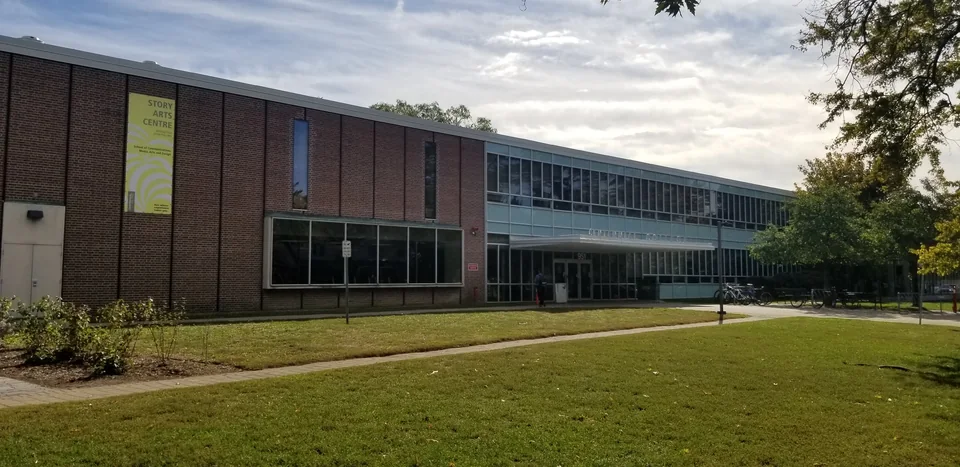
| Campuses | Progress (main, Scarborough), Morningside, Ashtonbee, Story Arts Centre, Downsview (aviation) |
| Credentials | Certificate, diploma, advanced diploma, fast-track, graduate certificate, bachelor's degree |
| How to apply | ApplyCentennial, CAD 125 ($90) fee, up to two programmes |
| English | IELTS 6.0 (5.5 per band) for diplomas; 6.5 (6.0 per band) for degrees and graduate certificates |
| Tuition | $12,640 (CAD 18,005) for diploma year one; degrees $12,900–16,010 (CAD 18,375–22,803) |
| Deposit | $1,400 (CAD 2,000), credited to tuition |
| Scholarship | $1,400–3,510 (CAD 2,000–5,000) depending on programme length |
| Residence | Centennial Place at Progress Campus, privately operated, guarantor required |
| PGWP | More than 80 programmes on the college's PGWP-aligned list |
Who Centennial suits
Centennial is an applied college: teaching happens in labs, studios and workshops, and many programmes include co-op or placements. Programmes are grouped by campus — aviation and aerospace at Downsview, automotive and engineering technology at Ashtonbee, media, journalism and design at the Story Arts Centre, and business, IT and health at Progress. Since 2024, programmes that a public college licenses to a private college no longer lead to a PGWP; Centennial states that it has no such arrangements.
Centennial fits if you:
- want to study in Toronto but cannot budget for a university at CAD 38,000–73,000 a year;
- are interested in aircraft maintenance, IT, engineering technology, media or health care;
- plan to move on to a university later with transfer credit.
If you want a university degree from day one, compare Toronto Metropolitan University. Other Toronto colleges include George Brown and Humber; see also universities in Toronto and studying in Canada.
Documents and English requirements
Certificates, diplomas and advanced diplomas require an Ontario Secondary School Diploma (OSSD) or equivalent plus senior-level English, which a test replaces for international applicants. A Russian school certificate is submitted as an equivalent: Centennial assesses it with your grades and, if needed, asks for national exam results; your admissions assistant tells you through ApplyCentennial.
What to upload:
- your school certificate with the grade transcript, or current grades if you are still at school;
- an English translation by a certified translator together with the original;
- a copy of your passport;
- for fast-track and graduate certificate programmes, your college or university diploma and transcript;
- for some programmes, a portfolio, letter of interest, résumé or an online information session.
English requirements:
| Test | Certificate, diploma, advanced diploma | Fast-track and some diplomas | Degree and graduate certificate |
|---|---|---|---|
| IELTS Academic | 6.0, bands 5.5+ | 6.5, bands 6.0+ | 6.5, bands 6.0+ |
| TOEFL iBT | 67 (reading 16+, writing 23+) | 81 (reading 19+, writing 23+) | 81 (reading 19+, writing 23+) |
| PTE Academic | 51 | 58 | 60 |
| CAEL | 60 | 60, writing 60 | 70, writing 60 |
| Cambridge English | 167–169 | 170–179 | 180 |
If your English falls short, Centennial's own English Language Learning (ELL) programme is an option: completing Level 5 with a C (60%) in all three courses meets the requirement for diplomas, and an A (80%) for graduate certificates. After admission, diploma students also take an internal placement test in English and, for some programmes, maths.
Programmes and PGWP eligibility
If you applied for your study permit on or after 1 November 2024, a non-degree programme leads to a PGWP only when its CIP code is on IRCC's list, which IRCC has frozen for 2026. Centennial shows the status on every programme page ("PGWP Aligned") and keeps a combined list that now exceeds 80 programmes.
| Example | Credential | PGWP Aligned |
|---|---|---|
| Computer Systems Technology – Networking | Advanced diploma | Yes, CIP 11.1001 |
| Business Administration – Marketing | Advanced diploma | No |
| Degrees such as Applied Information Technology | Honours degree | Field-of-study rule does not apply |
Two rules matter:
- The visa and the PGWP are separate. Centennial says a study permit can be granted for any of its full-time programmes, including those that do not lead to a PGWP, if general requirements are met. An approved permit therefore tells you nothing about a future work permit — check the list yourself before applying.
- Language for the PGWP. Diploma graduates need CLB 5 in all four skills and degree graduates CLB 7. IRCC accepts IELTS General Training, CELPIP, PTE Core, TEF and TCF Canada, but not the IELTS Academic you used for admission.
IRCC decides on the PGWP. More in working while studying and the PGWP and colleges in Canada.
Tuition fees in 2026/27
Centennial publishes base international tuition per academic year of two terms:
| Programmes | Year 1 | Year 2 | Year 3 |
|---|---|---|---|
| Most certificates and diplomas | $12,640 (CAD 18,005) | $12,280 (CAD 17,491) | $12,100 (CAD 17,237) |
| School of Engineering Technology and School of Transportation | $13,460 (CAD 19,167) | $13,070 (CAD 18,619) | $12,880 (CAD 18,348) |
Degree prices vary: International Business is $12,900 (CAD 18,375) a year for all four years, Public Relations Management $15,220 (CAD 21,676) in year one and Applied Information Technology $16,010 (CAD 22,803) in year one. The BScN nursing degree costs $26,670 (CAD 37,990) a year.
College and student association ancillary fees are added each term and vary by programme. The largest item for international students is health insurance at CAD 652.64 ($460) per term. For wider comparisons, see the cost of studying in Canada.
How to apply and get your PAL
- Apply in ApplyCentennial. Choose up to two programmes, complete the form, upload documents and pay the non-refundable CAD 125 fee. Centennial recommends applying 4–6 months before the start. Intakes are in September, January and May; on 2 October 2026 the application page listed January and May 2027 intakes only (September 2027 was not yet announced), and each programme page shows its dates.
- Letter of Acceptance (LOA). It states the deposit deadline.
- CAD 2,000 deposit. It goes towards tuition. For a stronger permit application, the college suggests paying the full first year.
- PAL. After the deposit, Centennial requests the provincial letter for you. PALs for programmes starting in summer 2027 will be issued from November 2026.
- Study permit. Submit the LOA, PAL and payment receipt with your IRCC application. Centennial gives free access to BorderPass, a service that helps prepare study and later work permit applications.
- After approval. Upload the approval to ApplyCentennial, pay the first term, take the placement test and register through the headSTART programme.
Scholarships
International students starting in September 2026 or January 2027 receive an Entrance Scholarship based on programme length:
| Programme length | Amount |
|---|---|
| 1 year | $1,400 (CAD 2,000) in year one |
| 2 years | $2,110 (CAD 3,000): CAD 2,000 in year one, CAD 1,000 in year two |
| 3 years | $2,810 (CAD 4,000) |
| 4 years | $3,510 (CAD 5,000) |
It is not available for a second Centennial programme, for students exempt from international fees, or for ELL-only students. The college decides on the award, and conditions for intakes after January 2027 will be published separately. More funding sources are in scholarships in Canada.
Housing: Centennial Place and renting
Centennial's only residence is Centennial Place at Progress Campus, shared with University of Toronto Scarborough students. It is run by a private operator, so the terms resemble a lease:
- agreements end in December, April, May or August, with 4, 8 or 9 monthly payments;
- a guarantor over 18 is required, usually a relative, and can live outside Canada;
- applying costs a refundable $350 (CAD 500) security deposit and a non-refundable $70 (CAD 100) fee;
- rooms are allocated first come, first served, and a signed agreement does not by itself mean a room.
The operator shares current room prices only on request. If there is no space, Centennial Housing Service helps with off-campus searches and runs workshops. Our guide to studying in Canada as a Russian citizen has more on living costs.
Study permit for Russian citizens
College programmes are longer than six months, so you need an IRCC study permit and an Ontario PAL. Ontario had 104,780 PAL application spaces for 2026; IRCC sets the 2027 cap in fall 2026, and students starting in 2027 will receive PALs from it.
For applicants from Russia:
- Funds. From 1 September 2026: first-year tuition, travel and $16,460 (CAD 23,448) for living costs. IRCC also checks that funds can leave a country with currency controls. TD's GIC is not available to residents of Russia.
- Passport and biometrics. Since 28 January 2026, Canada's visa application centres in Russia no longer accept passports or documents, according to IRCC's list of visa application centres. When IRCC asks for your passport, you submit it at a centre outside Russia that accepts documents, for example in Yerevan, Tbilisi, Almaty or Astana. Biometrics are given after IRCC's instruction letter; before booking, check on the chosen centre's website which services it currently offers.
- Medical exam. Mandatory for residents of Russia and Kazakhstan, with an IRCC panel physician.
- Fees. Permit $110 (CAD 150), biometrics $60 (CAD 85).
- Work. Up to 24 hours a week off campus during terms.
See the Canada study permit guide and how to pay for studies abroad from Russia.
After college: moving to a university
Several diplomas lead to university study with transfer credit. Centennial's programme pages list routes to institutions such as Toronto Metropolitan University, University of Toronto Scarborough, McMaster, Trent, Nipissing and Carleton; at Progress Campus, for instance, you can complete a Nipissing University commerce degree. The receiving university decides on admission and how much credit you get.
Recognition in Russia matters too: Canadian colleges are not on Order No. 186-r, so a Centennial diploma goes through Rosobrnadzor's recognition procedure. Degrees from several Canadian universities, including Carleton and Toronto, are recognised without it.
Centennial or other colleges
| Criterion | Centennial (Toronto) | Fanshawe (London, Ontario) | Durham College (Oshawa) |
|---|---|---|---|
| Diploma year one, 2026/27 | $12,640 (CAD 18,005) before ancillary fees | About $13,870 (CAD 19,761) with fees | About $13,590 (CAD 19,356) with fees |
| Application fee | CAD 125 | CAD 100 | CAD 100 |
| Scholarship | CAD 2,000–5,000 | CAD 2,000 | CAD 2,000 plus CAD 1,000 in year two |
| Residence | Private operator, guarantor required | College residence, after visa approval | From CAD 7,250 for 8 months |
| City | Major metropolis | City of about 500,000 | Toronto suburb |
Application plan
- 9–12 months ahead. Choose a programme and check its "PGWP Aligned" line and English requirements.
- 7–9 months ahead. Take IELTS Academic or another test and have your certificate translated by a certified translator.
- 4–6 months ahead. Apply in ApplyCentennial and pay the fee.
- After the LOA. Pay the deposit or the full year, wait for the PAL, apply to Centennial Place or start looking for a rental.
- Right after the PAL. Medical exam, IRCC application, biometrics after IRCC's instruction letter.
- After approval. Passport to a visa centre outside Russia, then upload the approval and pay the first term.
Common mistakes
- Reading an approved permit as a sign of a future PGWP. Permits are issued for programmes off the list too; check the code yourself.
- Forgetting per-term fees. Published tuition excludes insurance and ancillary fees.
- No guarantor for residence. Centennial Place will not sign an agreement without one.
- Applying a month before the start. The college asks for 4–6 months, and a visa from Russia also involves a trip abroad with your passport.
- Taking IELTS Academic for the PGWP. The work permit needs General Training or another IRCC-listed test.
FAQ
Can I enter Centennial College straight after Year 11?
Yes. For certificates, diplomas and advanced diplomas, Centennial accepts a foreign school certificate as equivalent to the Ontario diploma, provided your English is sufficient (usually IELTS 6.0). Centennial's admissions team decides and may request extra documents through ApplyCentennial.
How much does Centennial cost for international students?
In 2026/27 the first year of a standard programme costs $12,640 (CAD 18,005), engineering technology $13,460 (CAD 19,167), and degrees $12,900–16,010 for year one. Per-term ancillary fees come on top, including health insurance of CAD 652.64.
Do all Centennial programmes qualify for a PGWP?
No. Non-degree programmes qualify only if their field-of-study code is on IRCC's list, shown as "PGWP Aligned" on each programme page. Degrees are exempt from that rule, but everyone needs a language test. IRCC makes the decision.
Does Centennial College have residence?
Yes, Centennial Place at Progress Campus. A private operator runs it: you need a guarantor, a CAD 500 deposit and a CAD 100 fee, and rooms go in order of application. The residence operator, not the college, decides on allocation.
What scholarships does Centennial offer international students?
An Entrance Scholarship of CAD 2,000–5,000 depending on programme length for students starting in September 2026 or January 2027. No separate application is needed, but the college decides on the award and its conditions.
Can I transfer from Centennial to a university?
Yes, several diplomas have transfer routes with credit, for example to Toronto Metropolitan University, Carleton or Nipissing University. The receiving university sets the credit and makes the admission decision, so check its terms before choosing your programme.
Sources
- Centennial: international tuition 2026/27, ancillary fees — checked 2 October 2026
- Centennial: how to apply, required documents, FAQ
- Centennial: English proficiency
- Centennial: changes to international student policies, PGWP and PAL
- Programme pages: Computer Systems Technology – Networking, Business Administration – Marketing
- Centennial: entrance scholarships
- Centennial Place: before you apply, Centennial Housing Service
- IRCC: PGWP eligibility, field of study, proof of funds, PAL/TAL, 2026 cap allocations, visa application centres, fees, medical exams by country
- Russian Government Order No. 186-r of 30 January 2023, as amended on 19 February 2026
US dollar figures use the ECB reference rate of 1 October 2026 (CAD 1 = $0.7020), rounded to $10. All data checked on 2 October 2026.
If you want to work through your route, send a request: document preparation and submission are provided under an agreement with StudyU, and the college makes the admission decision.
During the free initial consultation, we clarify your goal, profile, timing, and budget and identify the next realistic step.
Next steps
- Toronto Metropolitan University (TMU): Admission and Fees for International Students
- Carleton University: Admission and Fees for International Students
- Fanshawe College (Canada): Admission, Fees and PGWP for International Students
- Durham College (Oshawa, Canada): Admission and Fees — Not Durham University
- Studying in Canada for international applicants
- George Brown College
