
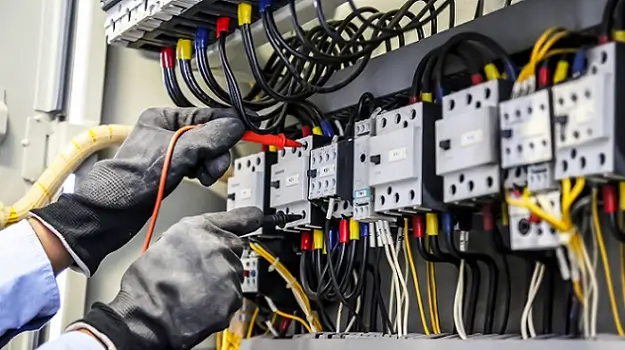
Electrical Engineering at a glance
Compare mathematics and circuit theory with electronics, power systems and control. Check laboratory access, design assignments and the technical electives available in the current curriculum.
Use the curriculum and university options below to build a shortlist. Confirm the exact degree level, teaching language, course sequence and practical requirements with each university; similar programme names do not make the courses interchangeable.
Interested in the discount available to you?
A personal strategy, requirement checks, selection of agreed options, document preparation, applications, and support are provided under an agreement with StudyU.
Study to Become an Electrical Engineer in Turkey
Turkish universities teach electrical and electronics engineering in English and Turkish. You need a high-school diploma and a language certificate; YÖS is not required everywhere. The degree usually takes 4 years; check professional recognition in the country where you plan to work. Under an agreement with StudyU, we select agreed university options within budget and support the application. The university makes the admission decision.
Study plan
The degree takes four years. The list below shows a typical sequence from foundation courses to electives and a graduation project; course titles, order and credits differ by university, so compare it with the published curriculum of each programme you shortlist.
- Calculus and linear algebra
- Physics I–II
- Introduction to programming
- Circuit analysis
- Differential equations
- Analogue and digital electronics
- Signals and systems
- Electromagnetics and electrical machines
- Microprocessors and embedded systems
- Power systems and power electronics
- Communications and RF, or control and robotics electives
- Team senior design project: design, build, measure and document a device
- Internship (staj); its length and who finds the placement are set by each university
Career opportunities
Your first role depends on the electives you choose: power, control, communications, electronics or embedded systems. Signing off designs as a chartered or licensed engineer requires registration in the country where you work.
Power systems engineers work for utilities, grid operators and renewable-energy developers on generation, networks and protection.
Automation and control engineers program PLCs and control loops in factories and process plants.
Embedded systems engineers design circuit boards and write microcontroller firmware for devices.
Telecommunications and RF engineers plan and test radio, mobile and data networks.
Electronics design and test engineers develop and check products for automotive and electronics manufacturers.
Is this your path?
A strong fit if you…
- are strong in mathematics and physics and accept that they fill most of the first two years;
- want to see theory work on real equipment: oscilloscopes, boards and machines;
- are ready to write lab reports with calculations, measurements and errors.
Slow down if you…
- mainly want to write software (compare Computer Engineering);
- dislike laboratory work and detailed reports;
- plan to sign off engineering designs abroad but have not checked the professional body’s recognition rules there.
Everyday student experience
What happens outside lectures depends on the university, so ask the department what it actually runs: laboratory and robotics projects, IEEE student branches where the university has one, and engineering competitions.
Turkish engineering curricula usually include compulsory summer internships (staj): ask how many working days are required, whether the university helps find a placement and whether a placement in your home country counts. For a semester abroad, ask which Erasmus+ partner universities the department has and whether international degree students can apply; a visa for the host country is a separate step.
Additional guide to programme language
For Electrical Engineering, students should compare both the track title and the language used in lab work: electrical, electronics and electrical-electronics can lead to different curricula. Bahcesehir lists Electrical and Electronics Engineering in English, while Topkapi lists English and Turkish options for Electrical-Electronics Engineering.
Examples to check with StudyU: Bahcesehir University: Electrical and Electronics Engineering (Bachelor, English); Topkapi University: Electrical-Electronics Engineering (Bachelor, English, Turkish).
Universities offering Electrical Engineering
Compare listed universities by degree, teaching language and annual tuition shown below.
| University | Degree | Language | Tuition |
|---|---|---|---|
| Biruni University | Bachelor | Turkish | $4 000/yr |
| Yeni Yuzyil University | Bachelor | Turkish | $4 000/yr |
| Isik University | Bachelor | English | $4 800/yr |
| Ankara Medipol University | Bachelor | English | $5 000/yr |
| Okan University | Bachelor | English | $5 000/yr |
| Uskudar University | Bachelor | English | $5 000/yr |
| Halic University | Bachelor | English | $5 200/yr |
| Atlas University | Bachelor | English | $5 550/yr |
| Altinbas University | Bachelor | English | $6 000/yr |
| Medipol University | Bachelor | English | $6 000/yr |
| Mudanya University | Bachelor | English | $6 000/yr |
| Mudanya University | Bachelor | Turkish | $6 000/yr |
| Topkapi University | Bachelor | Turkish | $6 000/yr |
| Topkapi University | Bachelor | English | $6 500/yr |
| Nisantasi University | Bachelor | English | $7 481/yr |
| Istinye University | Bachelor | English | $8 000/yr |
| Yasar University | Bachelor | English | $8 000/yr |
| Antalya Bilim University | Bachelor | English | $8 300/yr |
| Bahcesehir University | Bachelor | English | $9 000/yr |
| Gelisim University | Bachelor | Turkish | $9 000/yr |
| Gelisim University | Bachelor | English | $9 500/yr |
| TED University | Bachelor | English | $11 800/yr |
| Bilgi University | Bachelor | English | $12 000/yr |
| TOBB University of Economics and Technology | Bachelor | Turkish | $12 000/yr |
| Kadir Has University | Bachelor | English | $20 000/yr |
| Ozyegin University | Bachelor | English | $25 000/yr |
| Sabanci University | Bachelor | English | $36 500/yr |
| Uskudar University | Master | English | $5 700/yr |
| Halic University | Master | Turkish | $6 000/yr |
| Yasar University | Master | English | $7 200/yr |
| Atlas University | Master | English | $7 415/yr |
| Istinye University | PhD | English | $15 000/yr |
| Yasar University | PhD | English | $16 000/yr |
| Sabanci University | PhD | English | $36 500/yr |
| Bahcesehir University | PhD | English | $40 000/yr |
Ready to study electrical engineering in Turkey?
During the free initial consultation, we clarify your goal, profile, timing, and budget and identify the next realistic step.
Get a consultationQuestions and answers
To become an electrical engineer in Turkey you need a high-school diploma, a language certificate and denklik (recognition of your previous education). Some universities ask for the YÖS or SAT exam. Under an agreement with StudyU, a consultant can compare universities within budget, help prepare documents and check published scholarship terms. Each university decides admission and confirms individual scholarship terms; funding bodies decide their awards.
Many Turkish universities offer programs in English. Programs in Turkish require a TÖMER certificate. Exact requirements depend on the university.
Compare current vacancies or published pay scales for the exact role, seniority and location you are considering. Check the required language, work authorisation and professional registration alongside compensation. A degree alone does not establish a salary or job offer. Personalised salary research is provided under an agreement with StudyU.