
Berlin has three large research universities — Freie Universität (FU), Humboldt-Universität (HU) and Technische Universität (TU Berlin) — plus the medical university Charité, the University of the Arts (UdK), several public universities of applied sciences and private schools such as ESMT, Hertie School and Bard College Berlin. Public institutions in Berlin charge no tuition to anyone, including students from outside the EU. The only compulsory payment is the semester contribution: for winter 2026/27 it is $428–433 (€375–380), including a transit pass valid across Germany. The DAAD International Programmes catalogue lists 115 English-only master's programmes and 30 English-only bachelor's programmes at Berlin institutions.
Below you will find how Berlin's institutions differ, where to look for English-taught programmes, what contributions and student housing cost, how admission works and which mistakes most often cost applicants a place. Data checked on 23 September 2026; dollar amounts use the ECB rate for that day. If you are still comparing cities, start with our overview of universities in Germany and our Germany study guide.
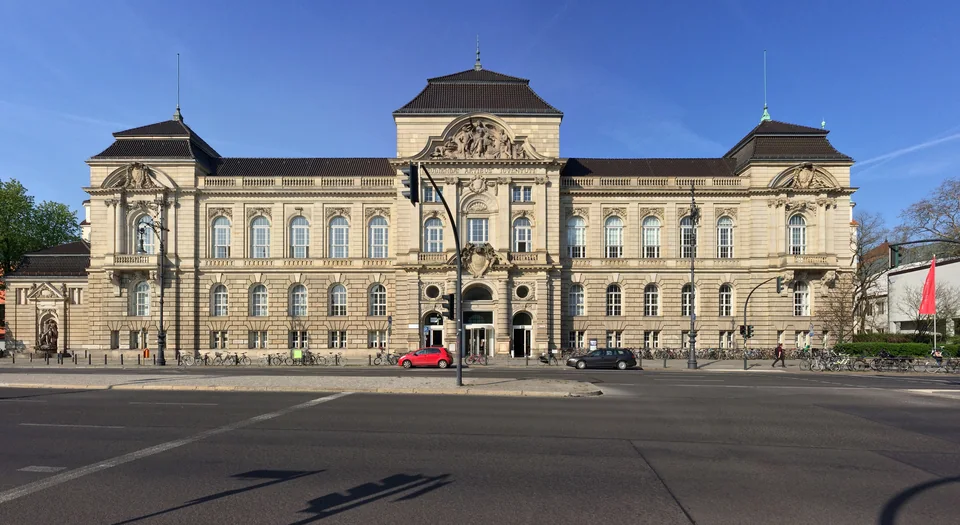
Berlin for students: five facts that shape the decision
| What | In Berlin | Why it matters |
|---|---|---|
| Tuition at public institutions | None, for all nationalities | In Baden-Württemberg, at TUM and at Hochschule München, non-EU students pay $571–6,847 per semester |
| Semester contribution, winter 2026/27 | FU $430 (€376.80), TU Berlin $433 (€379.06), HTW Berlin $428 (€375.30), HWR Berlin $433 (€379.77) | Includes the Deutschlandsemesterticket at $259 (€226.80) |
| Excellence status | The Berlin University Alliance (FU, HU, TU Berlin) keeps federal Excellence funding from 2027 | A sign of research strength, not of easy admission |
| English-only programmes | 200 international programmes, including 115 English-only master's and 30 English-only bachelor's | DAAD catalogue, September 2026 |
| Student residences | Rooms from $375 to $485 (€329–425) per month; waiting time at the residences we checked: "more than 18 months" | Most newcomers rent privately in their first year |
The big four: FU, HU, TU Berlin and Charité
| Institution | Academic profile | Status | What international applicants should know | StudyU profile |
|---|---|---|---|---|
| Freie Universität Berlin (FU) | Comprehensive: social and political sciences, humanities, natural sciences, economics, law | U15, Berlin University Alliance; 98th in QS 2027 | Main campus in Dahlem, south-west Berlin; runs a Studienkolleg | FU Berlin |
| Humboldt-Universität zu Berlin (HU) | Comprehensive: humanities and social sciences, natural sciences, agricultural sciences, law, economics | U15, Berlin University Alliance | Historic main building on Unter den Linden; science campus in Adlershof | HU Berlin |
| Technische Universität Berlin | Engineering, computer science, natural sciences, architecture, economics and management | TU9, Berlin University Alliance | Main campus in Charlottenburg; strict subject-credit checks for master's programmes | — |
| Charité — Universitätsmedizin Berlin | Medicine, dentistry, health sciences | Joint medical faculty of FU and HU | Medical degrees are taught in German and follow special admission rules | Medicine in Germany |
Choosing between FU and HU on "prestige" makes little sense: both belong to U15 and to the same excellence alliance. The programme itself decides. Open the module handbook (Modulhandbuch) and compare compulsory courses, the share of seminars and the size of the thesis.
TU Berlin is the only technical university of the three. If you are heading for mechanical or electrical engineering, or computer science with an engineering focus, it is Berlin's main option among research universities.
Universities of applied sciences in Berlin
Universities of applied sciences (Hochschulen für angewandte Wissenschaften, HAW) teach through projects and practical semesters. Berlin's public HAWs charge no tuition either.
- HTW Berlin (Hochschule für Technik und Wirtschaft): engineering, computer science, business, design. Contribution for winter 2026/27: $428 (€375.30).
- Berliner Hochschule für Technik (BHT): engineering, computer science, architecture, life sciences.
- HWR Berlin (Berlin School of Economics and Law): economics, management, law, public administration. Contribution for winter 2026/27: $433 (€379.77).
- Alice Salomon Hochschule (ASH Berlin): social work, health, early childhood education.
A HAW suits students who want to join a company after graduating rather than pursue research. English-taught programmes are rarer than at universities but exist in business and computing.
Art and music schools
The University of the Arts (Universität der Künste, UdK) teaches fine art, music, design, architecture and performing arts. Berlin also has the Hanns Eisler School of Music, the Ernst Busch Academy of Dramatic Arts, the German Film and Television Academy (dffb) and the Barenboim-Said Akademie.
Admission is by portfolio and audition, and deadlines often come earlier than at other institutions. German requirements depend on the programme; the performing arts nearly always need it.
Private institutions in Berlin
Berlin's private sector is large, and here you can start even a bachelor's degree in English. Costs are far above the public sector.
| Institution | Offer | Cost | Comment |
|---|---|---|---|
| Bard College Berlin | Liberal arts bachelor's in English | $31,380 (€27,500) per year without housing; $43,647 (€38,250) with housing and weekday meals | 2026/27 rate; housing during breaks is extra. Bard College Berlin is part of Bard College, which Russia designated an “undesirable organisation” in 2021; Russian citizens should take this into account. |
| ESMT Berlin | Master's in management and MBA | Fees for the September 2027 intake have not yet been published | The school advises budgeting about $1,369 (€1,200) per month for living costs |
| Hertie School | Master's in public policy and international affairs | Fees are listed on each programme page | Private school, programmes in English |
Before applying to any private institution, check its state recognition (staatlich anerkannt) in the HRK's Hochschulkompass database.
English-taught programmes in Berlin
The DAAD catalogue lists 200 international programmes at Berlin institutions, including 115 English-only master's and 30 English-only bachelor's programmes. The bachelor's picture is lopsided: 26 of the 30 are at private institutions (SRH, Hochschule Fresenius, Bard College Berlin, ISM), and the only public ones listed are at HTW Berlin and HWR Berlin. The catalogue contains only programmes that institutions have chosen to describe for international applicants, so always confirm details on the programme page.
How to search:
- Filter by city (Berlin), degree and language (English only) in DAAD International Programmes or in the HRK's Hochschulkompass.
- Add the institution-type filter to compare universities and HAWs separately.
- For each programme, open the university website and note degree requirements, language threshold, deadline and application channel.
English-taught bachelor's places at Berlin's public institutions are scarce. Without German, the realistic options are a private institution or a bachelor's degree at home followed by a Berlin master's. See our guide to master's degrees in Germany in English.
What studying and living in Berlin costs
Semester contribution for winter 2026/27:
| Institution | Contribution | Breakdown |
|---|---|---|
| FU Berlin | $430 (€376.80) | Student services $95 (€85), administration $55 (€50), student government $11 (€10), transit pass $259 (€226.80), social fund $6 (€5) |
| TU Berlin | $433 (€379.06) | Administration $55 (€50), student services $95 (€85), transit pass $259 (€226.80), student government fees |
| HTW Berlin | $428 (€375.30) | Administration $55 (€50), student services $95 (€85), transit pass $259 (€226.80) and other fees |
| HWR Berlin | $433 (€379.77) | Administration $55 (€50), student services $95 (€85), transit pass $259 (€226.80) and other fees |
Late re-registration adds $23 (€19.94).
Housing. Residences run by studierendenWERK BERLIN are the cheapest option but not a quick one. At Danckelmannstraße a room costs $375–439 (€329–385) per month; at Dauerwaldweg a room costs $398–485 (€349–425). For both, the waiting time is listed as more than 18 months. Apply as soon as you decide to come, and plan a room in a shared flat (WG) or temporary housing for your first months.
Visa minimum. German missions ask for proof of $13,584 (€11,904) per year, or $1,132 (€992) per month. That is the visa floor, not a Berlin budget: ESMT, for example, tells its master's students to plan about $1,369 (€1,200) per month. See our guide to the blocked account in Germany.
Which Berlin institution fits your goal?
| Your goal | Where to start | What to check |
|---|---|---|
| Engineering or computer science, with research in mind | TU Berlin; science programmes at HU and FU | Credit requirements in maths and your subject |
| Engineering or computer science with a practical focus | HTW Berlin, BHT | Practical semester, language of the programme |
| Political science, international relations, sociology | FU, HU, Hertie School | Language, essay and experience requirements |
| Economics and management | FU, HU, HWR, ESMT | Private-school fees; GMAT or GRE requirements |
| Art, music, design | UdK and specialist schools | Portfolio, audition, early deadlines |
| Medicine | Charité | German language and school-certificate recognition |
| No directly recognised school certificate | Studienkolleg at FU Berlin or TU Berlin | Entrance test and the German level the college requires |
How to apply to a Berlin university
After secondary school. If your school certificate does not give direct access, the route runs through Studienkolleg and its final exam (Feststellungsprüfung), or through study at a recognised university at home. In Berlin, FU and TU run a Studienkolleg. See our guide to Studienkolleg in Germany.
Master's programmes. FU lets you start a master's before graduating if you have completed two-thirds of your bachelor's coursework and finish the rest by the end of your first semester. Your final grade must appear clearly on your degree certificate or transcript; FU does not calculate it and does not accept estimated grades.
Channel and deadlines. Many programmes receive international applications through uni-assist, which charges $86 (€75) for the first programme and $34 (€30) for each additional one in the same semester. For many courses the winter-semester deadline is 15 July, but master's programmes often close earlier. See our guide to applying through uni-assist.
Visa. After your admission letter: blocked account, health insurance and a visa appointment. See our guide to the German student visa.
The university decides on admission, the German mission on your visa, and studierendenWERK BERLIN on residence places.
Mistakes that cost applicants a Berlin place
- Counting on a residence as your main option. With waits of over a year and a half, it rarely solves your first semester.
- Confusing free tuition with cheap living. The contribution is modest, but rent takes most of a Berlin budget.
- Choosing between FU and HU by name. Modules, language and requirements decide.
- Applying in the last week. uni-assist recommends at least eight weeks, and checks usually take four to six.
- Not checking the language of every semester. An English-taught master's may include German-language electives; the curriculum shows this.
- Overlooking a private school's status. A nice campus does not replace state recognition.
FAQ
Public institutions in Berlin charge no tuition to EU or non-EU students. Each semester you pay a contribution: for winter 2026/27 it is $428–433 (€375–380) at FU, TU Berlin, HTW and HWR, including a transit pass. Private institutions charge fees.
There is no official Berlin ranking. In QS 2027, FU Berlin is the highest-ranked Berlin university (98th). FU, HU and TU Berlin share excellence status as an alliance. For a specific subject, comparing programmes tells you more than overall ranks.
Yes, especially at master's level: the DAAD catalogue lists 115 English-only master's programmes at Berlin institutions. There are 30 English-only bachelor's programmes, 26 of them at private institutions.
A room in a studierendenWERK BERLIN residence costs about $375–485 (€329–425) per month, but the waiting time at the residences we checked exceeds 18 months. Private rentals cost more. The visa minimum is $1,132 (€992) per month.
It depends on whether your school certificate gives direct access. If not, you need Studienkolleg (in Berlin at FU and TU) or successful study at a university at home.
TU Berlin is a technical research university, a TU9 member that awards doctorates. HTW Berlin is a university of applied sciences focused on practice and company projects. Both are public and charge no tuition.
Sources
- DAAD International Programmes, Berlin filter (DAAD has been on Russia's list of undesirable organisations since February 2026) and HRK Hochschulkompass — checked 23 Sep 2026
- Semester contributions: FU Berlin, TU Berlin, HTW Berlin, HWR Berlin — checked 23 Sep 2026
- DFG: Universities of Excellence decision, 11 March 2026 — checked 23 Sep 2026
- TU9 and German U15 — checked 23 Sep 2026
- German Consulate General Vancouver: QS 2027 results — checked 23 Sep 2026
- studierendenWERK BERLIN residences, Danckelmannstraße, Dauerwaldweg — checked 23 Sep 2026
- FU Berlin: master's applications and Studienkolleg — checked 23 Sep 2026
- Bard College Berlin: 2026/27 fees and ESMT Berlin: fees and financing — checked 23 Sep 2026
- uni-assist: fees and deadlines — checked 23 Sep 2026
- German Foreign Office: proof of funds — checked 23 Sep 2026
- Exchange rate: ECB, 23 Sep 2026: €1 = $1.1411
Next steps
- Blocked Account in Germany 2026: Amount, Opening Steps and Alternatives
- Master's in Germany in English: How to Find a Programme, Which Tests You Need and What It Costs
- Studying Medicine in Germany as a Non-EU Applicant: Quotas, Selection, TMS, German C1 and Approbation
- Applying to German Universities: uni-assist, VPD and hochschulstart Step by Step
- Studying in Germany for international applicants
- German Student Visa 2026: Documents, Timing and Where to Apply
