
To get a German student visa you must show $1,132 (€992) for every month of study, which means $13,584 (€11,904) for the first year. Most applicants park this money in a blocked account (Sperrkonto): the money stays yours, but after arrival you can only withdraw up to $1,130 (€992) a month. If a blocked account does not work for you, German missions also accept a formal declaration of commitment (Verpflichtungserklärung) or a scholarship, and the three can be combined. Applicants from Russia should note that the German Embassy in Moscow no longer accepts statements from Russian bank accounts.
This guide explains where the $1,130 (€992) figure comes from and why it may rise in 2027, how to compare providers, what to do in which order, and how to get your money back if plans change. Figures were checked on the websites of the German Federal Foreign Office and the German missions in Moscow, Astana and Tashkent on 23 September 2026.
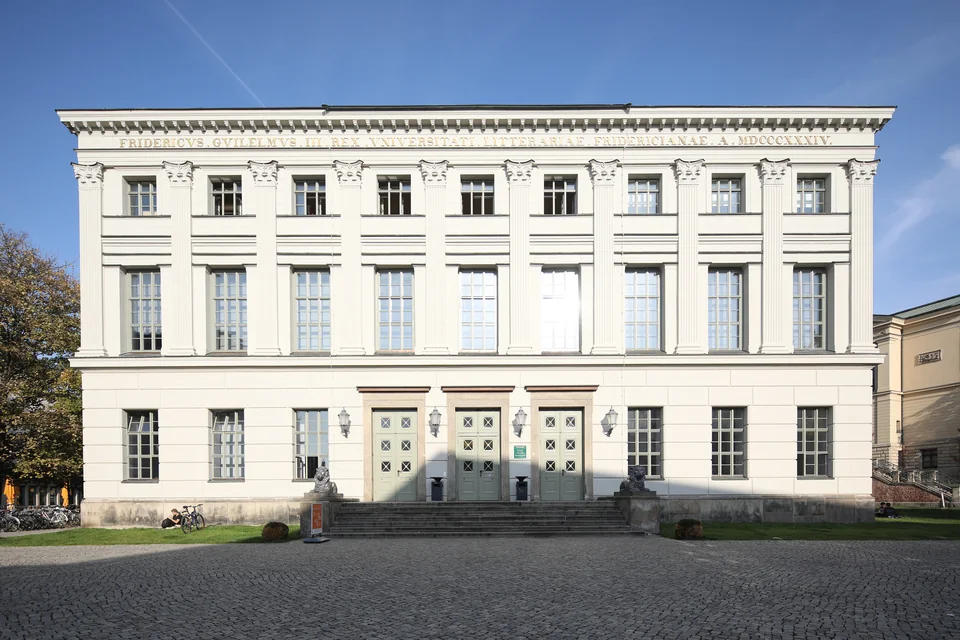
How much you need to block in 2026
| Purpose of stay | Monthly limit | Period | Total |
|---|---|---|---|
| Degree studies, Studienkolleg or a preparatory language course with admission (Section 16b Residence Act) | $1,132 (€992) | First year of study | $13,584 (€11,904) |
| Study-applicant visa: invitation to an entrance exam, no admission yet (Section 17) | $1,245 (€1,091) | Length of stay, 9 months maximum | $11,204 (€9,819) for the full 9 months |
Provider fees are paid on top. If your stay is shorter than a year, the account is set up for the actual period; you can also block money for longer, for example 18 months × $1,130 (€992).
The visa amount is a minimum for living costs, not your full budget. Semester contributions, tuition where it applies and the first weeks after arrival come on top — see our guide to tuition-free study in Germany. For multi-year programmes the embassy only needs proof for year one, but the Moscow embassy's checklist explicitly asks you to explain how the following years will be funded.
Where $1,130 (€992) comes from, and why it may change
The visa requirement follows the maximum rate of BAföG, Germany's state student grant, for a student living away from their parents:
| BAföG component | Per month |
|---|---|
| Basic needs | $542 (€475) |
| Housing | $434 (€380) |
| Health insurance | $116 (€102) |
| Long-term care insurance | $40 (€35) |
| Total | $1,132 (€992) |
On 12 August 2026 the German cabinet approved a BAföG reform. Under the draft, the housing component rises to $502 (€440) from the summer semester 2027 and basic needs to $574 (€503) from the winter semester 2027/28; the insurance supplements are also set to rise. The law is not yet in force, and the new visa figure is announced separately by the Foreign Office and missions. If you apply for a visa in spring or summer 2027, check the amount on your embassy's website right before you transfer the money.
How a blocked account works
- The account is in your name. Neither the embassy nor the foreigners' authority (Ausländerbehörde) can take money out of it.
- When you open it, you name the beneficiary of the block (Sperrbegünstigter): the embassy handling your visa before entry, the foreigners' authority after entry. The block can only be lifted with that authority's consent.
- Before you arrive, the money is inaccessible. In Germany you activate the account, and the provider transfers no more than the monthly limit to your current account.
- For the visa you need a blocking confirmation (Sperrbestätigung) showing the deposited amount and the monthly limit. The German missions in Kazakhstan state that a confirmation without both figures is not sufficient.
- A funded account proves money, not eligibility. The consulate still assesses admission, language skills, motivation and the rest of your file.
Other ways to prove financial resources
The missions in Moscow, Astana and Tashkent list the same three options and allow combinations.
| Option | What it is | Best for | Limits |
|---|---|---|---|
| Blocked account | Account with a German bank or a provider licensed for banking in Germany, with a monthly withdrawal limit | Almost everyone | Fees; time for the transfer and source-of-funds checks |
| Formal declaration of commitment (Sections 66–68 Residence Act) | A person living in Germany undertakes to cover your costs; their local foreigners' authority checks their income and issues the document | Applicants with a relative or friend in Germany who earns enough | Must be under 6 months old when you apply; purpose must read "Studium" |
| Scholarship | Award letter stating amount and duration | Holders of recognised scholarships | If it is below $1,130 (€992) a month, top up with a blocked account or declaration |
A regular bank statement from home is not listed as an option by these three missions. Which scholarships actually reach the visa threshold is covered in our guide to scholarships in Germany.
How to choose a provider
There is no official list of approved providers any more: the Federal Foreign Office removed it in mid-2022 and takes no responsibility if a provider lets you down. Compare providers on five points:
- Will they accept you? Providers check your passport, your country of residence and the sending bank separately; a working login does not mean your payment will be credited. Ask support about all three in writing and keep the reply.
- Total cost. Usually a set-up fee plus a monthly fee. Expatrio, for example, charged $136 (€119) to open and $10 (€9) a month on 23 September 2026. Sending and intermediary banks add their own charges.
- Time to confirmation. Registration takes minutes; the visa document is issued only after the money arrives. Expatrio quotes 3–5 business days for international transfers, sometimes up to 14. Source-of-funds checks can add more.
- Where payouts go. Some providers bundle a current account; others need your IBAN at a German or European bank.
- Closing and refunds. What documents they need after a refusal, which fees are non-refundable and where the money goes if a relative paid.
Well-known providers include Expatrio, Fintiba and Coracle. Their fees and acceptance rules change, so check the provider's own site on the day you transfer.
Step-by-step timeline
These lead times are our recommendation with a safety margin, not an official rule.
| When | What to do |
|---|---|
| As soon as you know your visa date | Check the amount and checklist on your embassy's website |
| 2–3 months before the appointment | Pick a provider and get written confirmation that it accepts your citizenship, country and payment route |
| 6–8 weeks before the appointment | Register, pass identity verification, receive payment instructions |
| Right after | Transfer the amount plus fees; prepare source-of-funds documents |
| Once funds arrive | Download the blocking confirmation; check name, amount, monthly limit and period |
| After entry | Register your address, activate the account, add the payout account |
Country notes: Russia, Kazakhstan, Uzbekistan
| Russia | Kazakhstan | Uzbekistan | |
|---|---|---|---|
| Where to apply for a national visa | Only the Embassy in Moscow, including residents of the St Petersburg, Yekaterinburg, Novosibirsk and Kaliningrad consular districts; appointments via RK-Termin | TLScontact visa centres, in the district where you actually live | TLScontact visa centre since 1 July 2025 |
| Accepted proof in the checklist | Blocked account, formal declaration, scholarship | Scholarship, declaration, blocked account | Scholarship, declaration, blocked account |
| Watch out for | Russian bank statements are not accepted; the embassy knows of no Russian bank whose blocked account meets visa rules | Confirmation must state the amount and monthly limit | Funding must cover the whole first year; for a fee-paying private university, also a cost plan, receipts for fees already paid and an Uzbek bank statement covering the rest of the first year's tuition |
If you are sending money from Russia, use only lawful payment routes and clear them with the provider in advance: it may reject a payment or request source-of-funds documents, including from a relative who pays for you. See how to pay for studies abroad from Russia. The full visa process is in our German student visa guide.
After you arrive
- Register your address (Anmeldung) right after entry; you need it for the residence permit and many banking services.
- Activate the account. Expatrio, for example, validates documents within 24 hours and pays out 2–3 business days later. Keep separate money for the first weeks: a rental deposit cannot be paid from the blocked account.
- Residence permit. When you extend it, the foreigners' authority checks your finances again, but a new blocked account is not always required. Berlin, for instance, accepts bank statements for the last six months plus proof of other income at extension, at the same $1,130 (€992) a month. For a first residence permit, Berlin also lists a notarised parental declaration backed by six months of parental income records and an employment contract for a side job. These are rules of the authority in Germany; the missions' visa checklists do not list them. An extension there costs $56 (€49) or $106 (€93) depending on the document format.
If your plans change: lifting the block and getting money back
According to the Federal Foreign Office:
- Visa refused: the refusal notice alone is enough to lift the block.
- You never applied, withdrew the application, received a visa but did not travel, or left the Schengen area before getting a residence permit: the mission can issue a consular certificate for the bank.
- You are already in Germany: your foreigners' authority lifts the block.
Which fees are refunded and how quickly depends on your provider contract; read that section before transferring.
Common mistakes
- Sending exactly $13,520 (€11,904) without covering fees, so the confirmation is refused.
- Opening an account without checking whether transfers from your country and bank will be accepted.
- Waiting for the admission letter before starting; registration can be done earlier.
- Mixing up the student limit ($1,130 (€992)) and the study-applicant limit ($1,240 (€1,091)).
- Booking flights before the visa is issued.
- Forgetting about cash for the first weeks in Germany.
FAQ
Yes. Providers do not require an admission letter, and starting early is wise. The student visa itself still requires admission; without it only the study-applicant visa with a $1,240 (€1,091) limit is possible.
For the visa, one year: $13,584 (€11,904). Funding for year two is checked when you extend your residence permit, and the embassy may already ask at the visa stage how you plan to pay for it. The application route is covered in our guide to applying to German universities via uni-assist, and the country overview is on our Germany page.
No. The whole point of the block is that only a fixed monthly share is available.
Yes, if the provider accepts third-party payers. Clear the sender in advance; the provider may ask for their ID and proof of where the money comes from.
Not if the scholarship comes from a recognised organisation and pays at least $1,130 (€992) a month. If it pays less, cover the difference for the same period.
The refusal notice lifts the block, and the provider refunds the balance under its terms. Set-up fees are refunded only if the contract says so.
Possibly. The cabinet has approved higher BAföG rates from the summer semester 2027, and the visa figure is derived from BAföG. Check your embassy's website when you transfer.
Sources
- Federal Foreign Office: opening and closing a blocked account — checked 23 Sep 2026
- German Embassy Moscow: study visa checklist (Feb 2025) and long-term stay page — checked 23 Sep 2026
- German missions in Kazakhstan: study visa and study-applicant visa — checked 23 Sep 2026
- German Embassy Tashkent: study visa — checked 23 Sep 2026
- BAföG Act, Section 13 and Section 13a — checked 23 Sep 2026
- Federal Government: BAföG reform FAQ — checked 23 Sep 2026
- Berlin: residence permit for study — checked 23 Sep 2026
- Expatrio: blocked account terms — checked 23 Sep 2026
- Currency conversion: ECB reference rate of 29 Sep 2026, €1 = $1.1355
Next steps
- Free University Education in Germany for International Students: Where Tuition Is Zero and What You Still Pay
- Working While Studying in Germany 2026: 140-Day Rule, Minijob, Werkstudent
- Scholarships in Germany 2026/27: DAAD, Deutschlandstipendium and Foundations
- German Student Visa 2026: Documents, Timing and Where to Apply
- How to Pay for Studies Abroad from Russia: What Works in 2026
- Studying in Germany for international applicants
