
International students can study in Germany without tuition fees: most public universities charge no tuition to Germans or non-EU students for a first degree, bachelor's and master's included. Everyone still pays a semester contribution — from $111 (€97) in Munich to $517 (€453.16) in Hannover — and a student visa requires proof of $13,584 (€11,904) per year. The main exceptions: Baden-Württemberg charges non-EU students $1,712 (€1,500) per semester, TUM charges $2,282–3,423 (€2,000–3,000) per semester for bachelor's programmes, and private universities charge fees — Constructor University in Bremen, for example, $27,215 (€23,850) per year.
Below: where tuition applies and who is exempt, what the semester contribution covers, what a "free" year really costs, and how to reduce it.
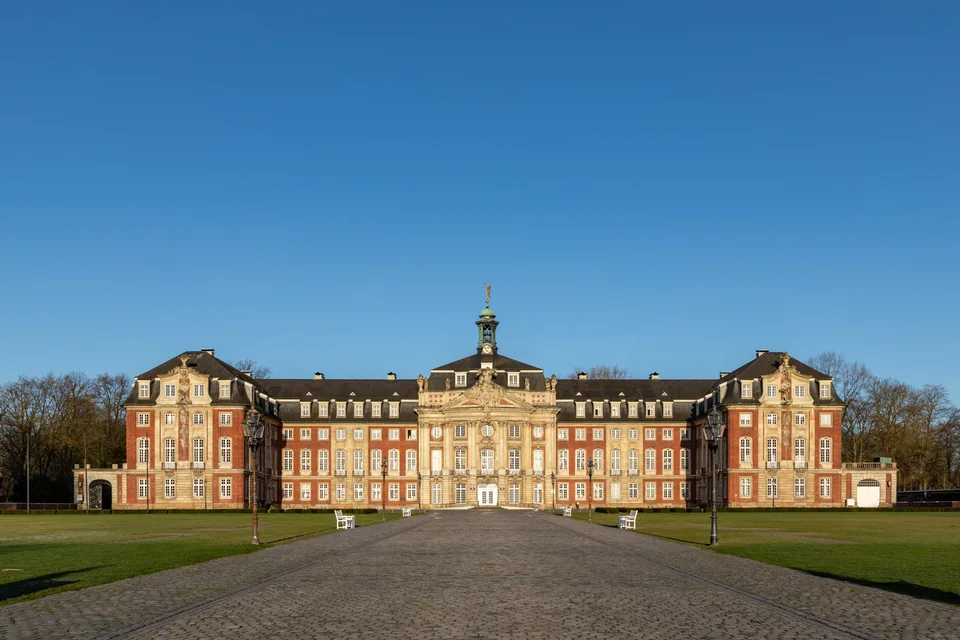
What "free" means in Germany
Free education in Germany means no tuition fee (Studiengebühren) at a public university. Students still pay for:
- The semester contribution (Semesterbeitrag). All students pay it, Germans included; LMU, for example, requires it even during a leave of absence. Without it you cannot enrol or re-register.
- Living costs, housing and insurance. For a student visa the consulate expects proof of $1,132 (€992) per month.
- The preparatory stage. For many international school leavers, a year at a Studienkolleg or at a home university.
The free route almost always means German. Bachelor's programmes at public universities are mostly taught in German; English-taught options are far more common at master's level.
Where tuition is charged
| Where | Who pays | How much | Key points |
|---|---|---|---|
| All public universities in Baden-Württemberg (Heidelberg, KIT, Stuttgart, Freiburg and others) | Non-EU/EEA citizens who came to Germany to study | $1,712 (€1,500) per semester | Since winter 2017/18, for bachelor's and master's; exemptions below |
| Baden-Württemberg, second degree | Anyone taking a second bachelor's or second master's | $742 (€650) per semester | A first bachelor's plus master's is not a second degree |
| TUM (Munich) | Non-EU students first enrolled from winter 2024/25 | Bachelor's usually $2,282 or $3,423 (€2,000 or €3,000); master's $4,564 or $6,847 (€4,000 or €6,000) per semester | The exact amount is on each programme page |
| Lower Saxony | Students who far exceed the standard study period | $571 (€500) per semester | After the standard period plus six extra semesters (Leibniz University Hannover) |
| Private universities | Everyone | E.g. Constructor University: $13,608 (€11,925) per semester | 2027/28 bachelor's rate, excluding housing |
The table does not cover every university: look for a programme's fees on its own page under Gebühren or Beiträge. LMU Munich states on its website that it has charged no tuition fees since winter 2013/14. Compare Munich's universities on our TUM and LMU pages.
Who is exempt in Baden-Württemberg and at TUM
Baden-Württemberg automatically exempts EU/EEA citizens, exchange students (such as Erasmus) and double-degree students where partners agreed on mutual waivers. Exemptions may also apply to:
- students eligible for German BAföG support (including some family-reunification and refugee cases);
- students whose disability significantly impairs their studies;
- particularly talented students, taking social criteria into account — under each university's statutes, within a quota of 5% of that university's fee-paying international students;
- students on leave of absence or in a practical semester.
The fee does not apply at the public Studienkolleg stage: HTWG Konstanz states that Studienkolleg students pay only a $220 (€192.50) administrative fee per semester. The tuition fee starts at university enrolment.
TUM does not charge EU/EEA citizens, doctoral candidates, exchange students or Studienkolleg students. Students with an "established domestic connection" under Section 8 of the BAföG are also exempt. Graduates of a German bachelor's degree are exempt in a TUM master's if they submit the degree certificate by the enrolment deadline. Completing a Studienkolleg, however, does not exempt you: TUM states that the FSP is not a German school-leaving qualification.
For fee-paying students, TUM offers a need-based waiver covering the standard study period (apply before the first semester), a two-semester merit waiver (from the first semester for master's students, otherwise from the third semester at the earliest), and one-off grants of $571–2,054 (€500–1,800) per semester. Places are limited and TUM decides.
What the semester contribution covers
Each university sets its own contribution, and the main difference is whether a transit pass is included.
| University | Semester | Amount | Breakdown |
|---|---|---|---|
| LMU and TUM (Munich) | Summer 2026 | $111 (€97) | Student services fee; no transit pass currently included |
| University of Hamburg | Winter 2026/27 | $459 (€402) | Transit pass $259 (€226.80), student services $115 (€101), administrative fee $57 (€50), student body fee $22 (€19.60) and transit-pass hardship fund $5 (€4.60) |
| Leibniz University Hannover | Winter 2026/27 | $517 (€453.16) | Student services $148 (€130), Deutschlandsemesterticket $259 (€226.80), administrative fee $86 (€75) and small levies |
| Public Studienkollegs | Per semester | $114–456 (€100–400) | Estimate by the working group of Studienkolleg directors (studienkollegs.de); varies by college |
Where the transit pass is included, you barely need a separate transport budget; where it is not, add it to your monthly costs.
What a "free" year really costs
Example first year for an international school leaver going to a public Studienkolleg and then a tuition-free public university (ECB rate, 23.09.2026):
| Item | Amount | Notes |
|---|---|---|
| Tuition | $0 | Public Studienkolleg and a university outside Baden-Württemberg and TUM |
| Proof of funds for the visa | $13,584 (€11,904) | Living money, usually in a blocked account; withdrawals of $1,132 (€992) per month |
| Semester contributions, 2 semesters | $221–1,034 (€194–906) | From Munich to Hannover |
| Health insurance | $143–171 (€125–150) per month | HTWG Konstanz estimate |
| uni-assist | From $86 (€75) | Plus $34 (€30) per additional programme |
| National visa | $86 (€75) | $43 (€37.50) for minors |
| Language exam, translations, travel | Actual cost | DSH fees range from $0 to $285 (€0 to €250) |
The visa amount is the consulate's minimum, not a budget for an expensive city. For legal payment routes from Russia, see how to pay for studies abroad from Russia.
Tuition alone over a three-year (six-semester) bachelor's:
| Option | Tuition over 3 years |
|---|---|
| Public university in Hamburg, Berlin, Hannover and most other states | $0 (plus semester contributions) |
| Public university in Baden-Württemberg | $10,270 (€9,000) |
| TUM | $13,693–20,540 (€12,000–18,000) |
| Constructor University | $81,646 (€71,550) |
Can you study for free in English?
Yes, mostly at master's level. There are few English-taught bachelor's programmes at public universities (the routes to year one are covered in our bachelor's in Germany guide), and if your certificate requires a Studienkolleg you will need German, because preparation is taught only in German. English-taught master's programmes at TUM cost non-EU students $4,564–6,847 (€4,000–6,000) per semester, and Baden-Württemberg's $1,712 (€1,500) applies there too.
If you do not plan to learn German, compare Germany with other countries honestly. In Italy, for example, public universities charge income-based fees and regional grants exist: see our guide to free university education in Italy.
When a private university makes sense
A private university means paying for English-taught teaching, small groups and sometimes more flexible admission, for the whole degree, while visa requirements stay the same. Check that the university is state-recognised (staatlich anerkannt): only such institutions award degrees equivalent to those of public universities. Private universities set their own admission rules, so compare them with your certificate's anabin rating.
How to reduce costs
- Choose the state as well as the university. The same subject in Baden-Württemberg and a neighbouring state can differ by $10,270 over a three-year bachelor's.
- Deutschlandstipendium. $342 (€300) per month regardless of nationality or family income; each university selects recipients on merit.
- Waivers in Baden-Württemberg and at TUM. Apart from the automatic cases, you apply and the university decides.
- Work. A student residence permit allows up to 140 full working days per year; student assistant jobs at the university do not count towards the limit.
- Transit pass in the contribution. Hamburg and Hannover include it; in Munich you buy it separately.
More funding options are in our scholarships abroad overview.
Common mistakes
- Assuming "free" means no money upfront. The consulate still asks for $13,584 per year.
- Ignoring the state. Baden-Württemberg's fee applies at all its public universities, including Heidelberg and KIT.
- Expecting Studienkolleg to exempt you from TUM's fee. It does not.
- Comparing universities by tuition alone. A contribution with or without a transit pass differs by hundreds of dollars a year.
- Applying for waivers after the semester starts. TUM accepts applications only before the semester for which the waiver is requested.
FAQ
At most public universities, yes — non-EU students pay no tuition. The exceptions are Baden-Württemberg ($1,712, €1,500 per semester), TUM and private universities. Everyone pays the semester contribution.
You must prove $13,584 (€11,904) per year for the visa. Add semester contributions, insurance, application costs and relocation.
At most public universities, yes. Baden-Württemberg and TUM charge non-EU students; graduates of a German bachelor's are exempt from TUM's fee in a master's.
Public colleges charge no tuition, only a semester or administrative contribution. Private preparatory colleges charge fees: TUDIAS in Dresden costs $8,615 (€7,550) for two semesters including the application fee. See our Studienkolleg guide.
Mostly at master's level at public universities outside Baden-Württemberg and TUM. The choice at bachelor's level is limited.
In Lower Saxony, students who far exceed the standard study period pay $571 (€500) per semester. States and universities can change fee rules, so check them before each semester.
Yes. Under a service contract we check your certificate's rating, shortlist universities by state and fees, and prepare applications and the visa file. Universities decide on admission and waivers; the German embassy decides on visas. The application process is explained in applying via uni-assist, and the country overview is on our Germany page.
Sources
- Baden-Württemberg Ministry of Science: fees FAQ and exemptions — checked 23.09.2026
- Heidelberg University: tuition fees for international students — checked 23.09.2026
- HTWG Konstanz: Studienkolleg costs — checked 23.09.2026
- TUM: tuition fees for non-EU students, scholarships and waivers, semester fees — checked 23.09.2026
- LMU: fees and tuition fees and semester fee — checked 23.09.2026
- University of Hamburg: semester contribution 2026/27 — checked 23.09.2026
- Leibniz University Hannover: study costs and long-term fees — checked 23.09.2026
- Working group of Studienkolleg directors: costs — checked 23.09.2026
- TUDIAS: course fees — checked 23.09.2026
- Constructor University: 2027/28 costs — checked 23.09.2026
- German mission: proof of funds and visa fees — checked 23.09.2026
- Deutschlandstipendium FAQ — checked 23.09.2026
- Residence Act, Section 16b — checked 23.09.2026
- University of Hamburg: DSH exam — checked 23.09.2026
- Exchange rate: ECB, 23.09.2026, €1 = $1.1411
Next steps
- Bachelor's in Germany for International Students: Entry Routes, Language, Deadlines and Costs
- Studienkolleg in Germany: Who Needs It, How to Get In and What the FSP Exam Gives You
- Applying to German Universities: uni-assist, VPD and hochschulstart Step by Step
- Technical University of Munich (TUM)
- Ludwig Maximilian University of Munich (LMU)
- How to Pay for Studies Abroad from Russia: What Works in 2026
