
Italian schooling lasts 13 years: 5 years of primary school, 3 years of lower secondary and 5 years of upper secondary at a liceo, a technical institute or a vocational institute. A foreign child living in Italy has the right to attend a state school on the same terms as Italian children, can enrol at any point in the year, and is normally placed in a class by age. A Russian citizen can obtain a study visa for school only from age 15, and only with an adult in Italy who takes responsibility for the child. If the family is not relocating, the realistic options are a state boarding school (convitto; in Salerno, about $3,163, or €2,800, a year for a place in a double room in 2026/27) or a private Italian boarding school. International schools are mostly day schools and suit families who live in Italy themselves.
| At a glance | As of 1 October 2026 |
|---|---|
| Structure | 5 + 3 + 5 years; upper secondary from age 14 to 19 |
| Compulsory education | 10 years, ages 6 to 16; the right and duty to study or train applies until 18 |
| Final exam | Esame di Stato after 5 years of upper secondary; opens access to universities, AFAM academies and ITS |
| Rights of a foreign child | Same conditions as Italian pupils, enrolment at any time of year (DPR 394/1999, art. 45) |
| Study visa for a pupil from Russia | From age 15 (from 14 only for cultural exchange programmes) |
| Responsible adult | Required: the host family or a school with residential care |
| State boarding school, example | Convitto Nazionale "T. Tasso", Salerno, 2026/27: about $3,163 (€2,800) a year, double room |
| International school | Usually a day school, fees per the school's own list; many lead to the International Baccalaureate (undesirable in Russia) |
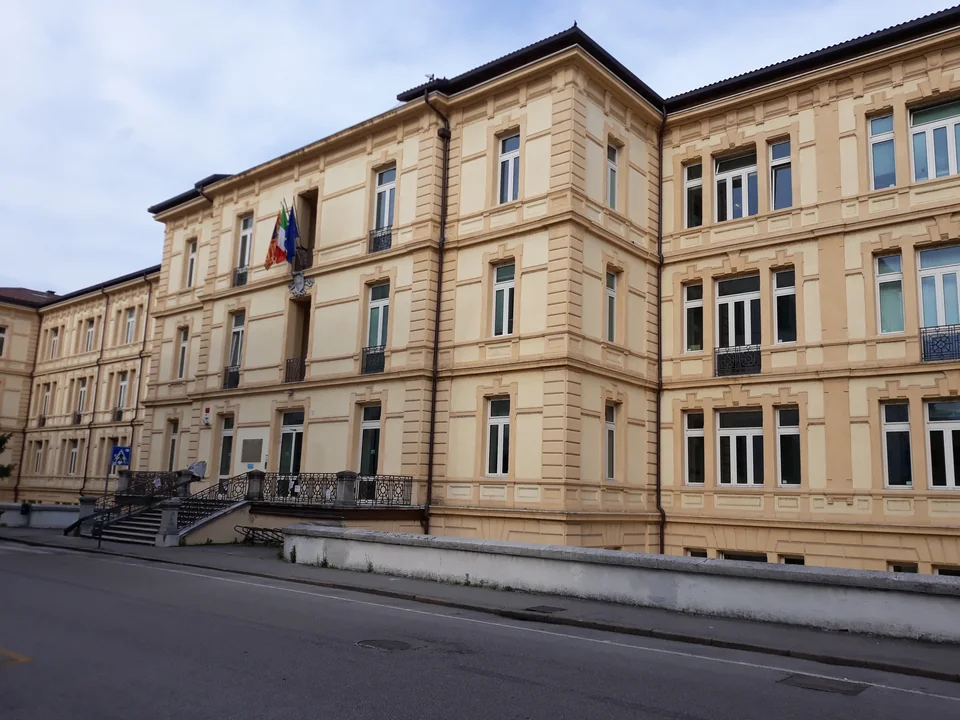
How Italian schooling is organised
The Ministry of Education and Merit (MIM) sets out the system as follows:
| Stage | Age | Length | Ends with |
|---|---|---|---|
| Scuola primaria (primary) | 6–11 | 5 years | Move to lower secondary |
| Scuola secondaria di primo grado (lower secondary) | 11–14 | 3 years | Exam at the end of the first cycle |
| Scuola secondaria di secondo grado (upper secondary) | 14–19 | 5 years | Esame di Stato |
Upper secondary schools come in three types:
- Licei prepare for university over five years: two two-year periods and a final year. Tracks include classical, scientific, languages, arts, human sciences, and music and dance.
- Istituti tecnici offer broad programmes in economics and technology and also lead to university.
- Istituti professionali have offered eleven practice-oriented programmes since 2018/19, with a path into higher technical institutes (ITS).
All three end with the Esame di Stato, which gives access to university. Because the Italian diploma follows 13 years of schooling, it automatically meets Italy's 12-year rule for university entry, unlike a Russian certificate after 11 years.
Who can attend a state school
Under Article 45 of Presidential Decree 394/1999, foreign minors present in Italy have the right to education regardless of their residence status. In practice:
- They enrol on the same terms as Italian pupils: state schools charge no tuition, and families pay for books, meals and small school charges.
- Enrolment is possible at any point in the school year, not only in the general enrolment period.
- If documents are missing, the child is enrolled provisionally, and this does not prevent obtaining the final diploma.
- Placement follows age. The teachers' board may decide otherwise, taking into account the child's home school system, skills, subjects studied and qualifications held.
One caveat matters: this is the right of a child who already lives in Italy. It does not create grounds for a visa. If the family stays in Russia, the pupil needs a study visa, and that requires a responsible adult and confirmed accommodation.
Options for a child from Russia
| Option | Who it suits | Language | Cost | Diploma |
|---|---|---|---|---|
| Family relocation and a state school | Families with grounds to live in Italy (work, residence permit) | Italian | Tuition free | Italian state diploma |
| State boarding school (convitto) | Teenagers ready to study in Italian and live by a timetable | Italian | Example: about $3,163 (€2,800) a year in Salerno, 2026/27 | Italian state diploma |
| Private "paritaria" school | Families wanting the Italian curriculum in a private setting | Italian, sometimes bilingual | School's own price list | Italian state diploma |
| International school | Families living in Italy who want a British or American curriculum | English | Per the school's fee list | Foreign (IGCSE, A level, US diploma and others) |
| Cultural exchange year | Pupils from 14 for one school year | Italian | Programme terms | School record of the year |
Many international schools in Italy lead to the International Baccalaureate in the final two years. The IB organisation is designated undesirable in Russia, so we do not recommend that route to Russian citizens.
State, paritaria and non-paritaria schools: what diploma you get
The type of school decides whether the pupil ends up with an Italian state diploma. MIM distinguishes:
- State schools (statali) and paritarie, private schools with state recognition. Together they form the public education system, award the Esame di Stato diploma and count towards compulsory education.
- Non-paritarie private schools, including many international schools, follow their own or foreign curricula. To re-enter the Italian system, pupils sit eligibility exams (esami di idoneità).
For a teenager aiming at an Italian university, the difference matters. With an Esame di Stato diploma no foundation year is needed. With a British or American school diploma, the university applies its own rules; IULM, for instance, publishes separate requirements for British and American qualifications.
State boarding schools: the convitti
A convitto nazionale is a state boarding school with a long tradition. It runs primary, lower secondary and upper secondary schools (often licei), and pupils either board or attend as day pupils (semiconvitto). The state pays the staff, and families pay a compulsory contribution for boarding and meals.
Fees for 2026/27: the Convitto Nazionale "T. Tasso" in Salerno charges upper-secondary boarders about $3,163 (€2,800) a year for a place in a double room; single rooms (€3,800) cannot be booked in advance. The fee covers accommodation, meals, supervised study from Monday to Sunday and laundry; an enrolment fee of about $113 (€100) and a deposit of the same amount are paid separately. Day attendance (semiconvitto) for lower and upper secondary pupils costs about $1,073 (€950) a year. For comparison, the Convitto "Vittorio Emanuele II" in Cagliari lists about $3,954 (€3,500) a year for boarding, but its page does not say which school year the figure applies to. Each convitto sets its own admission rules, holiday and weekend closures, age limits and documents in its regulations, so check them before applying.
Whether this suits a child from Russia depends on language: teaching is in Italian. A teenager starting from zero should take an intensive course before the move or in the summer; options are in our guide to Italian language courses in Italy.
International schools: what they lead to and who they suit
International schools cluster in Rome, Milan, Florence and Turin, and most are day schools: the child lives with the family, so they rarely work for a teenager travelling alone. Teaching is in English on a British (IGCSE, A level), American or other curriculum, and fees are typically several times a convitto's boarding fee. Each school publishes its own fee list; compare not only the annual fee but also the entry fee, exam fees and meals.
The key question for a Russian family is the final qualification. Many international schools in Italy switch to the International Baccalaureate in the last two years, so before choosing a school, check whether it offers A levels or a US high-school diploma at the end. Admission and year placement are decided by the school.
Visa for a minor: what the Moscow consulate requires
A school visa falls under the "courses, secondary and vocational education" category. According to the Italian consulate in Moscow:
- Age. From 15. From 14 only for cultural exchange programmes with a prior invitation and written authorisation from the Italian foreign and university ministries.
- Responsible adult. A person or institution must accept civil and legal responsibility for the child, usually the host family or a residential school. They provide a free-form letter in Italian or English and a copy of their ID; temporary guardianship is the alternative.
- Parental consent. A notarised power of attorney from the parents to the responsible adult, notarised consent for the child to travel unaccompanied (from 14) or with a third party, and copies of the parents' internal passports. For a long-stay visa, cross-consents from each parent, issued no more than a year earlier and covering the whole visa period.
- Child's documents. Birth certificate (original and copy), name-change documents where relevant, and proof if a parent is absent.
- Funds. Only parents may sponsor a minor, with their financial documents and the child's birth certificate.
- Biometrics. Fingerprints in person from age 12.
The decision on the visa, its length and number of entries rests solely with the Consulate General; the visa centre itself notes that parental consent on its own does not decide whether a long-stay visa is issued. The general filing route from Russia and processing times are in our guide to studying in Italy as a Russian citizen and the Italian student visa guide. After entering on a type D visa, apply for a residence permit as described in our permesso di soggiorno guide.
After 9th grade: which class will the child join?
A Russian pupil who has finished 9th grade is usually 15 or 16. Under the age-based rule, that means the second or third year of an Italian upper secondary school. The teachers' board makes the final call based on the school record, subjects and Italian level. Useful documents:
- the basic general education certificate with grades and subjects;
- an Italian translation, with an apostille for official procedures;
- vaccination records if the school asks for them.
Routes abroad after 9th grade in other countries are compared in our guide to studying abroad after 9th grade.
After school: university and recognition in Russia
With an Esame di Stato diploma, a graduate applies to Italian universities as a holder of an Italian school qualification, while fee bands and scholarships still depend on each university's and regional agency's rules about where the family lives and earns. Admission routes and fees are covered in our guide to Italian universities for international students. The country overview is on the Study in Italy page.
If the child returns to Russia, Italian education documents fall under the Russia–Italy agreement on mutual recognition of education documents, in force since 1 April 2016. Rosobrnadzor decides on individual documents, with applications handled by the Glavexpertcentre.
A 12–18 month plan
- 18 months ahead. Choose the format: family relocation, convitto, paritaria or international school. Check the child will be at least 15 when the visa is filed.
- 12 months ahead. Start Italian. Ask shortlisted schools about admission of foreign pupils, boarding and fees.
- 6–9 months ahead. Get written confirmation from the school and the responsible adult, arrange accommodation, sign the notarised consents and power of attorney.
- 3–6 months ahead. Apostilles and translations, parents' financial documents, visa appointment: the visa centre in Moscow warns that processing takes over 60 days.
- After arrival. Apply for the residence permit within 8 working days and register the child with the health service.
Common mistakes
- Assuming the right to schooling in Italy means a visa. The right applies to children already living there; entry still needs a study visa and a responsible adult.
- Choosing a non-paritaria school and expecting an Italian diploma. Without the Esame di Stato, the pupil sits eligibility exams or applies to university with a foreign document.
- Applying for a school visa at 14. Outside cultural exchange programmes the consulate considers study visas from 15.
- Signing parental consents too early. The consulate accepts consents no older than a year and covering the whole visa period.
- Starting a state school with no Italian. Placement follows age, and the first months without the language are hard.
FAQ
Yes. Under Article 45 of Presidential Decree 394/1999, a foreign minor living in Italy studies on the same terms as Italian pupils, and state schools charge no tuition. Enrolment is possible at any time of the year, and the school decides the class, usually by age.
According to the Italian consulate in Moscow, from 15, and from 14 only for cultural exchange programmes authorised by the Italian foreign and university ministries. An adult in Italy must accept responsibility, and the parents' consents must be notarised. The Consulate General decides on the visa.
Yes. The consulate requires a person or institution that accepts civil and legal responsibility for the child, usually the host family or a residential school. This is documented by a letter and a notarised power of attorney from the parents, or by temporary guardianship; the consulate judges whether the documents are sufficient.
A state convitto is relatively inexpensive: in Salerno, boarding for an upper-secondary pupil in 2026/27 costs about $3,163 (€2,800) for a place in a double room, plus an enrolment fee and a deposit of about $113 (€100) each. Private boarding schools and international schools publish their own, noticeably higher fees. Whether a pupil is admitted is decided by the school under its own rules.
Yes, if the family lives in Italy or the child holds a study visa. A Russian pupil after 9th grade is usually placed in the second or third year of upper secondary by age, but the teachers' board makes the decision based on the school record and Italian level.
The Esame di Stato diploma is awarded after 13 years of schooling and gives access to Italian universities, AFAM academies and higher technical institutes without a foundation year. The university decides on admission under its own selection rules, and other countries assess the Italian diploma through their recognition procedures.
Sources
- MIM: the education system and compulsory schooling, upper secondary: licei, technical and vocational institutes
- Presidential Decree 394/1999, art. 45 "School enrolment" (Normattiva)
- VMS, Moscow: study visa for courses and secondary education, minors, proof of funds, biometrics, processing times
- Convitto Nazionale "T. Tasso", Salerno: 2026/27 fees, Convitto Nazionale "Vittorio Emanuele II", Cagliari: fees
- IULM: foreign school qualification requirements (PDF)
- Glavexpertcentre: international recognition agreements
All sources checked on 1 October 2026. ECB reference rate of 1 October 2026: €1 = $1.1298; dollar amounts are rounded.
If you want to work through your route, send a request: document preparation and submission are provided under an agreement with StudyU; the school makes the enrolment decision and the consulate decides on the visa.
During the free initial consultation, we clarify your goal, profile, timing, and budget and identify the next realistic step.
Next steps
- Italian Language Courses in Italy: Visas, 2026–2027 Prices and Choosing a School
- Studying in Italy as a Russian Citizen: Type D Visa, Universitaly and Recognition
- Studying in Italy for international applicants
- Student Visa for Italy: Documents, Proof of Funds and Deadlines for 2026/27
- Permesso di Soggiorno for Students: How to Get and Renew Your Italian Residence Permit
- Studying Abroad After 9th Grade: Routes, Visas and the Path to University
