
Denmark has eight universities: the University of Copenhagen (KU), Aarhus University (AU), the Technical University of Denmark (DTU), Aalborg University (AAU), the University of Southern Denmark (SDU), Copenhagen Business School (CBS), Roskilde University (RUC) and the IT University of Copenhagen (ITU). Seven university colleges and seven business academies add practice-oriented programmes. Students from outside the EU/EEA and Switzerland pay tuition — roughly $11,300–19,500 (€10,000–17,300) a year on English-taught programmes — and English-taught bachelor's degrees are scarce: all 78 bachelor's programmes at the University of Copenhagen are taught in Danish. For Russian applicants, five of the eight (KU, AU, DTU, AAU, SDU) appear on Russia's government list of foreign universities whose degrees are recognised without a separate procedure.
| At a glance | What matters |
|---|---|
| Institution types | 8 universities, 7 university colleges, 7 business academies, schools of art and architecture, maritime schools |
| Non-EU tuition | CBS bachelor's $7,344 (€6,500) per semester; DTU master's $8,474 (€7,500) per semester; SDU $16,947–19,546 (€15,000–17,300) per year |
| English-taught bachelor's | limited: 16 programmes at SDU, a handful of BSc programmes at CBS, none at KU |
| English-taught master's | the main offer: KU alone runs about 120 master's programmes, with a wide English-taught choice |
| Recognition in Russia | KU, AU, DTU, AAU and SDU are on the list in Russian Government Order 186-r |
| Deadlines | bachelor's via optagelse.dk by 15 March, 12:00; KU and DTU master's for non-EU applicants by 15 January |
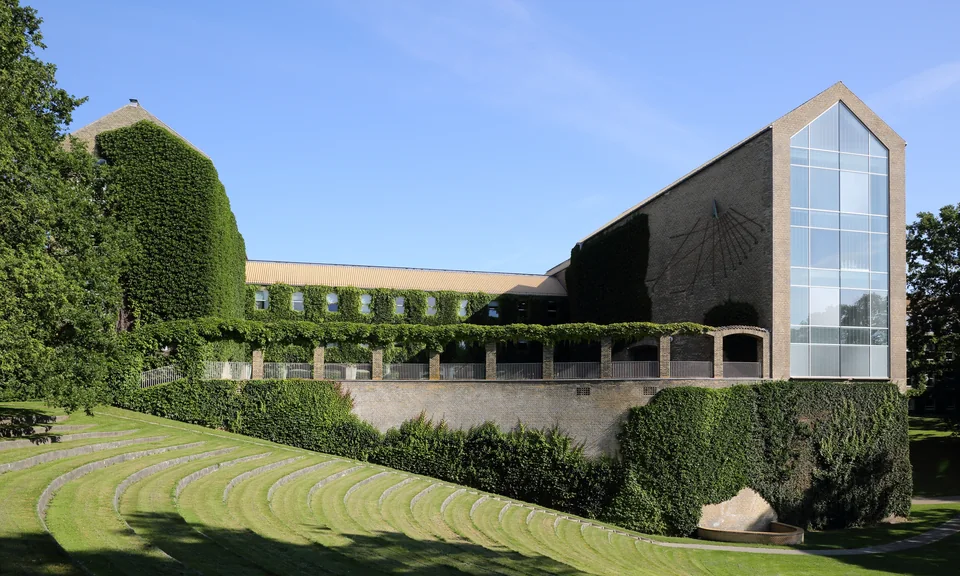
Types of higher education institutions
Danish institutions are divided by purpose, and the type decides which degree you get and what you can do with it next.
| Type | What it awards | Length | Best for |
|---|---|---|---|
| University | academic bachelor's (3 years), master's (usually 2 years, 120 ECTS), PhD | 3 + 2 years | research, analysis, engineering, progression to a master's |
| University college (professionshøjskole) | professional bachelor's in fields such as teaching, nursing, engineering and design, with mandatory work placement | 3–4.5 years (180–240 ECTS) | a specific profession with practical training |
| Business academy (erhvervsakademi) | academy profession degree, equivalent to the first two years of a bachelor's, with a 1.5-year top-up to a professional bachelor's | about 2 years (120 ECTS) + 1.5 years | a fast route into business, IT or technical jobs |
| Schools of art and architecture | creative bachelor's and master's | by programme | applicants with a portfolio |
There are about 85 professional bachelor's programmes and about 27 academy profession programmes, though most are taught in Danish. The Danish Ministry of Higher Education and Science keeps the list of recognised institutions. For a residence permit, the programme must be state-approved: students who applied on or after 2 May 2025 for a non-state-approved programme get neither work rights nor a job-seeking permit.
The eight universities at a glance
| University | Location | Strengths | What an international applicant should know |
|---|---|---|---|
| University of Copenhagen (KU) | Copenhagen | medicine, natural sciences, humanities, law, economics | 78 bachelor's programmes, all in Danish; about 120 master's programmes, a wide range of them in English |
| Aarhus University (AU) | Aarhus and other campuses | life sciences, economics, computer science, cognitive science | English-taught master's such as Computer Science, Economics and Cognitive Science; 2026/27 tuition $14,687–19,546 (€13,000–17,300) a year |
| Technical University of Denmark (DTU) | Kongens Lyngby (Greater Copenhagen) | engineering, biotechnology, IT | master's tuition $8,474 (€7,500) per semester, $33,894 (€30,000) for two years; $113 (€100) application fee |
| Aalborg University (AAU) | Aalborg, Copenhagen, Esbjerg | engineering, IT, social sciences | project-based group learning; English-taught master's such as Computer Science (IT) |
| University of Southern Denmark (SDU) | Odense, Kolding, Sønderborg, Vejle and others | engineering, business, European studies, IT | 16 English-taught bachelor's; $16,947–19,546 (€15,000–17,300) per year, with the first year paid in full in advance from the 2026 intake |
| Copenhagen Business School (CBS) | Frederiksberg (Copenhagen) | business, economics, international trade | bachelor's tuition $7,344 (€6,500) per semester; English via Cambridge C1 Advanced (185+) or C2 |
| Roskilde University (RUC) | Roskilde | natural sciences, humanities, interdisciplinary projects | master's tuition from the 2026 intake $5,649–9,038 (€5,000–8,000) per semester |
| IT University of Copenhagen (ITU) | Copenhagen | computer science, digital design, business IT | the most specialised of the eight |
Fees apply to non-EU/EEA and non-Swiss citizens and come from the universities' own pages as of 1 October 2026. At KU the fee depends on the programme and is shown on its programme page.
English-taught bachelor's versus master's
The defining feature of Denmark for international students is the imbalance: plenty of master's programmes in English, few bachelor's. The University of Copenhagen offers no English-taught bachelor's at all, and its bachelor's programmes require top-level Danish. CBS does teach some bachelor's degrees in English, but its language bar is high: Danish English B with a grade of at least 6.0 plus English A. IELTS Academic (7.0 overall, 6.0 in each section) counts only towards level A and only once level B is already met, so applicants with a Russian certificate in practice need Cambridge C1 Advanced (185 or above) or C2 Proficiency, which cover both. SDU lists 16 English-taught bachelor's programmes.
School-leaving certificates are the second hurdle. Many non-EU certificates, Russia's among them, are assessed as insufficient on their own for university bachelor's programmes and must be topped up with one year of university study (60 ECTS) or supplementary courses. Our guide to studying in Denmark explains how this works.
Master's admission is simpler: you need a relevant bachelor's degree, judged on its content. Danish rules allow universities to assess only your bachelor's degree, so you cannot make up missing subjects between degrees as you can in some other countries.
What studying at a Danish university costs
| University and level | Fee | Notes |
|---|---|---|
| CBS, bachelor's | $7,344 (€6,500) per semester, $14,687 (€13,000) per year | CBS starts the residence permit process only after the first semester is paid |
| SDU, English-taught bachelor's | $16,947–19,546 (€15,000–17,300) per year | first year paid in full from the September 2026 intake |
| DTU, master's | $8,474 (€7,500) per semester | DTU has flagged that fees may be revised for the autumn 2026 intake |
| RUC, master's (from September 2026) | $5,649–9,038 (€5,000–8,000) per semester | €20,000–32,000 for the full programme |
| AU, master's (2026/27) | $14,687–19,546 (€13,000–17,300) per year | rate depends on the programme |
| KU, master's | by programme | DKK 1,120 (about $169) application deposit, offset against tuition if admitted |
For living costs, a useful benchmark is the official threshold set by the Danish Agency for International Recruitment and Integration (SIRI): residence permit applicants must show DKK 7,426 (about $1,122) for each month of study, up to DKK 89,112 (about $13,467) a year. Students on a study residence permit cannot receive the State Educational Grant (SU).
Tuition fee waivers and scholarships for top non-EU applicants are awarded by the universities themselves; DTU, for example, announces waivers in April. For wider funding options, see scholarships abroad in 2026, and for legal payment routes from Russia, how to pay for studies abroad from Russia.
Choosing a university for your goal
- Engineering and technology. DTU for a master's; SDU and AAU for English-taught bachelor's and master's. SDU's Bachelor of Science in Engineering is a university degree.
- Business and economics. CBS is the most specialised option, with a high English bar; SDU and AU offer economics in cities where housing costs less.
- Natural sciences and medicine. KU and AU are strong in science, but their bachelor's degrees are in Danish, as are medical programmes.
- IT. ITU in Copenhagen, and computer science at AU, SDU, AAU and DTU.
- A practical profession. A university college or business academy, if your programme is taught in English: shorter, with mandatory placement.
- Returning to Russia. If recognition without a procedure matters, choose among KU, AU, DTU, AAU and SDU, the five named in Order 186-r. Degrees from CBS, RUC, ITU, colleges and academies go through the standard recognition procedure decided by Rosobrnadzor.
Comparing with Denmark's neighbours? See universities in Sweden and universities in Norway, where fee rules and deadlines differ.
Application deadlines
| Level | Where to apply | Deadline for non-EU applicants |
|---|---|---|
| Bachelor's, professional bachelor's, academy profession | national portal optagelse.dk | 15 March, 12:00 Copenhagen time (quota 2) |
| KU master's | university portal | 15 January, 23:59, for September entry |
| DTU master's | university portal | 15 January; tuition due by 1 May |
| Bachelor's admission results | optagelse.dk | 28 July (KU's date) |
| Pre-assessment of a school certificate | SDU, on request | 1 October – 15 November, documents by 30 November; Aarhus University no longer offers one |
International certificates are almost always assessed in quota 2: grades cannot be converted directly to the Danish scale, so the university makes an overall assessment of your subjects, grades and motivation, sometimes with a test or interview. At KU the quota 2 test is in Danish.
Common mistakes
- Looking for an English-taught bachelor's at the University of Copenhagen. There is none.
- Not checking that the programme is state-approved. Since 2 May 2025, non-state-approved programmes carry no work rights and no job-seeking permit.
- Applying to a university bachelor's on a school certificate alone when your country's certificate needs a top-up year.
- Comparing fees in different units. CBS and DTU quote per semester, SDU per year.
- Counting on SU. The State Educational Grant is not available to students on a study residence permit.
- Ignoring recognition at home if you plan to return.
FAQ
Eight: the University of Copenhagen, Aarhus University, the University of Southern Denmark, Roskilde University, Aalborg University, the Technical University of Denmark, Copenhagen Business School and the IT University of Copenhagen. Seven university colleges, seven business academies, schools of art and architecture and maritime schools complete the system.
Only EU, EEA and Swiss citizens study tuition-free. Students from other countries pay unless they hold permanent residence in Denmark. A university may award a tuition fee waiver or scholarship after its own selection, and it alone decides who receives one.
Russian Government Order 186-r lists the University of Copenhagen, Aarhus University, the Technical University of Denmark, Aalborg University and the University of Southern Denmark. Their bachelor's and master's degrees are recognised in Russia without a procedure; other Danish degrees are recognised by Rosobrnadzor on application.
Yes, but few: for example, 16 at the University of Southern Denmark and several BSc programmes at Copenhagen Business School. The University of Copenhagen teaches all its bachelor's in Danish. You apply through optagelse.dk by 15 March, and the university decides on admission.
About $11,300–19,500 (€10,000–17,300) a year on English-taught programmes: CBS charges €6,500 per semester for a bachelor's, DTU €7,500 per semester for a master's and SDU €15,000–17,300 a year. SIRI also requires proof of DKK 7,426 (about $1,122) per month for living costs.
It depends on your field: DTU for engineering and technology, CBS for business, KU and AU for natural and social sciences, AAU for project-based engineering and IT. What decides admission is how well your bachelor's credits match the programme, as judged by the university's admissions committee.
Sources
- Danish Agency for Higher Education and Science (UFSN): universities — ufsn.dk/english/education/the-higher-education-system/universities; university colleges — ufsn.dk/english/education/the-higher-education-system/university-colleges; business academies — ufsn.dk/english/education/the-higher-education-system/business-academies
- University of Copenhagen: bachelor's — ku.dk/studies/bachelor; requirements for non-EU applicants — ku.dk/studies/bachelor/admission-requirements/non-eu-eea-and-non-nordic-countries; master's admission — ku.dk/studies/admission/masters; deposit and fees — ku.dk/studies/admission/application-deposit-fee-and-tuition-fees
- DTU: fees — dtu.dk/english/education/graduate/fees-and-funding; deadlines — important dates, autumn intake
- CBS: requirements, country assessments, fees — cbs.dk/en/study-programmes/bachelor-programmes/application-and-admission
- SDU: English-taught bachelor's and fees — sdu.dk/en/uddannelse/bachelor; payment rules — sdu.dk/en/uddannelse/fees_and_funding/tuition; pre-assessment — sdu.dk/.../forhaandsvurdering; Aarhus University on pre-assessment — bachelor.au.dk/.../pre-assessment
- RUC: master's fee rates — ruc.dk/en/tuition-fee-rates
- Aarhus University: master's tuition rates 2026/27 — masters.au.dk/tuitionfees/current-tuition-fee-rates
- Study in Denmark (ministry portal): AU and AAU programme pages — studyindenmark.dk
- SIRI (nyidanmark.dk): study residence permit, funds, work, SU — nyidanmark.dk/en-GB/You-want-to-apply/Study/Higher-education
- Russian Government Order 186-r of 30.01.2023, Kingdom of Denmark section (as amended 19.02.2026) — publication.pravo.gov.ru/document/0001202302020018
All figures checked on 1 October 2026. Dollar amounts use the ECB reference rate of 1 October 2026: €1 = $1.1298 = DKK 7.4758, so $1 ≈ DKK 6.62. If you are still choosing a country, start with our guide to studying abroad for Russian citizens.
If you want to work through your route, send a request: document preparation and submission are provided under an agreement with StudyU, and the university makes the admission decision.
During the free initial consultation, we clarify your goal, profile, timing, and budget and identify the next realistic step.
Next steps
- Studying in Denmark as a Non-EU Student: Admission, Fees, SIRI Residence Permit and Work Rights
- How to Pay for Studies Abroad from Russia: What Works in 2026
- Scholarships abroad 2026: where international students study for free
- Universities in Sweden for International Students: Types, Fees and How to Choose
- Universities in Norway for International Students: How to Choose and What They Cost
- Studying Abroad as a Russian Citizen in 2026: Where You Can Go, Where to File Your Visa, How to Pay and How to Get Your Degree Recognised
