
Thirty-nine Swedish universities admit students to English-taught courses and programmes through the national portal universityadmissions.se. If you are not an EU/EEA or Swiss citizen, you pay tuition: the official Study in Sweden portal puts the usual range at $8,020–32,100 (SEK 80,000–320,000) per academic year, with an average of about $16,050 (SEK 160,000). In the QS World University Rankings 2027, Lund University leads the country at 71st in the world, followed by KTH (82nd), Uppsala University (87th) and Stockholm University (167th). English-taught master's programmes are plentiful; English-taught bachelor's programmes exist at only some universities, so the level you want to study at narrows the list before anything else.
This guide explains the types of institutions, which universities are strong in which fields, what they charge for the 2026–2028 intakes, and what to weigh besides rankings.
| At a glance | What to know |
|---|---|
| Universities admitting students to English-taught studies | 39 (University Admissions) |
| Where to apply | universityadmissions.se; one $90 (SEK 900) fee per application semester; Stockholm School of Economics runs a separate master's intake |
| Application window for autumn 2027 | 16 October 2026 – 15 January 2027 (first, international round) |
| Tuition for non-EU/EEA citizens | usually $8,020–32,100 (SEK 80,000–320,000) per year; the exact figure is on each programme page |
| Swedish universities in the QS 2027 top 200 | at least four: Lund, KTH, Uppsala, Stockholm University |
| English-taught bachelor's degrees | limited: e.g. 10 at Lund, 9 at Uppsala (most on the Gotland campus in Visby) |
| Two-year residence permit from the start | possible at the 34 institutions listed by the Swedish Migration Agency; elsewhere one year, then extension |
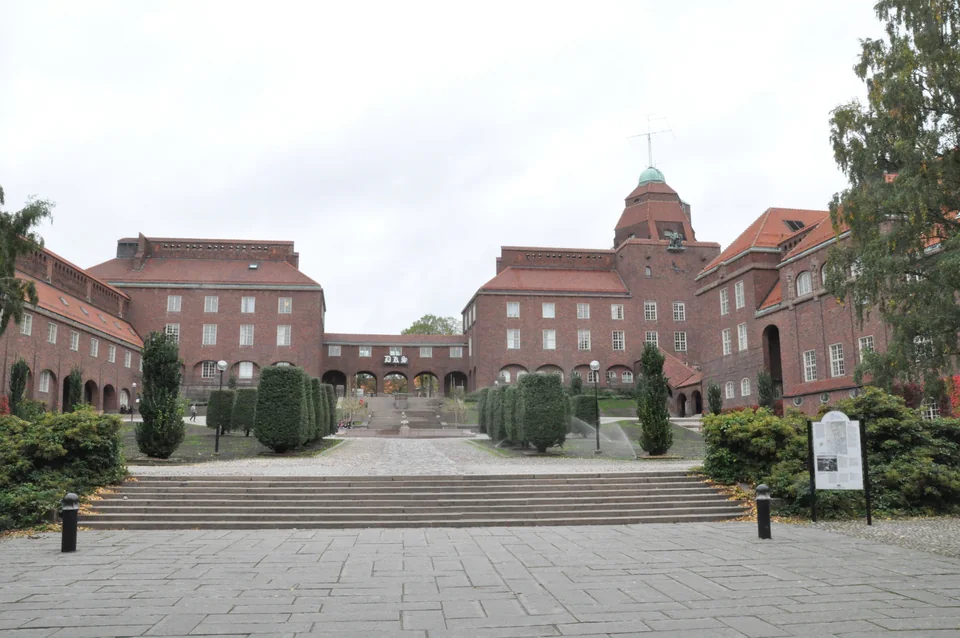
Types of higher education institutions in Sweden
Sweden has two main types: universities (universitet) and university colleges (högskola). Both award bachelor's and master's degrees. A university can award doctoral degrees by default; a university college needs a specific permission to do so. University Admissions calls both "universities", so "college" in a Swedish name does not mean a vocational school.
Ownership is the second difference. Most institutions are state agencies, while Chalmers, Jönköping University and the Stockholm School of Economics are run as foundations or private bodies; appeals against their admission decisions go to the institution's own leadership rather than the national appeals board. For applicants, the practical point is that SSE's master's programmes, according to the Swedish Institute, have their own intake outside the common portal.
Specialisation is the third. There are comprehensive universities (Lund, Uppsala, Gothenburg, Stockholm, Umeå), technical universities (KTH, Chalmers), the medical university Karolinska Institutet, the agricultural university SLU and specialised schools of art and design. The type largely decides what you can study in English and how much it costs: engineering and art programmes sit above humanities in price.
Leading Swedish universities compared
The table lists the universities international applicants shortlist most often. Dollar figures use the ECB rate of 29 September 2026 and refer to the intake shown; where no intake is given, the figure is the fee published by the university as of 30 September 2026.
| University | City | Strong fields | Example tuition for non-EU/EEA students |
|---|---|---|---|
| Lund University | Lund (also Helsingborg) | engineering (LTH), economics and management, sciences, social sciences, medicine | Master's in Management, 1 year, autumn 2027: $16,050 (SEK 160,000) in total; Bachelor's in International Business, 3 years: $39,120 (SEK 390,000) |
| Uppsala University | Uppsala, Visby | sciences, IT, pharmacy, humanities, social sciences | master's, 2026/27 intake: $4,960–9,030 (SEK 49,500–90,000) per semester depending on programme; Master's in Computer Science, 2026/27 intake: $30,090 (SEK 300,000) for 2 years |
| KTH Royal Institute of Technology | Stockholm | engineering, IT, architecture, energy | most two-year master's programmes: $38,620 (SEK 385,000) in total (2027/28 intake) |
| Stockholm University | Stockholm | law, social sciences, humanities, sciences | 2026/27 intake: $9,030 (SEK 90,000) per year in humanities, social sciences and law; $14,040 (SEK 140,000) in sciences |
| Karolinska Institutet | Stockholm (Solna) | medicine, public health, biomedicine | 2026/27 intake: master's $33,100–40,120 (SEK 330,000–400,000) for 2 years; Bachelor's in Biomedicine: $54,160 (SEK 540,000) for 3 years |
| Chalmers | Gothenburg | engineering, architecture, maritime technology | stated on each programme page and on the invoice after admission |
| University of Gothenburg | Gothenburg | business and economics, social sciences, arts, medicine | stated on each programme page; FAS+ insurance included for fee-paying students |
| Jönköping University | Jönköping | business (JIBS), engineering, health | 2027/28: JIBS bachelor's $12,040 (SEK 120,000) per year; engineering $17,050 (SEK 170,000) per year |
| Stockholm School of Economics | Stockholm | economics, finance, management | $36,110 (SEK 360,000) per bachelor's or master's programme (rate as of September 2026) |
| Kristianstad University | Kristianstad | IT, business, work-integrated learning | see the university profile |
Use these figures to compare, not as quotes. Fees vary inside one university: at Lund, the three-year International Business bachelor's costs $39,120, while the one-year Management master's costs $16,050 for the whole programme. Compare programmes over their full length, not "university prices". For a full budget including rent, read the cost of studying in Sweden.
StudyU profiles: Lund University, KTH, Uppsala University, Stockholm University.
Which university fits your goal
Start with three questions rather than a ranking: which level, which field, and what budget for the whole programme.
| Goal | Where to start | Check before applying |
|---|---|---|
| Engineering, IT, energy | KTH, Chalmers, Lund's LTH, Linköping | the maths and subject credits in your bachelor's degree |
| Medicine and public health | Karolinska Institutet, Uppsala, Lund, Gothenburg | English-taught options are mostly master's; KI's English list does not include the medical degree programme |
| Business and economics | SSE, Lund (LUSEM), JIBS in Jönköping, Gothenburg | required economics credits; SSE's separate intake |
| Social sciences and humanities | Stockholm University, Uppsala, Lund | essays, statements of purpose, sometimes a writing sample |
| Bachelor's straight after school | Lund (10 English-taught programmes), Uppsala (9), Jönköping University, Karolinska Institutet (Biomedicine) | subject requirements and the fact that only final school grades count in selection |
| Tighter budget | Stockholm University (humanities), Uppsala (master's semesters from $4,960), smaller regional universities | total tuition for the programme and local rents |
School leavers should first read about bachelor's degrees in Sweden: the admissions calendar often pushes their start back by a year. Graduates can go straight to master's degrees in Sweden.
Big city or student town: how the choice affects housing
Housing is the problem most international students meet first. Study in Sweden warns that student rooms are scarce in Stockholm and Gothenburg and in the traditional student towns of Lund and Uppsala, while small and mid-sized cities are easier. Typical rent is $300–700 (SEK 3,000–7,000) a month.
Some universities reduce that risk for fee-paying students:
- KTH commits to providing accommodation through KTH Housing for the first academic year to students paying for a full bachelor's or master's programme (including those whose scholarship covers the fee), if they meet the conditions and deadlines.
- Lund University places fee-paying students in the top priority group of the LU Accommodation queue: if they pay tuition on time and apply for housing on time for their first semester, they must receive a housing offer. Family members are not covered.
- Elsewhere, provision ranges from a university housing office to advice and links to city queues.
These university commitments usually cover only the student. If your family is coming, factor in their housing when choosing the city.
How to read Swedish university rankings
In the QS World University Rankings 2027, published in June 2026, Lund University is 71st worldwide and first in Sweden, followed by KTH (82nd), Uppsala University (87th) and Stockholm University (167th). Lund also ranks first worldwide in the QS sustainability category.
Keep two caveats in mind. Reputation surveys of academics and employers make up 45 per cent of the QS score, so an overall rank says little about a particular master's programme. And specialised institutions such as Karolinska Institutet or SSE can sit below comprehensive universities in general tables while leading in their own field. Curriculum, entry requirements and employer links tell you more.
Mistakes to avoid
- Picking a university by overall rank without checking that your programme exists in English at your level.
- Comparing "annual university cost" instead of the full fee for a specific programme.
- Planning a bachelor's at a university that teaches only master's programmes in English.
- Counting on part-time work to fund your studies: students whose permit was granted from 11 June 2026 may work at most 15 hours a week during term.
- Leaving the housing search until the permit arrives in cities with room shortages.
- Assuming SSE follows the common portal timeline.
Next steps
- Shortlist 4–8 programmes on universityadmissions.se and university websites; note level, language and total tuition.
- Check general and specific entry requirements; the process and deadlines are in applying to Swedish universities.
- See which funding your citizenship allows in scholarships in Sweden.
- Plan the permit timeline: it starts only after the first tuition instalment is paid; see the Swedish residence permit for studies.
For a country overview, see study in Sweden.
FAQ
According to University Admissions, 39 Swedish universities offer English-taught courses and programmes through universityadmissions.se. The Stockholm School of Economics additionally runs its own master's intake outside the portal.
Generally no. Non-EU/EEA and non-Swiss citizens pay an application fee and tuition. Exemptions include holders of a Swedish permanent residence permit or a temporary permit granted for reasons other than studies, doctoral students and exchange students. Scholarships can cover part or all of the tuition.
In QS 2027, Lund University is first in Sweden (71st worldwide), followed by KTH (82nd), Uppsala (87th) and Stockholm University (167th). For medicine and public health, Karolinska Institutet is the specialist choice, and for business, SSE, so the answer depends on your field.
Yes, but not many. Lund University offers 10 English-taught bachelor's programmes and Uppsala University 9, most of them in Visby. The majority of Swedish bachelor's programmes are taught in Swedish and require Swedish proficiency.
A högskola awards bachelor's and master's degrees just like a university but can award doctorates only with specific permission. For bachelor's or master's applicants the difference is rarely noticeable.
Study in Sweden says small and mid-sized cities are easier. In Stockholm, Gothenburg, Lund and Uppsala competition for rooms is high, which makes university housing commitments, such as those at KTH and Lund for fee-paying students, especially valuable.
Sources
- University Admissions: Swedish universities, autumn 2027 key dates, admissions results and appeals; checked 30 Sept 2026
- Study in Sweden: fees and costs and accommodation and budget; checked 30 Sept 2026
- Swedish Migration Agency: residence permit for higher education, two-year permit list, 15-hour work limit; checked 30 Sept 2026
- Lund University: International Business, Management, bachelor's studies, QS 2027; checked 30 Sept 2026
- Uppsala University: fees, Computer Science, bachelor's studies, QS 2027; checked 30 Sept 2026
- KTH: master's tuition and accommodation; checked 30 Sept 2026
- Stockholm University: fees and QS 2027; checked 30 Sept 2026
- Karolinska Institutet: tuition fees; checked 30 Sept 2026
- University of Gothenburg: tuition and FAS+, Chalmers: tuition; checked 30 Sept 2026
- Jönköping University: 2027/28 fees, Stockholm School of Economics: fees; checked 30 Sept 2026
- LU Accommodation: housing queue and priority groups; checked 30 Sept 2026
- ECB rate of 29 Sept 2026: €1 = $1.1355 = SEK 11.3210, so SEK 1 ≈ $0.1003. Rounding step: $1 below $100, otherwise $10.
Shortlisting universities and programmes for your profile, checking requirements and preparing the application are provided under an agreement with StudyU. The university decides on admission, the Swedish Migration Agency decides on the residence permit, and the housing office or landlord decides on accommodation.
- Bachelor's Degrees in Sweden in English: Programmes, School Certificate Rules and Real Timelines
- Master's Degrees in Sweden in English: Requirements, Costs and How to Choose
- Applying to Swedish Universities: Process, Documents and 2027 Deadlines
- Scholarships in Sweden for International Students: Who Qualifies and How to Apply
- Studying in Sweden for international applicants
- Kristianstad University
