
KTH (Kungliga Tekniska högskolan) is Sweden's largest technical university, based in Stockholm and ranked 82nd in the world in the QS World University Rankings 2027. For international applicants it is essentially a master's-level university: about 60 two-year master's programmes are taught in English, while only one bachelor's programme is, and that one cannot be applied to before you hold your final school certificate. Applications for August 2027 run from 16 October 2026 to 15 January 2027. For the August 2027 intake, most two-year master's programmes cost non-EU students $38,620 (SEK 385,000) in total, and the residence permit requires proof of a further $1,070 (SEK 10,656) for every month of the permit.
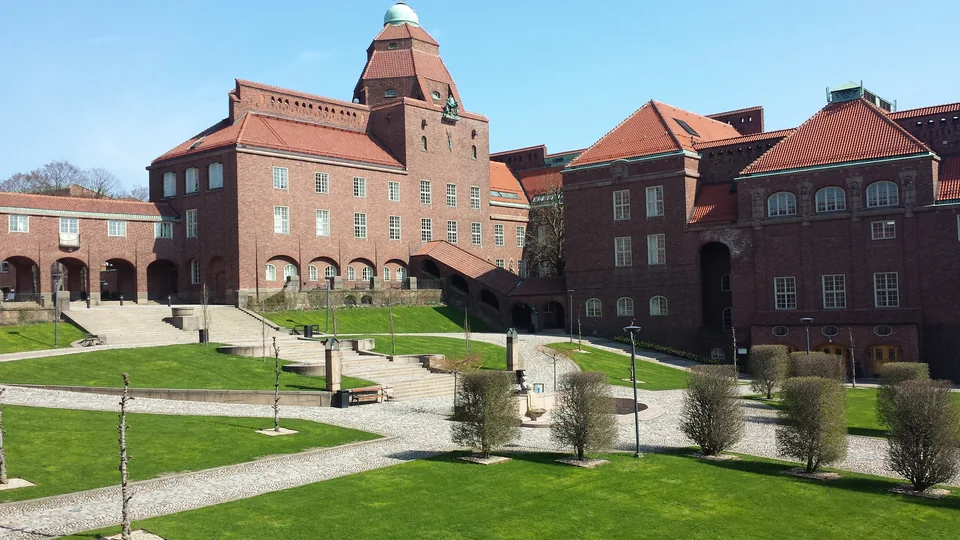
| KTH at a glance | As of September 2026 |
|---|---|
| Type and location | Public technical university founded in 1827; main campus on Valhallavägen in Stockholm, plus campuses in Flemingsberg and Solna |
| Students | About 17,000 |
| Rankings | QS 2027: 82nd; THE World University Rankings 2027 (released 30 September 2026): joint 106th |
| Taught in English | One bachelor's programme (Information and Communication Technology) and about 60 master's programmes |
| Applying for August 2027 | Via universityadmissions.se, 16 October 2026 – 15 January 2027; documents and fee by 1 February 2027 |
| Application fee | $90 (SEK 900) per semester you apply for (autumn 2027), non-refundable |
| Master's, full programme, 2027/28 intake | $38,620 (SEK 385,000) for most programmes; Architecture $64,390 (SEK 642,000) |
| BSc ICT, three years, 2027/28 intake | $42,430 (SEK 423,000) |
| KTH Scholarship | Covers tuition; 65 of 718 admitted applicants (9%) received it in 2026 |
| Funds for the permit | $1,070 (SEK 10,656) per month for applications filed in 2026 |
| Work during studies | Up to 15 hours a week in term time, unrestricted June–August |
What you can study at KTH in English
Bachelor's level. The single English-taught option is the BSc in Information and Communication Technology: three years, 180 ECTS credits, on the main campus. It combines electronics, programming, computer science and communication systems, and a large share of the curriculum is electives, so students can lean towards AI and machine learning or add Swedish and project management. All other first-cycle programmes are taught in Swedish.
Master's level. Around 60 two-year programmes (120 ECTS) sit in KTH's five schools:
- Electrical Engineering and Computer Science: Machine Learning; Computer Science; Systems, Control and Robotics; Cybersecurity; Electric Power Engineering; Embedded Systems
- Industrial Engineering and Management: Sustainable Energy Engineering; Industrial Management; Mechatronics; Technology-based Entrepreneurship
- Engineering Sciences: Engineering Physics; Aerospace Engineering; Vehicle Engineering; Naval Architecture; Applied and Computational Mathematics
- Architecture and the Built Environment (ABE school): Architecture; Sustainable Urban Planning and Design; Real Estate and Construction Management; Civil and Architectural Engineering
- Chemistry, Biotechnology and Health: Medical Biotechnology; Molecular Science and Engineering; Medical Engineering; Data-driven Health
Several programmes are joint degrees run through EIT or Erasmus+. They have separate application routes and deadlines, and most are excluded from the KTH Scholarship.
Doctoral level. PhD studies at KTH are four-year positions for applicants who already hold a master's degree.
Can you enter KTH straight from secondary school?
On paper yes; in practice only a year after graduating. KTH states that students in their final year of upper secondary school cannot submit a complete application in the first round: there is no conditional admission and predicted grades are not accepted. Documents are due on 1 February, but most school systems issue final certificates in the summer. A student finishing school in 2027 therefore applies between October 2027 and January 2028 and starts in August 2028. The spring round is technically open to everyone, but a non-EU student admitted in July rarely has time to pay the fee and receive a residence permit before term starts.
For applicants from Russia, University Admissions accepts the Russian certificate of secondary general education (attestat) with its grade supplement as meeting the general entry requirement. The ICT programme then adds:
- English at the level of Swedish English 6: IELTS Academic 6.5 with no section below 5.5, or TOEFL iBT 4.5 on the new scale (tests from 21 January 2026) with no section below 4; older TOEFL results need 90 overall and 20 in writing
- mathematics and physics equivalent to Swedish Mathematics 4 and Physics 2 (advanced level). Russia is not among the school systems KTH clarifies on its requirements page, and for unlisted countries KTH asks applicants to check with info@kth.se, so do that before applying and attach a translation of your grade supplement
- selection purely on school grade point average; motivation and recommendation letters are ignored. In 2024 KTH admitted 71 of 684 eligible applicants, or 10%
School English counts for Russian applicants only if it was studied at profile level, you graduated in 2008 or later and the profile is visible on the grade documents. Kazakh school English never counts, so applicants from Kazakhstan need a test.
The ICT bachelor's costs $42,430 (SEK 423,000) for three years and KTH offers no scholarships at this level. For a less competitive English-taught bachelor's, look at Uppsala University's programmes in Visby or Stockholm University's seven English-taught bachelor's programmes.
Master's entry requirements and how selection works
Prior degree. You need the equivalent of a Swedish kandidatexamen. For Russian degrees, University Admissions requires a bakalavr of at least four years. Final-year students can apply by uploading a transcript for all completed semesters.
English. The same English 6 level: IELTS 6.5 or TOEFL 4.5 on the new scale.
Programme-specific requirements are defined in credits. Computer Science, for instance, asks for:
- mathematics: four subjects totalling 28.5 ECTS, covering single-variable calculus, linear algebra, probability and statistics, and discrete mathematics
- computing: three subjects totalling 22.5 ECTS, including object-oriented programming, algorithms and data structures, and an advanced course in algorithmic complexity
Matching course titles are not enough; credit volume and content are checked. If you lack a formal requirement but have the knowledge, KTH lets you apply for recognition of prior learning, and the university decides.
Documents, all uploaded to universityadmissions.se by 1 February:
- degree certificate and transcript in the original language plus an official translation into English or Swedish, signed and stamped by a translation company or professional translator
- passport copy
- English test result
- CV in English
- a motivation letter under 500 words, one per programme
- two recommendation letters where requested, ideally one academic and one professional
- the programme summary sheet where one exists, submitted through KTH's own link rather than the portal
For Russian degrees, record books are not accepted as transcripts; documents must be in the official state format and scanned exactly as issued, in colour if they are in colour.
Scoring. Applicants are rated on a 1–75 scale that combines grades, the relevance of previous courses, awards and publications, and motivation. For degrees from abroad, the ranking of your university is part of the assessment. Up to four programmes fit into one round, in an order of priority you set. Architecture is the exception to grade-based scoring: it is rated on a portfolio submitted according to the school's own instructions.
How competitive the popular programmes are
KTH publishes the share of eligible applicants it admitted. Figures for the 2026 intake:
| Programme | Eligible applicants | Admitted | Rate |
|---|---|---|---|
| Machine Learning | 1,019 | 58 | 6% |
| Systems, Control and Robotics | 713 | 53 | 7% |
| Computer Science | 762 | 63 | 8% |
| Industrial Management | 446 | 52 | 12% |
| Architecture | 473 | 102 | 22% |
| Engineering Physics | 176 | 42 | 24% |
| Sustainable Energy Engineering | 433 | 183 | 42% |
The practical lesson: pair your most competitive choice with at least one programme where the admission rate is higher and your credits clearly fit. Remember that the KTH Scholarship is only considered for the programme you rank first.
Timeline for August 2027
| When | What to do |
|---|---|
| Before 16 October 2026 | Shortlist up to four programmes, check credit requirements, book an English test |
| 16 October 2026 | Applications open on universityadmissions.se |
| 1 December 2026 | KTH Scholarship form opens |
| 15 January 2027 | Deadline for the application, programme ranking and scholarship form |
| 1 February 2027 | Deadline for documents and the $90 (SEK 900) fee |
| 1 April 2027 | Master's and scholarship results; bachelor's results on 8 April |
| April–May 2027 | Pay the first semester and apply for the residence permit straight away |
| August 2027 | Studies begin |
Step by step:
- Create an account on universityadmissions.se and select your programmes.
- Fix your ranking before 15 January: you can be admitted to only one programme, the highest-ranked one you qualify for.
- Upload documents and pay the fee by 1 February, by Visa or Mastercard or by bank transfer. KTH grants no fee waivers.
- Check results on 1 April. First-round offers need no reply.
- Pay the first-semester invoice. Until it is paid, admission is not final and no residence permit can be issued.
What KTH costs
The fees below are published on the programme pages through which KTH is recruiting for August 2027, so they are the rates for students starting in the 2027/28 academic year (checked on 29 September 2026). KTH does not print the year next to the amount, so compare your invoice before paying.
| Programme, 2027/28 intake | Full programme | Average per academic year |
|---|---|---|
| Most two-year master's programmes, including Computer Science, Machine Learning, Industrial Management, Engineering Physics and Sustainable Energy Engineering | $38,620 (SEK 385,000) | $19,310 (SEK 192,500) |
| Architecture (MSc) | $64,390 (SEK 642,000) | $32,200 (SEK 321,000) |
| Architectural Lighting Design, one year | $19,310 (SEK 192,500) | — |
| BSc Information and Communication Technology, three years | $42,430 (SEK 423,000) | $14,140 (SEK 141,000) |
Fees are invoiced per semester in advance and paid by bank transfer; joint programmes may bill differently. EU, EEA and Swiss citizens pay neither the application fee nor tuition.
A realistic minimum for the first master's year (2027/28) is $19,310 in tuition, $12,830 (SEK 127,872) for the 12 months of living costs the Migration Agency requires, $150 (SEK 1,500) for the permit application and $90 for the application fee: about $32,400 before flights and a housing deposit.
Applicants from Russia should note that Russian-issued Visa and Mastercard cards do not work abroad, so fees are usually paid from a card or account held outside Russia. Legal payment routes are covered in our guide on paying for studies abroad from Russia. For a comparison with other Swedish universities, see the cost of studying in Sweden.
Scholarships
| Scholarship | What it covers | Who can apply |
|---|---|---|
| KTH Scholarship | Full tuition for one or two years, no living costs | Any fee-paying master's applicant who ranks a KTH programme first |
| KTH One-Year Scholarship | Second-year tuition | Current KTH master's students |
| SI Scholarship for Global Professionals (Swedish Institute) | Tuition, $1,200 (SEK 12,000) a month and a travel grant | Citizens of 34 listed countries with work and leadership experience; Russia and Kazakhstan are not on the 2026/27 list |
| Bachelor's scholarships | — | Not offered by KTH |
KTH Scholarship. The form is open from 1 December 2026 to 15 January 2027 and needs no extra documents: assessors use what you uploaded to the portal. They weigh your GPA, the ranking of your university, research, publications, work experience, competition awards and your motivation to contribute to sustainable development. The second year is funded if first-year results are satisfactory. Erasmus+ and EIT joint programmes and COSSE are excluded, and an unpaid application fee rules you out.
Swedish Institute. Eligible countries in the region include Armenia, Azerbaijan, Belarus, Georgia, Moldova and Uzbekistan. The travel grant is $1,000 (SEK 10,000) for the first five and $1,500 (SEK 15,000) for other eligible countries. The list is revised every year, so check si.se before applying. More options are covered in scholarships in Sweden.
Housing and living costs in Stockholm
First-year housing. KTH Housing undertakes to offer accommodation for the first academic year to students paying tuition for a full bachelor's or master's programme, provided they meet the current conditions; the same applies when a scholarship covers the fees. You apply after admission and payment of the first instalment. Rooms are furnished and located on campus and elsewhere in Stockholm. From the second year you are on your own, so join the SSSB student housing queue as early as possible. Family housing is limited, and KTH's commitment covers only the student.
Real budgets. KTH published three international students' monthly spending for 2026:
| Monthly item | Corridor room | Shared flat | KTH Housing |
|---|---|---|---|
| Housing | $380 (SEK 3,800) | $440 (SEK 4,350) | $820 (SEK 8,200) |
| Food | $250 (SEK 2,500) | $200 (SEK 2,000) | $300 (SEK 3,000) |
| Transport | $65 (SEK 650) | $65 (SEK 650) | $30 (SEK 300) |
| Leisure | $90 (SEK 900) | $300 (SEK 3,000) | $150 (SEK 1,500) |
| Total | $790 (SEK 7,850) | $1,000 (SEK 10,000) | $1,300 (SEK 13,000) |
These are personal examples, not an official estimate; phone, books, clothing and a buffer are missing. Fee-paying students are covered by the state FAS+ insurance administered by Kammarkollegiet. With a permit of one year or more you can register in the Swedish population register, receive a personal identity number and use public healthcare at local rates.
Residence permit
The Swedish Migration Agency (Migrationsverket) decides on study permits. You can apply only after paying the first semester; KTH then confirms your final admission to the agency.
Where to apply. Online on the Migrationsverket website, paying $150 (SEK 1,500) by Visa or Mastercard. Citizens of Russia and Belarus, and foreigners legally resident in Russia, can instead file a paper application at the Swedish Embassy in Moscow (60 Mosfilmovskaya Street), where the fee is paid in cash: 13,400 roubles. Because Russian citizens need a visa to enter Sweden, after approval they give fingerprints and a photo at the embassy and can collect the permit card there. The Swedish Embassy in Astana does not accept residence permit applications; Sweden's foreign ministry directs citizens of Kazakhstan and Uzbekistan to the Consulate General in Istanbul. For other countries, the directory on the Migrationsverket website shows the responsible mission.
Passport. Since 1 October 2026 Sweden no longer recognises ordinary non-biometric Russian passports, and no study permit or visa can be issued on one. A transition period until 31 December 2026 applies only if the passport already holds a valid Schengen visa or EU residence permit issued before 1 October. If yours is an old-style passport, order a biometric one early enough to have it for the spring permit application.
Funds. At least $1,070 (SEK 10,656) for each month of the permit period. The bank statement must be issued no earlier than four months before the permit start date. Private individuals cannot act as sponsors, so family money must be moved to an account in your name.
Length and timing. KTH is on the list of universities whose students can receive a two-year permit in one go. Three quarters of recent decisions were made within three months.
Rules since 11 June 2026. For permits granted from that date:
- work is capped at 15 hours a week in term time and unrestricted in June–August; the cap does not apply to work that is part of your programme or to teaching, research, administration or student representation at your university
- extensions require 37.5 credits in the first year and 45 credits in each later year
- you must report your Swedish address within 30 days of receiving the permit and after every move, unless you are already in the population register
A full walkthrough is in the Sweden student residence permit guide.
After graduation
Graduates of a programme lasting at least two semesters can receive a permit of up to 12 months to look for work or explore starting a business. You apply from Sweden while your study permit is still valid and show the same monthly funds. Under the new rules, switching from a study permit to a work permit inside Sweden generally also requires a completed programme of at least two semesters.
Is KTH the right choice?
| Strengths | Things to know first |
|---|---|
| About 60 English-taught master's programmes in engineering, IT, architecture and energy | Machine Learning, Robotics and Computer Science admit 6–8% of eligible applicants |
| A full-tuition scholarship open to all nationalities | About 9% of admitted applicants receive it, and only for their first choice |
| First-year housing for fee-paying students | From year two you face Stockholm's queues and rents |
| One portal for up to four programmes at any Swedish university | Only one English-taught bachelor's, usually after a gap year |
| A two-year permit and 12 months to job-hunt after graduation | Term-time work is capped at 15 hours a week |
KTH suits graduates of a technical bachelor's with strong grades, solid mathematics credits and a first-year budget of at least $32,000. If your background leans towards the natural or social sciences, compare it with Uppsala University, where the Computer Science master's cost $30,090 (SEK 300,000) in total for the 2026/27 intake, and Stockholm University, where a science programme costs $14,040 (SEK 140,000) a year. Lund University is another research-intensive option. For the wider picture, see universities in Sweden, master's in Sweden and our study in Sweden page.
Common mistakes
- Applying for the bachelor's in your final school year: the full file cannot be ready by 1 February, so the application fails.
- Ranking KTH second and hoping for the scholarship, which only considers first choices.
- Paying the application fee on the last day: if it arrives after 1 February, the application becomes late and is processed only if places remain.
- Uploading a degree without its transcript, or a record book instead of an official transcript.
- Planning to cover costs with part-time work: the 15-hour cap and a job market that often expects Swedish make this unrealistic.
- Applying for the permit with a non-biometric Russian passport: Sweden stopped recognising these on 1 October 2026, so no permit can be issued on one.
- Showing a parent's account or money deposited the day before: funds must be in your own account and the statement no older than four months before the permit start date.
FAQ
Can I apply to KTH straight after finishing school?
Only for the single English-taught bachelor's, and only once you hold your final certificate, so a 2027 school leaver realistically applies for August 2028. Selection is by grade point average, and 10% of eligible applicants were admitted in 2024.
Do I need IELTS or TOEFL?
Almost always. Russian school English counts only if it was a profile-level subject, you graduated in 2008 or later and the profile appears on your grades. The minimum is IELTS Academic 6.5 with no section below 5.5, or TOEFL iBT 4.5 on the new scale.
How much does a KTH master's cost for non-EU students?
For the 2027/28 intake, most two-year programmes cost $38,620 (SEK 385,000) in total, or $19,310 a year; Architecture costs $64,390 (SEK 642,000). On top of that the Migration Agency expects at least $1,070 (SEK 10,656) a month for living costs.
Can Russian citizens get the KTH Scholarship?
Yes. The KTH Scholarship is open to every fee-paying applicant regardless of nationality, covers tuition only and goes to about 9% of admitted applicants who ranked KTH first. The Swedish Institute's Global Professionals scholarship is not open to Russian citizens in the 2026/27 cycle.
How much money do I need to show for the residence permit?
For applications filed in 2026, $1,070 (SEK 10,656) for each month of the permit, or $12,830 (SEK 127,872) for a year. The money must be in an account in your name, with a statement issued no earlier than four months before the permit starts.
Can I work while studying at KTH?
Yes, within limits: for permits granted from 11 June 2026, up to 15 hours a week during semesters and without restriction in June, July and August. Work that is part of your programme, or teaching and research at the university, is exempt.
How does StudyU help with KTH applications?
Programme selection against your degree, checks of subject credits, motivation letters, CVs, translations and the residence permit file are provided under an agreement with StudyU. KTH decides on admission and scholarships; the Swedish Migration Agency decides on the permit.
Sources
- KTH: Study at KTH, bachelor's studies, BSc ICT entry requirements and selection, BSc ICT fees, bachelor's deadlines
- KTH: How to apply for master's studies, Entry requirements, Application and tuition fees, Computer Science requirements, Architecture fees
- KTH: Scholarships, KTH Scholarship
- KTH: Accommodation for new students, Cost of living in Stockholm, Insurance, KTH campuses, About KTH
- University Admissions: autumn 2027 dates, application fee, English requirements, Russia, bachelor's, Russia, master's, Kazakhstan, bachelor's
- Migrationsverket: residence permit for higher education, new rules from 11 June 2026, permit to look for work after studies, non-biometric Russian passports from 1 October 2026
- Embassy of Sweden in Moscow: how to apply, fees; Sweden in Kazakhstan: where to apply for a permit
- Swedish Institute: SI Scholarship for Global Professionals
- Times Higher Education: World University Rankings 2027, KTH profile, Uppsala University on QS 2027
Dollar figures are converted at the ECB reference rate for 29.09.2026 (€1 = $1.1355 and SEK 11.3210, which gives about $0.1003 per krona). Sums below $100 are rounded to the nearest dollar and larger ones to the nearest $10.
If you want to know which KTH programmes your degree qualifies for on subject credits and how to meet the 2027 deadlines, send us a request.
During the free initial consultation, we clarify your goal, profile, timing, and budget and identify the next realistic step.
Next steps
- Uppsala University: Admission, Fees and Scholarships for International Students
- Stockholm University: Admission, Tuition Fees and Scholarships
- Universities in Sweden for International Students: Types, Fees and How to Choose
- Master's Degrees in Sweden in English: Requirements, Costs and How to Choose
- Studying in Sweden for international applicants
- Lund University
