
Public universities in Norway are no longer free for citizens of countries outside the EU/EEA and Switzerland. Tuition fees were introduced in autumn 2023, and since 1 August 2026 institutions have been allowed to charge less than the full cost of a study place. The result is a wide price spread: for the 2026/27 academic year, a year of a master's programme costs from $5,220 (NOK 50,000) at the University of South-Eastern Norway to $30,810 (NOK 295,000) for science programmes at the University of Oslo. English-taught options are concentrated at master's level, while most bachelor's programmes are taught in Norwegian. Russian citizens face an extra constraint: the Norwegian Directorate of Immigration (UDI) warns that a study permit below master's level is difficult for them to obtain.
This guide explains the types of institutions, compares published fees, looks at how the city affects your choice, and lists the checks to make before you apply. For a short overview of the whole destination, see study in Norway.
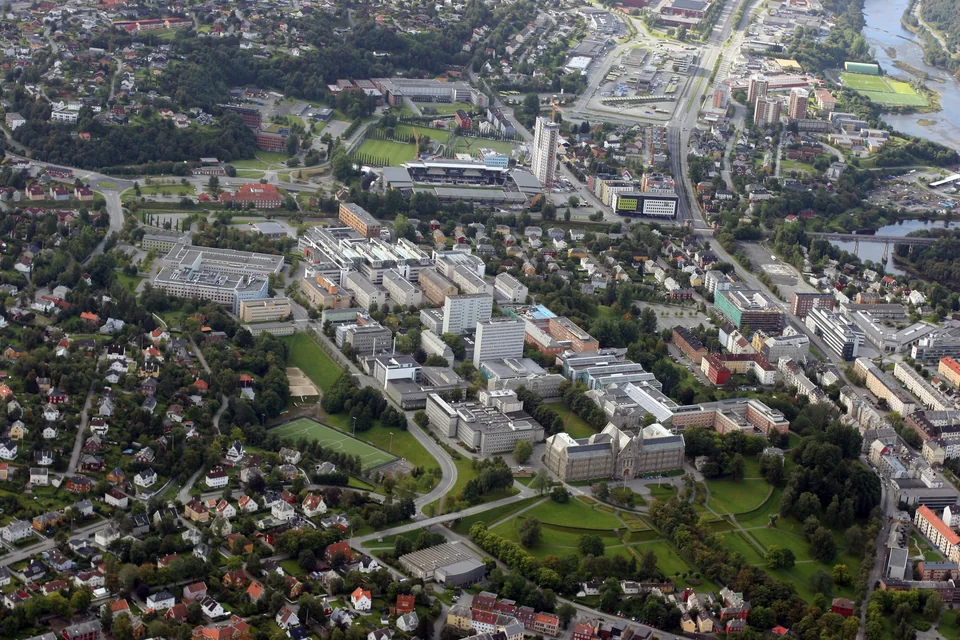
Types of higher education institutions in Norway
Norway groups its institutions into three categories plus private providers. The distinction matters less for prestige than for which degrees and languages are available.
| Type | What it offers | Examples | What matters for international applicants |
|---|---|---|---|
| University (universitet) | bachelor's, master's and PhD across many fields | University of Oslo (UiO), NTNU, University of Bergen (UiB), UiT | the widest range of English-taught master's programmes |
| Specialised university institution (vitenskapelig høgskole) | depth in one field such as economics, architecture, music or sport | NHH Norwegian School of Economics, Oslo School of Architecture and Design | narrow choice, strong reputation in its field |
| University college (høgskole) | applied bachelor's and some master's programmes | Western Norway University of Applied Sciences (HVL) | fewer English-taught programmes than universities |
| Private institution | programmes with their own price lists | BI Norwegian Business School, Kristiania | everyone pays; non-EU/EEA students pay a higher rate |
Whichever you choose, the institution must be accredited by NOKUT, the national quality agency. UDI only grants study permits for studies at institutions on NOKUT's list.
Public university fees compared: 2026/27
The figures below are annual tuition fees for citizens of countries outside the EU/EEA and Switzerland, as published by the institutions. They exclude the student welfare semester fee, housing, food and the study permit fee.
| University | City | Profile | Annual fee, 2026/27 |
|---|---|---|---|
| University of Oslo (UiO) | Oslo | comprehensive research university | bachelor's $15,460–21,300 (NOK 148,000–204,000); master's $21,300–30,810 (NOK 204,000–295,000); medicine and dentistry $59,420 (NOK 569,000) |
| NTNU | Trondheim, Gjøvik, Ålesund | engineering, technology and natural sciences, plus humanities and health | $18,410 (NOK 176,300) for humanities, social sciences and business; $21,470 (NOK 205,600) for natural sciences and technology; $55,210 (NOK 528,650) for medicine |
| University of Bergen (UiB) | Bergen | comprehensive, strong in marine and climate research | $20,570 (NOK 197,000) or $23,600 (NOK 226,000) depending on programme; design, fine art and music $41,950 (NOK 401,704) |
| Norwegian University of Life Sciences (NMBU) | Ås, near Oslo | environment, biology, aquaculture, veterinary science | $8,350 (NOK 80,000) for one bachelor's programme; $15,660 (NOK 150,000) for master's programmes |
| University of Stavanger (UiS) | Stavanger | energy, engineering, business | $6,270 (NOK 60,000) or $8,880 (NOK 85,000) per 60 ECTS |
| OsloMet | Oslo | applied engineering, IT, design, social policy | $7,000–9,920 (NOK 67,000–95,000) |
| University of South-Eastern Norway (USN) | several campuses, including Kongsberg and Drammen | engineering, technology, business | $5,220, $6,270 or $9,400 (NOK 50,000, 60,000 or 90,000) |
| Nord University | Bodø and other northern towns | business, biology, aquaculture | $6,270 (NOK 60,000) or $8,880 (NOK 85,000) |
| University of Inland Norway (INN) | Lillehammer, Hamar and others | applied sciences, animation, games | $6,080 (NOK 58,200) or $7,150 (NOK 68,500) per 60 ECTS |
| NHH | Bergen | economics and business | bachelor's $14,830 (NOK 142,000), master's $21,300 (NOK 204,000) for the 2026/27 cohort |
ECTS credits measure study workload: 60 credits equal one year of full-time study.
How to read this table:
- Price depends on the programme, not just the institution. NTNU runs several master's programmes, such as Childhood Studies and Global Relations and Sustainable Development, at a separate rate of $2,760 (NOK 26,445) a year, several times below its general category.
- The largest universities have been slower to cut prices. According to the higher-education newspaper Khrono, UiT, UiS, OsloMet, NMBU, INN, USN, the University of Agder and Nord lowered fees for 2026/27, while NTNU, UiO, UiB and HVL kept their previous levels for that year.
- Rates are reset every year. UiO has already published 2027/28 prices: most master's programmes will drop to $19,420 (NOK 186,000) or $22,770 (NOK 218,000), while some bachelor's programmes will rise. The University of Agder (UiA) has announced 2027/28 rates from $5,120 (NOK 49,000) for a global development bachelor's to $14,520 (NOK 139,000) for selected music programmes.
BI Norwegian Business School, a private foundation, charges non-EU/EEA students 30% more than EU/EEA students because it receives no state subsidy for them. See the BI Norwegian Business School profile for programme details.
Oslo, Bergen, Trondheim or the north: how the city shapes your choice
Oslo has the most programmes and internships and the tightest competition for student housing. For a classic research university, look at the University of Oslo; for applied engineering or IT at a lower price, OsloMet.
Trondheim is home to NTNU, Norway's main technical university, and suits engineering, energy, computer science and materials. See the NTNU profile.
Bergen offers the University of Bergen for marine, climate and medical research, NHH for economics and HVL for applied programmes.
The north and the regions — Tromsø (UiT), Bodø (Nord), USN and INN campuses — charge noticeably less, and Arctic subjects such as biology, geology and climate science are often stronger there than in the capital. The trade-off is fewer programmes and fewer flights.
For the study permit, the city makes no difference: UDI requires one national amount of $17,790 (NOK 170,368) for living costs in 2026/27. Our cost of studying in Norway guide builds a full budget.
Bachelor's or master's: where the English-taught choice really is
Bachelor's programmes at public institutions are mostly taught in Norwegian. To enrol, you need documented Norwegian, for example B2 in all four parts of the Norskprøven test or a 60-credit Norwegian language course at a Norwegian institution. English-taught bachelor's programmes exist but are few.
Master's level looks different: the large universities run dozens of two-year programmes in English, and most international students come at this stage. For Russian citizens it is effectively the only workable option. UDI's study permit page for Russian nationals states that a permit for studies below master's level is difficult to obtain without special circumstances, and the Norwegian embassy in Moscow publishes the same warning.
Requirements and deadlines are covered in separate guides: applying to Norwegian universities and master's degrees in Norway.
Choosing a university: five questions that matter more than rankings
- Is the programme offered at your level and in your language? Search studyinnorway.no or the institution's site. A Norwegian-taught programme stays closed to you until you pass a language test.
- Which price category does your programme fall into? Differences inside one university can be several-fold, so check the fee table for your programme and the academic year it applies to.
- Can you meet the non-EU/EEA deadline? It falls three to five months earlier than for Europeans: 1 December at UiO, NTNU and UiB, 15 November at UiT, 1 November at OsloMet.
- Does your qualification fit? For bachelor's entry, a school certificate from Russia, Kazakhstan, Belarus or Uzbekistan must be combined with one year of university study under Norway's GSU list. For master's entry, the university assesses your bachelor's subjects and grades.
- Do you have the money before you travel? Before applying for the permit you must pay tuition (or show funds for it) and deposit $17,790 (NOK 170,368) for living costs in a Norwegian bank account or the deposit account your university names (in Oslo and Bergen it belongs to the student welfare organisations SiO and Sammen).
Common mistakes when choosing a university
- Relying on lists of "free universities in Norway". Many articles still say international students pay only a semester fee. For non-EU/EEA citizens that stopped being true in autumn 2023. Who still studies without tuition is explained in our guide to free education in Norway.
- Comparing prices from different years. After the 2026 legal change, one university's 2025/26 and 2026/27 rates can differ by half.
- Confusing universities with university colleges. It makes no difference for the permit, but colleges offer fewer English-taught programmes and a narrower profile.
- Ignoring how your citizenship interacts with study level. For Russian citizens, the deciding factor is often not the ranking but the level: a Norwegian bachelor's rarely leads to a study permit.
- Leaving housing until the end. Student welfare organisations (SiO in Oslo, Sammen in Bergen, Sit in Trondheim) accept housing applications, but there are not enough rooms for everyone, especially in Oslo.
FAQ
The largest are the University of Oslo, NTNU, the University of Bergen, UiT, the universities of Stavanger and Agder, NMBU, OsloMet, Nord, USN and the University of Inland Norway. There are also specialised institutions such as NHH and university colleges such as HVL. All public institutions charge tuition to non-EU/EEA citizens.
Among published 2026/27 rates, USN, INN, UiS, Nord and OsloMet charge the least, from $5,220 to $9,920 (NOK 50,000–95,000) a year. NTNU has individual master's programmes at $2,760 (NOK 26,445), but these are exceptions rather than its standard rate.
That depends on your country. Under the GSU list, school certificates from Russia, Kazakhstan, Belarus and Uzbekistan qualify only together with one year of university study. Applicants from other countries should check their own GSU entry, and Russian citizens should also note UDI's position on permits below master's level.
Bachelor's programmes are mainly in Norwegian; many master's programmes are in English. For English-taught master's programmes, UiO and NTNU require IELTS Academic 6.5 in every section or TOEFL iBT 90, and some programmes set higher thresholds.
Universities and university colleges award the same bachelor's and master's degrees under NOKUT accreditation. The differences lie in the programme range, research base and number of English-taught courses.
UiO and NTNU state that they offer no scholarships covering tuition fees, and the Norwegian state has no general scholarship for international students. Students in Erasmus Mundus joint master's programmes and some government-funded schemes study without tuition, but these have their own selection.
Sources
- Universities and University Colleges Act, section 2-6 (Lovdata) and amending act of 19 June 2026, in force from 1 August 2026 — checked 29 September 2026
- UDI: study permit for Russian citizens and Norwegian embassy in Moscow: studying in Norway — checked 29 September 2026
- University of Oslo: 2026/27 and 2027/28 rates — checked 29 September 2026
- NTNU: tuition fees 2026/27 — checked 29 September 2026
- University of Bergen: tuition fees 2026/27 — checked 29 September 2026
- NMBU, OsloMet, USN, Nord, INN, UiS, UiA, NHH — non-EU/EEA rates, checked 29–30 September 2026
- BI Norwegian Business School: tuition fees — checked 29 September 2026
- Khrono: which institutions cut fees after the legal change, 31 July 2026 — checked 29 September 2026
- HK-dir: GSU list and language requirements — checked 29 September 2026
- Study in Norway: cost and requirements — checked 29 September 2026
- Dollar figures in the tables are converted from kroner at the ECB reference rate of 29 September 2026: €1 = $1.1355 = NOK 10.8735, so $1 ≈ NOK 9.58. Amounts under $100 are rounded to the dollar, larger ones to the nearest $10.
University shortlisting for your profile and budget, requirement checks and document preparation are provided under an agreement with StudyU. The university decides on admission; UDI decides on the study permit.
Next steps
- Free Education in Norway: Who Still Studies Without Tuition in 2026
- Master's Degrees in Norway: English-Taught Programmes, Requirements and Costs
- Applying to Norwegian Universities: Requirements, Deadlines and Steps
- Cost of Studying in Norway in 2026/27: Tuition, Living Costs and a Full Budget
- Studying in Norway for international applicants
- BI Norwegian Business School
