
A pupil who has finished grade 9 cannot enter an American university yet: first comes high school and a High School Diploma. For an international teenager the realistic option is a private school — a day school with a host family or a boarding school — because an F-1 student may attend a public high school for no more than 12 months in total and only after reimbursing the school district for the full cost. Tuition and board for 2026/27 cost $48,000 at Maine Central Institute and $74,530–79,800 at highly selective schools such as Choate Rosemary Hall and Phillips Academy Andover. Russian citizens book their visa interview at the U.S. Embassy in Warsaw or Astana, as the embassy in Moscow no longer issues nonimmigrant visas.
| At a glance | Position on 2 October 2026 |
|---|---|
| Where to go after grade 9 | A private high school (grades 9–12) on an F-1 visa |
| Public high school on F-1 | Maximum 12 months in total, with full cost reimbursed to the school district |
| J-1 exchange | 1–2 semesters, ages 15 to 18½; an exchange year, not a diploma route |
| Interview for Russian citizens | U.S. Embassy Warsaw or Astana |
| Fees | Visa $185 + SEVIS I-901 $350 |
| Boarding, 2026/27 | Maine Central Institute $48,000; Choate $74,530 (tuition $73,530 + $1,000 technology fee); Andover $79,800 |
| Who decides | The school on admission, the U.S. consular section on the visa, U.S. border officers on entry |
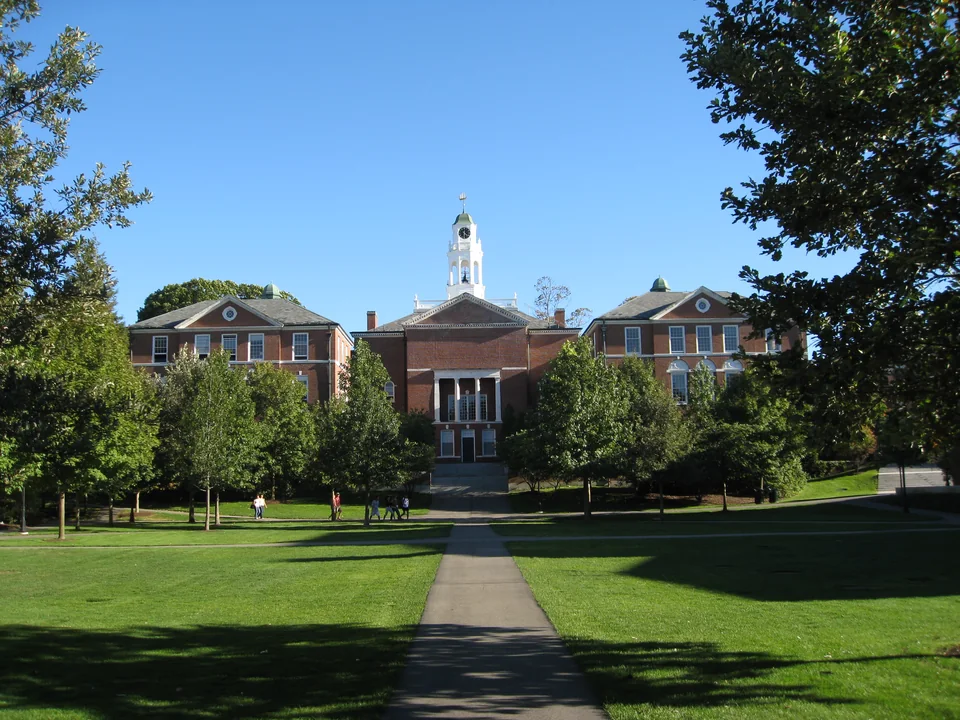
Which schools an international pupil can attend
American schooling lasts 12 years; high school covers grades 9–12, and its diploma is what colleges require.
| Option | Possible on F-1? | Length | Outcome |
|---|---|---|---|
| Private boarding school | Yes, if SEVP-certified and issuing Form I-20 | Through grade 12 | High School Diploma, AP courses |
| Private day school + host family | Yes, if the school issues an I-20; housing via school or agency | Through grade 12 | High School Diploma |
| Public high school | Yes, but max 12 months in total, with full cost reimbursed | One year at most | A record of the year, not a diploma |
| J-1 exchange year | No, a different visa | 1–2 semesters | Experience and English, not a diploma |
The public-school rule sits in 8 CFR 214.2(f): F-1 students at a public high school, including taxpayer-funded charter schools, are limited to an aggregate of 12 months including breaks and vacations, and at entry must show they reimbursed the local educational agency for the full, unsubsidised per-capita cost. A full diploma therefore means a private school.
J-1 secondary exchanges are regulated separately: one or two semesters, participants aged 15 to 18½ at the start, and only one such exchange per student. It is a good test of independence, but the diploma still requires a private school.
Which grade after Russian grade 9
A pupil finishing grade 9 in Russia is usually the age of an American 10th grader, but schools weigh maturity, English and curriculum:
- Grade 10. Three years to graduation, including grade 11, the year universities scrutinise most.
- Repeat grade 9. Many boarding schools invite international pupils to start in grade 9: four years leave time for English, AP courses and the extracurricular record universities assess.
The school sets the grade. It asks for reports for the current and two previous years, so grades 7–9 matter.
What a boarding school costs: three official fee lists
| School | Tuition and board, 2026/27 | Day pupil | Other costs |
|---|---|---|---|
| Choate Rosemary Hall, Connecticut | $73,530 + $1,000 technology fee = $74,530 | $57,610 | About $1,000 a year for books and supplies, mandatory health insurance, a phone with a U.S. plan, travel at breaks; 10% non-refundable deposit on signing |
| Phillips Academy Andover, Massachusetts | $79,800 | $63,840 | $125 application fee for international applicants; insurance, books, travel |
| Maine Central Institute, Pittsfield, Maine | $48,000 for 7-day boarding; $35,000 for 5-day boarding | $16,000 | In-school ESL programme; health insurance through the school's plan for international students; other expenses listed separately |
Choate and Andover are highly selective; Maine Central Institute shows what a mid-priced boarding school costs — it takes grade 9–12 boarders from many countries and runs ESL for them. Schools publish fees in different formats, so compare the full annual sum including mandatory fees, insurance and any paid ESL programme. Some schools give financial aid to international pupils — Andover explicitly invites them to apply — and the school sets the amount from the family's income documents. Fees are paid in dollars; our guide to paying for studies abroad from Russia explains the legal transfer options.
How private high schools admit international pupils
Andover's published process illustrates a selective school:
- Candidate profile on Gateway to Prep Schools, which also collects reports, recommendations and a graded writing sample.
- Interview on campus, by video or recorded; Andover interviews through January.
- Test. Upper-level SSAT or ISEE, or PSAT, SAT or ACT. The SSAT is offered at Prometric centres ($250), at home with remote proctoring ($263) or on paper at international sites; availability depends on where the pupil physically is on test day.
- English. Pupils from non-English-medium schools submit TOEFL iBT, IELTS or the Duolingo English Test; most international students admitted to Andover score at least 100, 7.5 or 135 respectively.
- Recommendations from current maths and English teachers, who may write in their own language.
- Deadline. Andover's is 1 February for September entry.
Most boarding schools follow a similar calendar, so SSAT and English preparation starts in grade 8 or 9 and applications go in seven to eight months before the start.
The F-1 visa for a minor
The visa rests on Form I-20 from an SEVP-certified school:
- The school issues the I-20 after admission and proof of funds for tuition and living costs.
- The family pays the SEVIS I-901 fee of $350.
- The DS-160 is completed and the $185 fee for non-petition nonimmigrant visas is paid.
- Interview. The U.S. Embassy in Moscow offers no non-diplomatic visa services and the consulates in Yekaterinburg and Vladivostok remain suspended; Russian nationals apply in Warsaw or Astana. F-1 applicants must set social media accounts to public. Fees are non-refundable.
- Entry no earlier than 30 days before the programme start date on the I-20.
On 17 July 2026 the Department of Homeland Security (DHS) published a final rule that would admit F-1 students for a fixed period — the time needed for the I-20 programme, capped at 4 years, plus 30 days after completion — instead of "duration of status". It was due to apply from 15 September 2026, but on 14 September a federal district court in Massachusetts issued a nationwide preliminary injunction, so duration of status still applies for now. If the rule does take effect, four years of high school fit within the period and moving to university requires a new I-20; below graduate level, students could not transfer or change educational level in the first academic year unless SEVP authorises an exception, for example a pupil who must change schools to complete secondary education. Either way, choose the school for the whole course and check SEVP and school updates before travel.
Details on documents, funds and the interview are in our F-1 student visa guide. Kazakh residents interview at the U.S. embassy or consulate in Kazakhstan. The consular section decides on the visa; U.S. border officers decide on admission.
Where the pupil lives and who is responsible
Boarders live in dormitories supervised by house parents, and the school takes on day-to-day care during the term. Day pupils live with a host family arranged by the school or an agency, at extra cost. There is no separate visa requirement for a guardian, but the school contract sets out who collects the pupil when dorms close and who makes emergency decisions when parents are abroad; settle this before signing.
To leave Russia without a parent, a minor needs a passport and a notarised consent from one legal representative under Article 20 of Federal Law 114-FZ. Russia's Consular Department notes that the consent can run until adulthood and must list the countries — the United States and, if the pupil travels alone to the interview, Poland or Kazakhstan.
After high school: university and recognition in Russia
An American diploma lets the graduate apply to colleges and universities as a domestic high school student; admissions look at grades 9–12, AP courses, SAT or ACT and the extracurricular record. See SAT or ACT, US universities for international students and the alternative route of US university entry after 11 years of school; country costs and visas are on studying in the USA. Russia and the USA have no recognition agreement, so for Russian university entry the diploma goes through Rosobrnadzor's procedure under Article 107 of the Education Law.
USA after grade 9 or after grade 11
| Criterion | US private school after grade 9 | US university after grade 11 in Russia |
|---|---|---|
| Age of departure | 15–16 | 17–18 |
| Cost before university | 3–4 years of school fees: $48,000 a year at a mid-priced boarding school, $74,000–80,000 at a leading one | None |
| English | Becomes a working language within a year or two | Must reach university level at home |
| University application | U.S. transcript, AP, teacher recommendations | Russian certificate, translation and credential evaluation, SAT/ACT, TOEFL |
| Risks | Early independence, high cost | Competing with better-prepared applicants |
For other countries see studying abroad after grade 9; German speakers can compare studying in Germany after 9th grade.
An 18-month plan
- Spring of grade 8. Decide whether to go after grade 9; start SSAT and TOEFL preparation.
- September–October of grade 9. Shortlist 6–10 schools of varying selectivity; create the Gateway profile.
- October–January. Tests, interviews, teacher recommendations.
- By 1 February. Applications; other schools by their own deadlines.
- March–April. Decisions, contract, deposit, I-20.
- May–July. SEVIS fee, DS-160, interview in Warsaw or Astana, notarised travel consent.
- August. Entry no earlier than 30 days before classes start.
Common mistakes
- Planning on a public school. On F-1 it is one year at most and at full cost.
- Using a J-1 exchange to earn a diploma. Exchanges last one or two semesters.
- Applying only to the two or three most famous schools. A balanced list is essential.
- Leaving English and the SSAT to grade 9. Deadlines fall in winter, so tests are taken in autumn.
- Forgetting that the interview is abroad. Plan the trip, an accompanying adult and booking times.
- Switching schools after one semester. The new school handles the transfer in SEVIS, and if the DHS fixed-period rule takes effect, first-year transfers will need SEVP approval.
FAQ
Only in a limited way. Under 8 CFR 214.2(f), an F-1 student may attend a public high school for no more than 12 months in total and must reimburse the school district for the full cost. A full diploma means a private school; the U.S. consular section decides on the visa.
Tuition and board for 2026/27 are $48,000 at Maine Central Institute, $74,530 at Choate Rosemary Hall, including the technology fee, and $79,800 at Phillips Academy Andover. Add insurance, books, travel and visa fees. Discounts and financial aid are decided by each school based on income documents.
The U.S. Embassy in Moscow does not issue nonimmigrant visas, so Russian nationals are directed to interview in Warsaw or Astana. Before that the school issues the I-20 and the family pays the SEVIS ($350) and visa ($185) fees. The consular section makes the visa decision.
Usually the SSAT or ISEE (some accept PSAT, SAT or ACT) and an English test: TOEFL iBT, IELTS or Duolingo English Test. Most international students admitted to Andover score at least 100 on the TOEFL iBT. Schools also ask for three years of reports, recommendations and an interview, and the school decides on admission.
There is no separate visa requirement. A boarding school provides daily supervision, while a day pupil lives with a host family. The school contract states who collects the pupil during breaks and who handles emergencies, so clarify it before signing.
Russia and the USA have no recognition agreement. For Russian university entry the diploma goes through Rosobrnadzor's recognition procedure under Article 107 of the Education Law, and Rosobrnadzor decides on each document. US universities accept the diploma directly.
Sources
- eCFR, 8 CFR 214.2(f): F-1 admission period, public schools, transfers (text as amended by the DHS final rule)
- IU Global: Duration of Status Update — injunction of 14 September 2026
- ICE SEVP: DHS final rule of 17 July 2026
- eCFR, 22 CFR 62.25: J-1 secondary school students
- eCFR, 22 CFR 22.1: $185 visa fee
- ICE: I-901 SEVIS fee
- U.S. Embassy in Russia: visas and designated posts for Russian nationals
- Phillips Academy Andover: 2026–2027 tuition, how to apply
- Choate Rosemary Hall: 2026–27 tuition
- Maine Central Institute: 2026–27 costs, ESL programme
- SSAT: testing options and pricing
- Russian MFA Consular Department: consent for a minor's travel
- Russian Ministry of Science and Higher Education: recognition agreements, Russian Education Law, Article 107
Sources checked on 2 October 2026. All amounts are in US dollars as published by schools and agencies.
If you want to work through your route, send a request: document preparation and submission are provided under an agreement with StudyU; the school makes the enrolment decision and the consular section of the U.S. embassy decides on the visa.
During the free initial consultation, we clarify your goal, profile, timing, and budget and identify the next realistic step.
Next steps
- Studying in the USA as a Russian Citizen: Interviews in Astana or Warsaw, Tests, Payments and Degree Recognition
- The University of Arizona: Admission for International Students
- Studying in the USA for international applicants
- F-1 Student Visa for the USA in 2026: I-20, Fees, Where to Interview and the New Fixed Period of Stay
- SAT or ACT: Which Test to Take for US Admission in 2026–27
- Universities in the USA for International Students: Types, 2026/27 Costs and How to Build Your List
