
You cannot enter medical school in the United States straight from secondary school. The MD route starts with a bachelor's degree (usually four years) that includes the required science courses, followed by the MCAT, four years of medical school and then residency. Few medical schools admit international applicants, and those that do set strict conditions: many require a bachelor's degree or at least a year of study at a U.S. or Canadian college and evidence that you can pay, and federal student loans are not available to international students. If you already hold a medical degree from Russia, Kazakhstan or another country, the path is different: ECFMG certification (USMLE Step 1 and Step 2 CK, OET Medicine) followed by the residency Match.
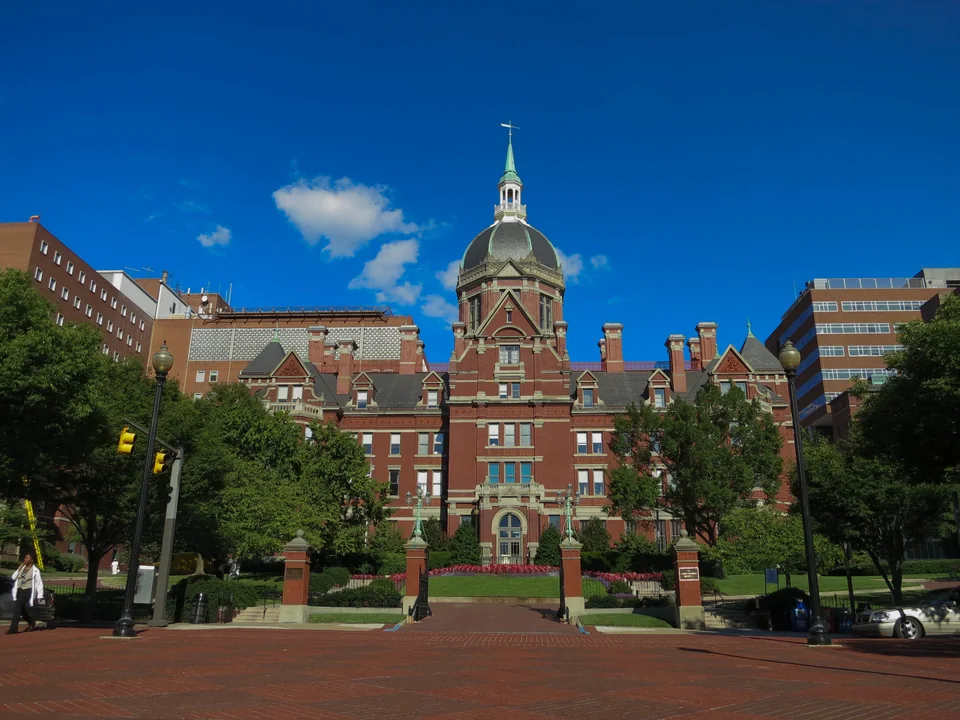
Two routes into U.S. medicine
| Route A: study in the U.S. from the start | Route B: medical degree abroad, then ECFMG | |
|---|---|---|
| Who it suits | secondary school students or early undergraduates | senior medical students and graduates |
| Stages | bachelor's → MCAT → medical school (MD) → residency | medical school abroad → USMLE Step 1 and Step 2 CK → OET and Pathways → ECFMG certificate → Match → residency |
| Minimum time to residency | about 8 years | depends on your stage; exams and certification usually take years |
| Cost | bachelor's plus MD: hundreds of thousands of dollars without aid (the first MD year at Harvard alone is $121,950) | exam and service fees run to thousands of dollars, plus preparation, travel and visas |
| Main risk | few schools admit international students, and there are no federal loans | in 2026, 56.4% of non-U.S.-citizen international graduates matched into residency |
Both routes end in U.S. residency. Without it you cannot obtain a U.S. medical licence, whatever degree you hold. For a general overview, see our study in the USA page.
How U.S. medical education works
1. Bachelor's degree. There is no undergraduate major called "medicine". Students choose any major, from biology to psychology or history, and complete the courses medical schools require. This track is called pre-med: it is a plan of courses and advising, not a degree.
2. The MCAT. The standardised admission test for medical school, usually taken in the third undergraduate year or after graduation. Schools set their own validity windows: the University of Pennsylvania's Perelman School of Medicine, for autumn 2027 entry, accepts MCAT scores from January 2023 to September 2026.
3. Applying to medical school. You submit a primary application through AMCAS, then each school sends a secondary application with its own fee. The cycle is long: Perelman's primary AMCAS deadline is 15 October and its secondary deadline 15 November, for study starting the following autumn.
4. Medical school (MD). Four years of foundational science and clinical rotations. Students take USMLE Step 1 and Step 2 CK during this time.
5. Residency. Paid specialty training, allocated through the National Resident Matching Program (NRMP). It lasts from three years in internal medicine, paediatrics and family medicine to five or more in surgical specialties. Residents take USMLE Step 3, and the state medical board issues the licence.
The U.S. also has osteopathic schools awarding the DO degree, whose graduates also enter residency but follow their own admissions and exams. This guide covers the MD route.
The bachelor's degree and pre-med: what to achieve in four years
Medical schools look beyond grades at how applicants have tested their commitment to medicine. A typical profile at the time of application includes:
- science foundations: biology, general and organic chemistry, biochemistry, physics, maths and statistics, with laboratory work. Perelman, for example, requires no specific course list but expects demonstrated competency in biology, chemistry, physics, biochemistry and mathematics;
- behavioural and social sciences: psychology, sociology and how social factors affect health;
- clinical exposure: volunteering or working with patients;
- research: laboratory experience, particularly for research-intensive schools;
- recommendations from faculty and supervisors, and a personal statement.
Harvard Medical School requires at least three years of college work and a bachelor's degree before matriculation. If you choose a bachelor's programme with medicine in mind, check whether the university has a pre-med adviser and which courses first-years can take. Our guide to bachelor's degrees in the USA covers the choice, and our profiles of Harvard and the University of Pennsylvania show how undergraduate aid works at that stage.
How many medical schools admit international students
Not many. State medical schools are funded by their states and mainly admit residents, while private schools often set extra conditions for international applicants. Three well-known private schools illustrate this:
| School | Conditions for international applicants |
|---|---|
| Harvard Medical School | at least one year of college in the U.S. or Canada; the school says international applicants without a U.S. or Canadian bachelor's or advanced degree are rarely accepted |
| Penn Perelman School of Medicine | the same admission standards for everyone; applicants with a bachelor's from outside the U.S. or Canada must complete a full-time year of science coursework (biology, chemistry, biochemistry, physics, maths) before applying; non-U.S. citizens cannot receive federal loans and must show they can pay through school scholarships and/or personal funds |
| NYU Grossman School of Medicine | only applicants with a bachelor's from an accredited U.S. or Canadian institution, including international students; every MD student receives a full-tuition scholarship |
The practical conclusion: a school leaver from Russia or Kazakhstan has a more realistic path to a U.S. MD if they complete their bachelor's in the U.S. or Canada. Check each school's policy on its website and in MSAR (Medical School Admission Requirements), the database run by the Association of American Medical Colleges (AAMC), which shows whether a school considers international applicants.
What it costs to become a doctor in the U.S.
Medical school. Harvard Medical School's first-year budget for 2026–27 is $121,950 for ten months, including $76,828 tuition. At that price four years would cost around half a million dollars, and prices rise every year. 72% of HMS students receive aid, a figure that covers all students, not specifically international ones.
Loans and scholarships. U.S. federal student loans are not available to international students. Perelman states that non-U.S. citizens must show they can pay through school scholarships, personal funds or both. NYU Grossman waives tuition for every MD student, but housing, food and insurance remain the student's responsibility. Ask each school whether international students are considered for its own scholarships and for how many years funds must be documented.
Bachelor's degree. Add four more years. At Harvard, for example, the 2026–27 budget before aid is $95,134–100,134. Harvard gives international students aid on the same terms as U.S. citizens, so the real cost depends on family income; other private universities can be stricter with international applicants. Our guide to the cost of studying in the USA compares budgets.
Route B exam and service fees (2026–2027 rates):
| Item | Amount |
|---|---|
| MyIntealth account | $110 |
| Application for ECFMG Certification | $580 |
| USMLE Step 1 | $695 + $210 outside the U.S. and Canada |
| USMLE Step 2 CK | $695 + $235 outside the U.S. and Canada |
| 2027 Pathways application | $945 |
| Credential verification request | $220 |
| USMLE Step 3 (usually during residency) | $955 |
On top of this come OET Medicine, preparation courses, travel to test centres, residency interviews and visas. All amounts are in U.S. dollars as published by ECFMG and USMLE.
If you are already a doctor or medical student: ECFMG certification
International medical graduates (IMGs) must obtain ECFMG certification before starting residency. ECFMG is part of Intealth. The main steps:
- Open a MyIntealth account and apply for ECFMG certification. Your diploma and transcript are verified with your medical school.
- Pass USMLE Step 1 and Step 2 CK at a test centre. If none operates in your country, budget for travel and the international surcharge.
- Meet the clinical and communication requirement through a Pathway. For 2027 there are six: for doctors already licensed in another country; for graduates who passed an OSCE at an eligible school; for schools accredited by an agency recognised by WFME or with an NCFMEA comparability determination; for schools awarding joint degrees with a U.S. school; and a pathway based on Mini-CEX clinical evaluation. Every Pathways applicant, regardless of native language, must pass all four OET Medicine sub-tests. The 2027 Pathways deadline is 31 January 2027, and OET scores must reach ECFMG by the same date, so aim to test by December 2026.
- Apply to residency through ERAS and take part in the NRMP Match.
School accreditation. Intealth currently applies its Recognized Accreditation Policy for information only; it does not affect eligibility for ECFMG certification. Accreditation does matter for Pathway 3. Among WFME-recognised agencies, the only one listed for Russia is IAAR, a Kazakhstan-based agency accrediting schools across borders (recognised until January 2028). Kazakhstan, Kyrgyzstan and Uzbekistan have other listed agencies as well, and Georgia has its national agency NCEQE. Check whether your school holds such accreditation.
Match outcomes. In the 2026 Match, IMGs filled 9,682 first-year positions, about 23.6% of all matched applicants. U.S.-citizen IMGs matched at 70.0% and non-U.S.-citizen IMGs at 56.4%. These are overall figures, not a forecast for any candidate: results depend on scores, U.S. clinical experience, letters and specialty choice.
Residency visas. International doctors usually train on a J-1 visa sponsored by ECFMG, or on an H-1B if the programme sponsors one. A rule ending "duration of status" for F and J visa holders was due to take effect on 15 September 2026, but on 14 September a federal court in Massachusetts postponed it while the litigation continues. For now J-1 physicians are still admitted for the duration of their programme.
Step-by-step plans
If you are at school (Route A):
- Grades 9–11. Strong results in biology, chemistry, maths and English; early olympiads, research projects and patient-facing volunteering.
- Final year. Apply to a bachelor's programme in the U.S. or Canada at a university with pre-med advising. See our guide to applying to US universities.
- Years 1–3. Required courses, lab work, clinical volunteering and relationships with faculty who will write your letters.
- Year 3 or after graduation. Take the MCAT and apply through AMCAS about a year before medical school starts.
- Four years of MD, USMLE Step 1 and Step 2 CK, then the residency Match.
If you are a medical student or doctor (Route B):
- Check your school: does it meet ECFMG requirements, and does it hold recognised accreditation (relevant to Pathway 3)?
- Open MyIntealth, apply for ECFMG certification and register for Step 1, usually after pre-clinical courses.
- Step 2 CK and OET Medicine, then Pathways by 31 January of your Match year.
- U.S. clinical experience (observerships or externships) and letters from U.S. physicians; without them the Match is very hard.
- ERAS and the Match, then a J-1 or H-1B visa.
Alternatives if the U.S. route does not fit
If budget or timing rules out Route A, you can study medicine in Europe or Asia, where programmes start after secondary school, and pursue ECFMG certification later if you still want U.S. residency. Compare options in our guides to medicine in Germany, medicine in Italy and the IMAT, medicine in China and our medicine page. Remember that practising in the U.S. still requires U.S. residency.
Common mistakes
- Looking for a U.S. "medicine after school" programme. It does not exist: a bachelor's degree comes first.
- Doing your bachelor's outside the U.S. and Canada when a U.S. MD is the goal. Many schools require at least a year of U.S. or Canadian study, and Harvard says it rarely admits international applicants without such a degree.
- Counting on federal loans. International students cannot use them, and schools ask to see your funding in advance; how many years must be covered varies by school.
- Taking Step 1 and Step 2 CK without a Match strategy. Exams are only part of the competition; U.S. clinical experience and letters matter.
- Confusing accreditation checks with eligibility. The accreditation policy is currently informational, but school accreditation matters for Pathway 3.
FAQ
No. The MD requires a bachelor's degree: Harvard Medical School, for example, requires at least three years of college and a bachelor's degree before matriculation.
Some do, on strict terms. Harvard requires a year in the U.S. or Canada and says it rarely admits international applicants without a U.S. or Canadian degree; NYU Grossman considers only graduates of U.S. or Canadian colleges; Perelman asks applicants with a foreign degree to complete a year of science coursework first. Many state schools mainly admit their own residents.
At Harvard Medical School the first year in 2026–27 costs $121,950, including $76,828 tuition. At that rate four years come to roughly half a million dollars before price increases and aid.
Only after completing U.S. residency. That requires ECFMG certification (USMLE Step 1 and Step 2 CK, OET Medicine and a Pathway) and the Match. In 2026, 56.4% of non-U.S.-citizen IMGs matched.
Check the current list of test centres when you register. If there is none in your country you will need to test abroad, and the international surcharge is $210 for Step 1 and $235 for Step 2 CK.
Yes. ECFMG requires OET Medicine from every Pathways applicant regardless of native language or language of instruction.
Under a service agreement we help you choose a bachelor's programme with pre-med in mind, plan testing, prepare documents and aid forms, and, for medical graduates, plan the examination sequence. Medical schools, ECFMG and U.S. consulates make the admission, certification and visa decisions.
Sources
- Harvard Medical School: Eligibility
- Harvard Medical School: Cost of Attendance
- Penn Perelman School of Medicine: Admissions FAQ
- NYU Grossman School of Medicine: MD Admissions and Admissions Requirements
- ECFMG: 2027 Pathways
- ECFMG: Fee Increases Beginning April 1, 2026
- ECFMG: IMGs in the 2026 Residency Match
- ECFMG: D/S Final Rule Postponed (23 Sep 2026)
- USMLE: Apply for Exams (2026–2027 fees)
- WFME: agencies with recognition status and note on the Intealth policy
- Harvard College: Cost of Attendance
If you want to know which of the two routes is realistic for your education and budget, send us an application.
During the free initial consultation, we clarify your goal, profile, timing, and budget and identify the next realistic step.
Next steps
- Bachelor's Degree in the USA: How It Works, What It Costs and How to Apply for 2027
- Harvard University
- University of Pennsylvania (Penn)
- Cost of Studying in the USA in 2026: Tuition, Living Costs and a Realistic First-Year Budget
- Studying in the USA for international applicants
- Studying Medicine in Germany as a Non-EU Applicant: Quotas, Selection, TMS, German C1 and Approbation
