
You can study design abroad at three kinds of institutions: specialist art and design schools, design faculties inside ordinary universities, and private fashion and design institutes. Almost everywhere, admission turns on a portfolio, an interview or a creative test rather than on school grades. For 2026/27, annual tuition ranges from $180–4,480 (€157–3,943) at Politecnico di Milano, and no tuition at public universities in most German states, to $66,460 at the private Rhode Island School of Design. The most common trap for applicants with an 11-year school certificate from Russia or another CIS country is the UK, where direct entry to a bachelor's degree usually requires a foundation year or A-levels first.
This guide compares countries by language, entry with an 11-year certificate and cost, explains how creative selection works, sets out a timeline for the 2027/28 intake and lists the mistakes that cost applicants a year.
| In brief | Answer |
|---|---|
| How applicants are selected | portfolio and interview (UK, US, private schools), an entrance test (TOLD at Politecnico di Milano), an aptitude assessment in the local language (Germany) |
| Is an 11-year certificate enough? | usually in the US; in the UK you need a foundation course, A-levels or another recognised school qualification; in Italy and the Netherlands it depends on the institution |
| Language | English in the UK, the US, private schools in Italy and France and Dutch art academies; German at B2 at public art universities such as UdK Berlin |
| Tuition for 2026/27 | from $180 (€157) at Politecnico di Milano to $35,770 (£27,000) at Goldsmiths and $66,460 at RISD |
| Key UK date | 13 January 2027, 18:00 UK time — UCAS equal-consideration date for most 2027/28 courses |
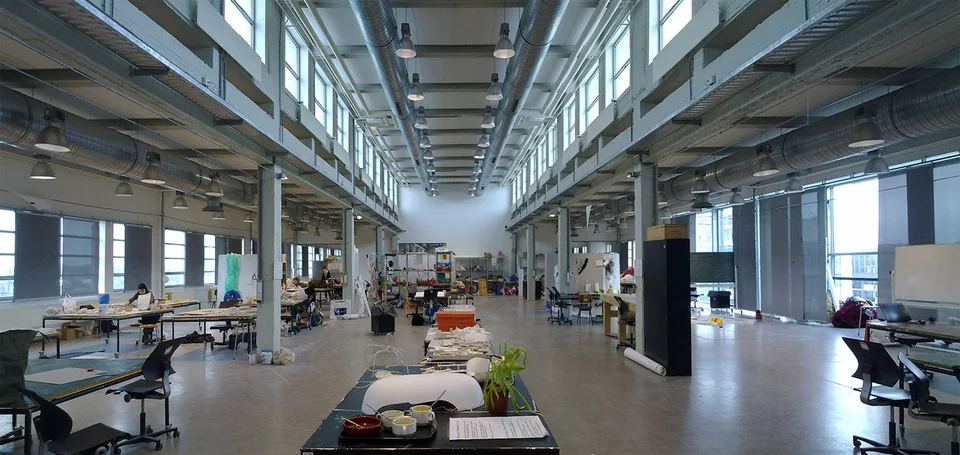
Which design fields you can study
"Design" covers disciplines with different preparation, different entrance tests and different jobs after graduation. Choose the field first and the country second: a strong fashion school and a strong industrial design school are rarely the same institution.
| Field | What you work on | Typical degree title | What selectors look for |
|---|---|---|---|
| Graphic and communication design | identity, typography, packaging, visual systems | BA, BDes, BFA; MA or MDes at master's level | sketches, type and layout, series of work rather than single images |
| Interaction and UX/UI design | digital products, services, user behaviour | BA, BSc or BDes; often a master's after another bachelor's | research, prototypes, the logic behind decisions |
| Industrial and product design | objects, devices, furniture, transport | BA, BDes; BSc at engineering universities | sketches, models, understanding of materials and manufacturing |
| Interior and spatial design | spaces, exhibitions, public interiors | BA, BDes | spatial thinking, drawings, photos of models |
| Fashion and accessories | collections, pattern cutting, materials | BA, BFA | sketchbook, development of an idea, samples, fabric work |
| Game design, animation, motion | game mechanics, characters, movement | BA, BSc | storyboards, animations, playable prototypes |
If you have not settled on a field, a broad first year helps. UK programmes simply called "Design", such as the BA Design at Goldsmiths, let students try several practices before specialising.
Countries compared: language, entry and cost
| Country | Language | Entry with an 11-year school certificate | Selection | Example tuition, 2026/27 |
|---|---|---|---|---|
| United Kingdom | English, IELTS 6.0 or higher | direct entry needs A-levels, another recognised school qualification or a foundation course | UCAS application, portfolio, interview | BA Design, Goldsmiths: $35,770 (£27,000) a year |
| Netherlands | English at art academies; engineering design at TU Delft is taught in Dutch | depends on the academy — check before applying | the academy's own creative selection | Royal Academy of Art, The Hague (KABK): $13,040 (€11,488) a year for non-EEA students |
| Italy | Politecnico bachelor's mainly Italian; private schools English | recognition rules explained in our Italy guide | TOLD at Politecnico; portfolio and interview at private schools | Politecnico di Milano: $180–4,480 (€157–3,943); Istituto Marangoni Milan: $33,840 (€29,800) including the enrolment fee |
| Germany | German, often B2 by enrolment | the status of your certificate is assessed first | creative test or portfolio review (Mappe) | no tuition at public universities in most states; a semester contribution remains |
| United States | English | an 11-year certificate is usually accepted | application, portfolio, essays, references | RISD: $66,460 tuition plus $1,216 in fees |
| France | public schools in French; private schools in English | depends on the school | competitive exam or portfolio and interview | private schools cost as much as Italy's or more; see Istituto Marangoni Paris |
| Turkey | English or Turkish | direct entry after 11 years of school | portfolio or interview, sometimes a drawing test | many private creative programmes cost $5,000–25,000 a year, based on our Turkey design research |
Two details deserve a check before you shortlist. At TU Delft, the Industrial Design Engineering bachelor's is taught only in Dutch; the university offers just four bachelor's programmes in English, and design is not one of them. Dutch art academies such as KABK charge non-EEA students an institutional fee and require the money for tuition, living costs and the residence permit — almost $29,520 (€26,000) — to be paid up front.
For the Italian route, the TOLD test and Milan's private schools, see our guide to design and fashion schools in Italy. For tuition-free study in Germany and its exceptions, see free university education in Germany.
How creative selection works
A portfolio is read as evidence of how you think, not as a gallery of your best pictures. Still, each system tests it differently, and preparation should follow the format.
- United Kingdom. You apply through UCAS, and the school may invite you to an interview with your portfolio. Goldsmiths asks international applicants who cannot attend in person to send an electronic portfolio and to include only work they can talk about.
- Politecnico di Milano. Bachelor's places at the School of Design are allocated by the TOLD test; no portfolio is required. At master's level the opposite applies: projects are the main criterion.
- Germany. Public art universities review a folder of work (Mappe) and hold an aptitude assessment. Language is checked separately: at UdK Berlin, programmes requiring B2 accept an application with a B1 certificate, but full B2 is needed to enrol.
- United States. The portfolio is uploaded with the application, alongside essays and references, and the school weighs both creative work and academic record.
- Private schools in Italy, France and Turkey. Usually a portfolio, a motivation letter and an online interview. Selection is gentler; tuition is higher.
Limited life drawing is not always a problem. For graphic and digital design, project series, research and clear reasoning often matter more. Fashion and industrial design are harder to enter without hand sketches and physical models.
Your school certificate: when a preparatory year is needed
In the UK, an 11-year Russian certificate normally does not give direct entry to a bachelor's degree. Goldsmiths states that applicants from Russia need A-levels, a comparable international school qualification or a recognised foundation course. For design this is usually a Foundation Diploma in Art and Design or a university's international foundation year; see our guide to the foundation year in the UK.
US colleges accept an 11-year certificate and assess the whole application, so grades, essays and portfolio count together. Italy's recognition rules depend on years of schooling and the university. Germany first checks the status of your certificate and, for art programmes, your creative aptitude. Turkish universities admit students directly after 11 years.
If you are finishing 10th grade, you can either apply after 11 years with a preparatory year or move to a school offering A-levels or another international qualification. The second route takes longer and costs more, but it removes the recognition problem.
What a year of design study costs: 2026/27 examples
| Institution and programme | Tuition, 2026/27 | Worth knowing |
|---|---|---|
| Politecnico di Milano, School of Design (bachelor's) | $180–4,480 (€157.04–3,943.04) | depends on family income; mostly taught in Italian |
| Royal Academy of Art, The Hague (KABK) | $13,040 (€11,488) | institutional fee for non-EEA nationals |
| Goldsmiths, BA Design | $35,770 (£27,000) | three years including a professional placement in Year 2 |
| Istituto Marangoni Milan, Fashion Design & Accessories | $33,840 (€29,800) | $4,540 (€4,000) annual enrolment fee plus $29,300 (€25,800) tuition for non-EU students, September 2026 start |
| Rhode Island School of Design (bachelor's) | $66,460 plus $1,216 in fees | housing and dining are charged separately |
| Private creative programmes in Turkey | typically $5,000–25,000 a year, based on our research updated in September 2026 | materials, printing and equipment are extra |
Materials, printing, model-making, software and hardware come on top of tuition, and in creative subjects they add up: a laptop and a graphics tablet are needed from the first term, and final-year production costs rise. Rent in London, Milan, The Hague or New York is often comparable to tuition itself.
Bachelor's, master's or a short course
A bachelor's degree takes three years in the UK and Italy and four in the US and Turkey. It suits applicants who are still building their first portfolio.
A master's degree suits those who already hold a degree and have projects to show. UK MA programmes often last one year; in Italy and the Netherlands, two. English-taught options are wider at this level: Politecnico di Milano teaches Digital and Interaction Design and Product Service System Design in English, for example. Career changers are common too, especially in UX and service design, when they can show project work.
Short programmes — summer schools and one-term or one-year courses at private schools — help you build a portfolio or test your interest. They do not award a bachelor's degree, and study longer than a few months requires a visa with its own conditions.
Working after graduation: what to check before choosing a country
A design degree rarely settles the question of a first job on its own: employers look at your portfolio and your experience of real projects. So when choosing a programme, find out whether it includes a professional placement — as in Year 2 of the BA Design at Goldsmiths — and where graduates in your particular field work.
The second part of the question is the right to stay after graduating, which the country's immigration authority decides, not the school. In the UK, graduates can apply for the Graduate visa to look for work and work: it lasts 2 years if you apply on or before 31 December 2026 and 18 months if you apply from 1 January 2027. Anyone starting a three-year bachelor's in 2027 should therefore plan on 18 months. The Netherlands offers a separate residence permit for an orientation year to look for work after graduation.
If you plan to return home after graduating, think about recognition of your degree. In Russia, a foreign qualification carries academic and professional rights only after recognition under Article 107 of the Law on Education. Design clients rarely care, since they judge the portfolio, but you will need recognition if you later want to continue studying at a Russian university.
Timeline for the 2027/28 intake
- September–October 2026. Choose your field and five to eight programmes in two or three countries. Check the language, school-certificate and portfolio requirements on each programme page.
- October–December 2026. Tailor the portfolio to each format and take your English test.
- By 13 January 2027. Submit your UCAS application if you are applying to the UK; later applications are considered only if places remain. The full UK timeline is in our guide to applying to UK universities.
- January–May 2027. Interviews, creative tests, TOLD at Politecnico and offers. Dutch deadlines and the Studielink procedure are covered in applying to Dutch universities.
- May–August 2027. Payment, proof of funds, housing and visa.
Visas and payments for Russian citizens
A full degree requires a student visa, and the rules on funds and where to apply differ for Russian citizens: US visa interviews take place in third countries, while the UK and the Netherlands have their own proof-of-funds procedures. See our guides to the UK student visa, the US F-1 visa and the Dutch student residence permit.
Payments from Russia must go through legal channels, and the school's bank may ask where the money comes from. Current options are explained in how to pay for studies abroad from Russia.
Common mistakes
- Choosing by overall ranking rather than field. A school famous for fashion may be weak in industrial design; compare programmes, workshops and graduate work.
- Sending one portfolio everywhere. A British school wants process and sketches, a private Italian school finished projects, a German academy its own format.
- Assuming TU Delft's design bachelor's is in English. Industrial Design Engineering is taught in Dutch.
- Applying to the UK with only an 11-year certificate. Without a foundation course or A-levels, direct bachelor's entry is usually closed.
- Forgetting German. No tuition in Germany does not remove the B2 requirement for enrolment.
- Budgeting for tuition only. Materials, equipment and rent in design capitals can double the bill.
FAQ
Public universities charge least: Politecnico di Milano starts at $180 (€157) a year for 2026/27, and most German states charge no tuition. In both cases, however, bachelor's teaching is in the local language, so budget an extra year or more for language study.
Yes, if your portfolio shows how you think and develop ideas. Art school is not required for graphic or digital design; for fashion and industrial design, sketchbooks, models and series of drawings partly replace it. A UK foundation year is designed to build exactly that base.
In the UK, the US and private schools in Italy and France, almost always. The exception is the bachelor's at Politecnico di Milano's School of Design, which selects by the TOLD test. German universities speak of a folder of work and an aptitude assessment, which amounts to the same thing.
Tuition-free bachelor's degrees taught in English are rare. Germany's free public programmes and Italy's low-cost ones are usually taught in the local language. English-taught options are mostly fee-paying or at master's level, and institutional scholarships — with conditions set by each school — are the main way to reduce the cost.
A bachelor's takes three years in the UK and Italy and four in the US and Turkey. A master's lasts from one year in the UK to two years in Italy and the Netherlands. Applicants heading to the UK from an 11-year school system should add a preparatory year.
For a bachelor's, usually IELTS 6.0–6.5 or an equivalent test. Goldsmiths asks for 6.0 overall on the BA Design, with 6.0 in writing and no component below 5.5. Always check the programme page before booking the test.
Sources
- Goldsmiths, University of London: BA (Hons) Design — 2026/27 fee, IELTS, portfolio
- Goldsmiths: requirements for applicants from Russia
- UCAS: dates and deadlines for 2027/28 entry
- KABK Royal Academy of Art, The Hague: tuition fees 2026/27
- TU Delft: BSc Industrial Design Engineering and English-taught bachelor's programmes
- UdK Berlin: German language requirements
- Rhode Island School of Design: 2026–27 tuition and fees
- GOV.UK: Graduate visa — length of stay
- Federal Law on Education in the Russian Federation, Art. 107 — recognising foreign qualifications (in Russian)
- IND: residence permit for an orientation year
- Politecnico di Milano and Istituto Marangoni figures come from our Italy design guide, where each amount links to its official source; the Turkey range comes from our Turkey design cost research.
Dollar figures are converted at the ECB reference rate for 29.09.2026 (€1 = $1.1355; pound via the ECB cross rate, £1 ≈ $1.3247) and rounded to the nearest $10, or to the dollar below $100.
Matching fields and programmes to your portfolio, checking certificate and language requirements, and preparing documents and applications are provided under an agreement with StudyU. The school or university decides on admission, and the consulate decides on the visa.
Next steps
- Istituto Marangoni Paris
- Design and Fashion Schools in Italy: Politecnico, AFAM Academies and Private Schools
- Free University Education in Germany for International Students: Where Tuition Is Zero and What You Still Pay
- Foundation Year in the UK: Types, Entry Requirements, Costs and Progression
- Applying to UK Universities for 2027: A Step-by-Step Plan for International Students
- Applying to Dutch Universities for 2027/28: Deadlines, Studielink, Documents and the Residence Permit
