
A Swiss boarding school is the most expensive school route in Europe: for 2026/27 full boarding at Brillantmont in Lausanne costs $119,000–133,000 (CHF 99,500–111,000) a year and at TASIS near Lugano $127,502 (CHF 106,500). A pupil from Russia needs a national D visa and a cantonal residence permit for education under Article 27 of the Swiss Foreign Nationals and Integration Act (AIG); the canton decides, and the school must take responsibility for supervising a minor. Cantonal practice differs: Zurich, for example, does not normally admit pupils under 18. For Russian citizens we recommend A-levels, an American High School Diploma or the Swiss Matura rather than the International Baccalaureate, an organisation designated "undesirable" in Russia.
| At a glance | Position on 2 October 2026 |
|---|---|
| Needed for study over 90 days | National D visa plus a cantonal permit for education (Art. 27 AIG) |
| Who decides | The cantonal migration office; the embassy issues the visa only after cantonal approval |
| Conditions for a pupil | School confirmation, accommodation, funds, ability to follow the programme; supervision of a minor |
| School requirements | Full-time, in-person teaching of at least 20 hours a week; boarding schools count as full-time schools |
| Boarding, 2026/27 | Brillantmont $119,122–132,889 (CHF 99,500–111,000), TASIS $127,502 (CHF 106,500) a year |
| Routes other than the IB | A-levels, American High School Diploma, Swiss Matura, German Abitur, French Baccalauréat |
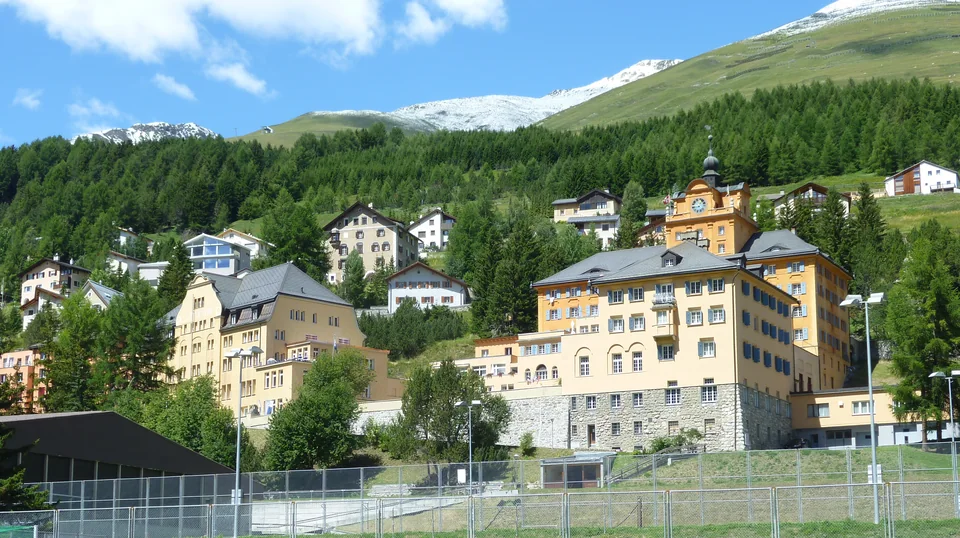
How Swiss boarding schools differ from English ones
An English independent school follows the national GCSE and A-level path. Swiss boarding schools were built for international families, so one campus often runs two or three sections leading to different leaving qualifications:
| Programme | Language | Opens the way to | Best for |
|---|---|---|---|
| A-levels | English | UK universities directly; other countries on their own rules | Pupils aiming at the UK or English-taught bachelor's degrees in Europe |
| American High School Diploma with AP courses | English | US colleges with SAT/ACT | Pupils considering a US bachelor's |
| Swiss Matura (Gymnasium) | German or French | Swiss universities without extra exams | Pupils ready to study in the canton's language and stay in Switzerland |
| Abitur, French Baccalauréat | German, French | Universities in Germany, France, Belgium | Strong linguists with a clear target |
| International Baccalaureate | English | — | Not recommended for Russian citizens |
The Swiss Matura is the most local and most demanding option, with two or three languages, usually taught in the canton's language. English-medium international sections are easier to start but lead to a foreign certificate. Public Swiss gymnasiums serve local residents and are not a route for a pupil arriving without family.
What a year costs: official fee lists
| School | Canton | Programmes | Boarding per year | One-off payments |
|---|---|---|---|---|
| Brillantmont International School | Vaud (Lausanne) | A-levels or American High School Diploma | Grades 8–9 $119,122 (CHF 99,500), grade 10 $125,706 (CHF 105,000), grades 11–13 $132,889 (CHF 111,000); 2026/27, VAT included | Deposit $14,366 (CHF 12,000), refunded at the end |
| TASIS The American School in Switzerland | Ticino (Montagnola, Lugano) | US diploma and AP; also runs the IB | $127,502 (CHF 106,500) for middle and high school, 2026/27 | Application $1,497 (CHF 1,250), deposit $3,592 (CHF 3,000), one-time campus fund $5,986 (CHF 5,000) |
| Institut Montana Zugerberg | Zug | Swiss Gymnasium and international section | $84,283–87,156 (CHF 70,400–72,800) a year; the page does not state the school year | Admission fee $6,585 (CHF 5,500), deposit $5,986 (CHF 5,000) |
Usually excluded: compulsory Swiss health insurance, exam fees, private lessons, ski weeks and trips, flights and pocket money. Day places cost 2.5–3 times less — $40,705–45,494 (CHF 34,000–38,000) a year at Brillantmont — but are not an option for a child without family in Switzerland. Fees are paid to the school in Swiss francs; our guide to paying for studies abroad from Russia covers the legal transfer routes.
The permit for a minor: how Switzerland decides
Article 27 AIG allows admission for education when the school management confirms the pupil can start, suitable accommodation is available, the necessary funds exist, and the pupil meets the personal and educational requirements. For minors, supervision must also be ensured.
The Federal Office for Migration (SEM) directives, as amended to 15 June 2026, add detail:
- Full-time schools. Permits are granted only for in-person study of at least 20 hours a week; boarding schools are expressly treated as full-time schools.
- Personal appearance. Visa-required applicants appear in person at the Swiss representation for an interview that also assesses the language of instruction and plans after school.
- Documents. School confirmation, proof that fees are paid (or that the school's rules do not require prepayment), proof of funds, a motivation letter, CV, the language assessment sheet and a written declaration that the pupil will leave Switzerland after the studies; the embassy may verify authenticity.
- Funds. A confirmation from a Swiss-licensed bank, a written undertaking by a solvent Swiss resident, or a binding written commitment of a scholarship or loan.
- Permit type and length. Over one year means a B permit, under one year an L permit. Total study time is normally capped at 8 years, with exceptions for logical sequences such as boarding school followed by gymnasium.
- No entitlement. Article 27 gives no right to a permit; a canton may refuse even when the conditions are met.
Cantons apply this differently. Zurich's migration office, in its directive of 19 November 2021, states that it does not admit pupils or students under 18, except exchange pupils and exceptionally talented young musicians, artists or athletes, because anyone taking a minor into their household needs a separate foster-care permit; in those exceptional cases the school or host gives a written supervision undertaking and the parents consent in writing. Most boarding schools are in Vaud, Valais, Ticino, Bern and Graubünden, and each school knows its canton's practice from its own pupils — ask before signing a contract. Check whether the school is listed in the Swiss Private School Register (Privatschulregister Schweiz): under SEM's directives cantons presume that registered schools meet the training requirements for foreign pupils. That settles questions about the school, not about the pupil.
Applying from Russia
Residents of Russia apply for the national D visa in person at the visa section of the Swiss Embassy in Moscow by appointment; residents of Kazakhstan apply at the embassy in Astana. The embassy forwards the file to the cantonal migration office and issues the visa only after the canton agrees; the whole process usually takes 8–12 weeks, and the application can be lodged no earlier than three months before entry, so book the appointment as soon as the place is confirmed. At Brillantmont, for example, the school starts the visa and permit process only after the deposit is paid, and permit fees are already included in the annual fee. Documents, fees and booking are covered in our Swiss student visa guide, and the general picture for Russian citizens in studying in Switzerland as a Russian citizen. After arrival the pupil registers with the commune and receives a permit card, renewed each year with proof of progress and funds.
How schools admit international pupils
- Application form and fee. TASIS charges CHF 1,250; Brillantmont charges boarding applicants a non-refundable CHF 2,000 registration fee.
- School reports for the last two or three years, translated, plus teacher references.
- Tests in English or the language of instruction and in mathematics; some schools accept recognised language certificates.
- Interview with the pupil and parents, often by video.
- Offer and deposit. The place is held once the contract is signed and the deposit paid: CHF 12,000 at Brillantmont, CHF 3,000 at TASIS.
Boarding schools admit year-round while places last, but the permit alone takes 8–12 weeks plus document collection, so start about a year before September.
Supervision, guardianship and parental consent
Swiss schools usually do not ask for a separate local guardian as English schools do: for the permit, what matters is the boarding school's written commitment to supervise the child and the parents' written consent to study in Switzerland. Check in the contract who looks after the pupil on closed weekends and who represents the parents with doctors and the migration office — schools typically ask for a power of attorney.
To leave Russia without a parent, a minor needs a passport and a notarised consent from one legal representative under Article 20 of Federal Law 114-FZ. Russia's Consular Department explains that the consent may run for any period up to adulthood and must list the destination countries, so include Switzerland and transit countries.
After school and recognition in Russia
The Swiss Matura leads to Swiss universities, A-levels to the UK, the American diploma to US colleges. How Swiss universities assess a Russian certificate after grade 11, if the pupil returns earlier, is explained in universities in Switzerland; hospitality-minded pupils can read hospitality management in Switzerland. Country costs and visas are summarised on studying in Switzerland. Russia has no education recognition agreement with Switzerland, so a Swiss or other foreign school certificate goes through Rosobrnadzor's recognition procedure (Article 107 of the Education Law) for entry to a Russian university.
Switzerland or England
| Criterion | Swiss boarding school | English boarding school |
|---|---|---|
| Boarding fee, 2026/27 | $119,000–133,000 at Brillantmont, $127,502 at TASIS | $77,000–82,000 at Oakham, Millfield, Rugby |
| Programmes | Several sections in one school | National GCSE and A-levels |
| Languages | English plus French, German or Italian | English |
| Permit for a child | Cantonal decision; some cantons restrict under-18s | Child Student visa for ages 4–17 under national rules |
| Guardian | The school supervises | Schools require a UK guardian |
See our detailed guide to private schools in England and the country comparison in studying abroad after grade 9.
Common mistakes
- Choosing by reputation before checking the curriculum. Many famous boarding schools teach only the IB in the final years, leaving no A-level or US diploma route.
- Ignoring the canton. It decides whether an under-18 pupil is admitted and what supervision documents are needed.
- Starting with a language course and switching schools later. Migration offices rarely approve a change of programme without strong reasons.
- Applying a month before term. Embassy and canton need 8–12 weeks.
- Forgetting insurance and one-off fees. Deposits, campus funds and health insurance add several thousand francs to the first year.
FAQ
Official 2026/27 fees are $119,122–132,889 (CHF 99,500–111,000) a year at Brillantmont depending on grade and $127,502 (CHF 106,500) at TASIS. Institut Montana lists CHF 70,400–72,800 a year without naming the school year. Add deposits, insurance and exams; each school decides on its own discounts and scholarships.
Yes, if the canton grants a residence permit for education: the school confirms the place and supervision, funds are available and the parents consent. The cantonal migration office decides, and the embassy issues the D visa only after its approval. Some cantons, such as Zurich, do not normally admit pupils under 18.
Each school sets its own range: Brillantmont boards from grade 8, TASIS from middle school, Institut Montana from age 10. Whether the canton admits a pupil of a given age is decided by its migration office, so check age and canton together before applying.
A-levels for British universities, an American High School Diploma with AP for US colleges, and the Swiss Matura for Swiss universities if the pupil can study in German or French. We do not recommend the International Baccalaureate for Russian citizens. The school decides on admission to each programme.
The embassy in Moscow forwards the file to the canton, and the process usually takes 8–12 weeks. The application can be lodged in person, by appointment, no earlier than three months before entry, so confirm the school place well ahead. The canton decides on the permit and the embassy issues the visa after cantonal approval.
Russia has no recognition agreement with Switzerland. For entry to a Russian university, the Swiss Matura or another foreign certificate goes through Rosobrnadzor's recognition procedure under Article 107 of the Education Law, and Rosobrnadzor decides on each document.
Sources
- SEM: AIG directives, chapter 5.1 "Education", as amended to 15 June 2026 (PDF)
- SEM: directives on residence without gainful employment
- Canton of Zurich Migration Office: directive on education and training (PDF)
- Brillantmont: 2026/27 fees, A-levels or High School Diploma
- TASIS: 2026–2027 tuition and fees
- Institut Montana Zugerberg: tuition fees
- Russian MFA Consular Department: consent for a minor's travel
- Russian Ministry of Science and Higher Education: recognition agreements, Russian Education Law, Article 107
Sources checked on 2 October 2026. Currency converted at the ECB reference rate of 1 October 2026: €1 = $1.1298 and €1 = CHF 0.9437 (CHF 1 ≈ $1.1972); dollar figures rounded.
If you want to work through your route, send a request: document preparation and submission are provided under an agreement with StudyU; the school makes the enrolment decision, the cantonal migration office decides on the residence permit and the Swiss embassy issues the visa after cantonal approval.
During the free initial consultation, we clarify your goal, profile, timing, and budget and identify the next realistic step.
Next steps
- Studying in Switzerland for international applicants
- Studying in Switzerland as a Russian Citizen: D Visa, Sanctions, Payments and Degree Recognition
- Swiss Student Visa: the D Visa, Documents, Proof of Funds and Timing
- Universities in Switzerland: Types, Fees and Admission Routes for International Students
- Hospitality Management in Switzerland: Schools, Degrees, Fees and Paid Internships
- How to Pay for Studies Abroad from Russia: What Works in 2026
