
Switzerland has 12 public universities: ten cantonal universities and two federal institutes of technology, ETH Zürich and EPFL. Around ten universities of applied sciences, a network of teacher-education universities and a small group of accredited private institutes such as Glion, Les Roches and IMD complete the system. In 2026/27, international students at public universities pay between $530 (CHF 435) and $4,830 (CHF 4,000) per semester. Living costs weigh far more: ETH Zürich budgets about $26,700 (CHF 22,100) a year just to live in Zurich.
Whether you can apply straight after school depends on where your certificate was issued. Holders of a Russian or Kazakh school certificate, for example, need two years of recognised university study at home for the cantonal universities, and an entrance examination for ETH Zürich or EPFL. In Switzerland you pick your admission route first and the university second.
| At a glance | What matters |
|---|---|
| Public universities | 12: Basel, Bern, Fribourg, Geneva, Lausanne, Lucerne, Neuchâtel, St. Gallen, USI (Lugano), Zurich, ETH Zürich, EPFL |
| Language | depends on the region: German, French or Italian; English mostly at master's level |
| International tuition, 2026/27 | $530–4,830 (CHF 435–4,000) per semester plus compulsory fees |
| Living costs | ETH: about $33,950 (CHF 28,100) a year including tuition; EPFL: about $2,550 (CHF 2,107) a month excluding tuition |
| Non-EU school certificates | often two years of university at home or an entrance exam; check the country table |
| Visa | a national D visa through the Swiss representation in your country of residence |
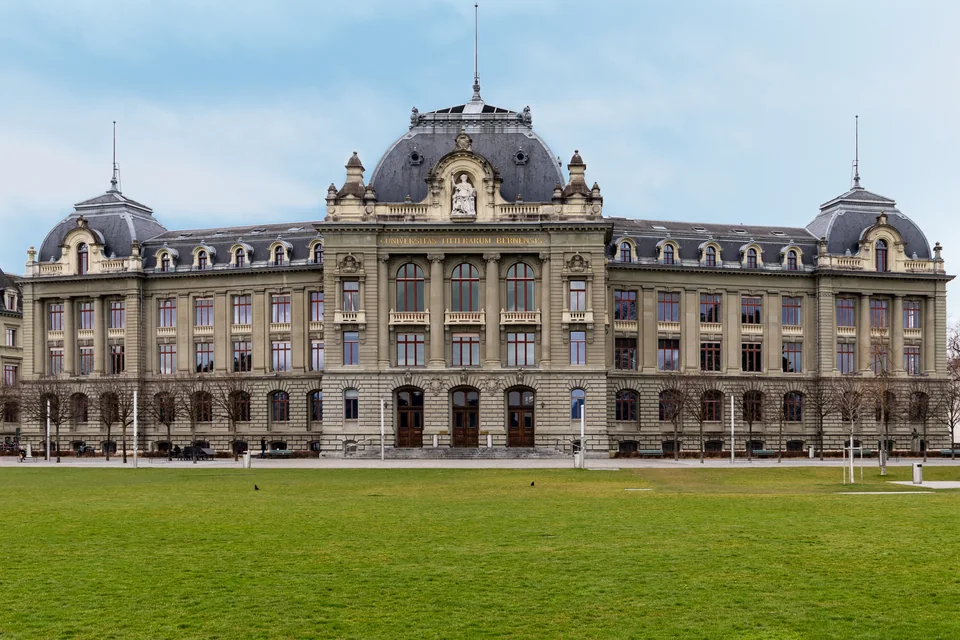
What types of higher education institutions exist in Switzerland?
The Swiss Higher Education Act (HEdA) recognises three types of institution. The type decides the admission rules, the teaching language, the cost and where the degree can take you next.
| Type | Number | What it offers | Best for | Typical entry for international applicants |
|---|---|---|---|---|
| Universities (incl. ETH and EPFL) | 12 | bachelor's, master's, doctorate; research focus | research, engineering, sciences, law, economics | school certificate plus country-specific conditions |
| Universities of applied sciences (Fachhochschule, HES, SUPSI) | about 10 | bachelor's and master's with work placements | engineering, business, design, health, social work | usually work experience in the field on top of the certificate |
| Universities of teacher education (PH, HEP) | about 18 | teacher training | future teachers in Swiss schools | tied to local language and school system |
| Accredited institutes | about 15 | specialised programmes: hospitality, business, MBA, international relations | a narrow sector at a private price | own rules; mostly taught in English |
Universities of applied sciences admit students under Article 25 of the Act: a vocational baccalaureate with training in a related occupation, a general baccalaureate plus at least one year of relevant work experience, or a specialised baccalaureate. For most international applicants a school certificate alone is not enough, so check each programme.
Moving between types is possible but never automatic. EPFL, for instance, admits graduates of Swiss universities of applied sciences to master's degrees only in certain engineering fields, with an average of at least 5.0 and a preparatory year of 57–60 ECTS credits. If a research master's is your goal, an applied bachelor's is not the shortest road to it.
The 12 universities: language, profile and fees
The table lists all public universities with the official 2026/27 fees published by swissuniversities. "International" means students who moved to Switzerland to study. Amounts are per semester; there are two semesters a year.
| University | City and language | Known for | International tuition per semester | Other fees per semester |
|---|---|---|---|---|
| ETH Zürich | Zurich; bachelor's in German, most master's in English | engineering, architecture, natural sciences, computer science | $2,650 (CHF 2,190) | $90 (CHF 74) |
| EPFL | Lausanne; bachelor's in French | engineering, computer science, life sciences, architecture | $2,650 (CHF 2,190) | $30–60 (CHF 25–50) |
| University of Zurich (UZH) | Zurich; German | medicine, law, economics, humanities and sciences | bachelor's $1,470 (CHF 1,220), master's $990 (CHF 820) | $70 (CHF 59) |
| University of Geneva (UNIGE) | Geneva; French | international relations, law, life sciences, translation | $530 (CHF 435) | $80 (CHF 65) |
| University of Lausanne (UNIL) | Lausanne; French | business (HEC Lausanne), law, biology, medicine | $600 (CHF 500) | $100 (CHF 80) |
| University of Basel | Basel; German | medicine, life sciences, humanities | $1,030 (CHF 850) | — |
| University of Bern | Bern; German | medicine, veterinary science, law, natural sciences | $3,080 (CHF 2,550) | $40–70 (CHF 34–59) |
| University of Fribourg | Fribourg; French and German | bilingual degrees, law, theology | $1,050 (CHF 870) | $140 (CHF 115) |
| University of Neuchâtel | Neuchâtel; French | humanities, sciences, economics | $940 (CHF 775) | — |
| University of Lucerne | Lucerne; German | law, theology, economics, social sciences | $1,240 (CHF 1,025) | $110 (CHF 90) |
| University of St. Gallen (HSG) | St. Gallen; German and English | business, economics, law, international affairs | bachelor's $3,750 (CHF 3,103), master's $4,010 (CHF 3,317) | $290 (CHF 240.50) |
| USI | Lugano and Mendrisio; Italian and English | economics, informatics, communication, architecture | $4,830 (CHF 4,000) | — |
A one-off application fee comes on top, from $80 (CHF 65) in Geneva to $320 (CHF 268) in St. Gallen. UZH charges $180 (CHF 150) for foreign qualifications and refunds nothing if you are rejected or withdraw.
Geneva and Lausanne have the lowest fees, but tuition is the small part of the bill. Fees differ by a few hundred francs per semester, rent by a few hundred francs per month. For a full budget, see our guide to the cost of studying in Switzerland.
ETH Zürich and EPFL: what changed for international students
Since autumn 2025 both federal institutes charge students who came to Switzerland to study three times the domestic rate: $2,650 (CHF 2,190) instead of $870 (CHF 730) per semester. The fee group is fixed once at admission and does not change later, not even when you move from a bachelor's to a master's. EPFL will index the fee to consumer prices every four years, starting in 2029.
ETH Zürich rules for 2027 entry:
- bachelor's programmes are taught in German, and a C1 certificate must be uploaded by 31 March;
- applications with a foreign certificate run from 1 December to 31 March, and studies start only in autumn; if you are assigned the exam, you sit it the following January and start in the September after that, so an application in spring 2027 leads to a start in autumn 2028;
- depending on the country, applicants are admitted directly, sit a reduced exam (mathematics, biology, chemistry, physics) or a comprehensive exam of eight subjects;
- the exam is held once a year in late January, in German, and costs $660 (CHF 550) or $970 (CHF 800).
EPFL works differently:
- bachelor's programmes are in French; B2 is required and C1 recommended;
- from 2025, for at least four years, first-year places are capped at 3,000;
- holders of certificates from outside the EU, EFTA and UK enter either the preparatory CMS year (only for listed countries) or through the entrance exam;
- registration for the 2027 exam runs from 1 October to 1 December 2026, science subjects are sat on 18–22 January 2027 and general subjects in August–September 2027.
EPFL itself advises against sitting the exam with a school curriculum as your only preparation.
Profiles of the two federal institutes and the largest cantonal university are on our pages for ETH Zürich, EPFL and the University of Zurich.
At master's level, ETH screens applications from countries on its embargo and risk list against export-control rules. The list includes Russia, Belarus, China and Iran, among others. Screening covers master's programmes with dual-use content such as computer science, electrical and mechanical engineering, robotics, materials, chemistry and mathematics. EPFL also weighs export-control and embargo compliance in master's admissions. This is not a ban, but it is an extra filter to factor in before you choose a programme. More in our guide to master's degrees in Switzerland.
ETH Zürich shares 8th place with University College London in the QS World University Rankings 2027. For applicants this signals the workload more than the odds: ETH says openly that its master's programmes select the strongest graduates of comparable universities.
Which school certificate is enough? Country examples
Each university decides whether to recognise a foreign certificate, and swissuniversities publishes the combined picture every year. Examples for 2026/27 from post-Soviet countries, a region where the rules vary a lot:
| Certificate from | ETH Zürich | EPFL | Cantonal universities |
|---|---|---|---|
| Russia, Kazakhstan, Belarus, Kyrgyzstan, Tajikistan, Ukraine | certificate + proof of admission to a recognised home university in the subject + reduced exam; otherwise comprehensive exam | certificate + EPFL entrance exam | certificate + two years of recognised university study + proof of admission; HSG adds its own selection |
| Armenia, Georgia, Moldova | certificate + proof of admission + reduced exam; otherwise comprehensive | certificate + EPFL exam | certificate + proof of admission to a recognised home university in the subject |
| Uzbekistan | certificate + proof of admission + reduced exam; otherwise comprehensive | certificate + EPFL exam | a university degree of at least three years |
Look up your own country on the swissuniversities map before anything else: EU certificates, the IB and A-levels follow different, usually simpler rules.
You will often hear about ECUS. It is a supplementary exam for holders of foreign certificates who already have conditional admission to a specific university. You cannot register yourself: the university assigns you and sets the scope. It takes place once a year in August in Zurich (German-speaking universities) or Crissier (French-speaking ones), costs about $1,280 (CHF 1,060) or $1,270 (CHF 1,050), and counts only at the assigning university. ETH and EPFL do not accept it. It is not a general substitute for missing years of study.
When do universities of applied sciences and private institutes make sense?
Universities of applied sciences such as ZHAW, FHNW, HSLU, BFH and HES-SO suit students who want a practical profession and placements rather than a research career. Fees are similar to cantonal universities, but entry leans on practical experience: bachelor's programmes often expect a year of relevant work, master's programmes a degree in the same field.
Private schools are a separate market. Check them against the official list of accredited institutions published by swissuniversities. Examples from that list:
- EHL, as part of the HES-SO University of Applied Sciences;
- Glion, Les Roches and César Ritz Colleges, as "university of applied sciences institutes";
- IMD, Franklin Switzerland and the Graduate Institute Geneva (IHEID), as "university institutes".
Schools missing from the list may operate legally and award degrees of partner universities abroad, but they hold no institutional accreditation under Swiss law. Before paying, find out who awards the degree and whether the university you may apply to later recognises it. For the hospitality sector see our guide to hospitality management in Switzerland; StudyU also profiles Glion, BHMS and EU Business School Geneva.
How much does a year at a Swiss university cost?
Tuition at a public university never exceeds $9,660 (CHF 8,000) a year; that maximum applies at USI. Housing, food and insurance make up most of the budget. Two official benchmarks:
| Item | ETH Zürich, international (group 2), per year | EPFL, international, per year |
|---|---|---|
| Tuition and compulsory fees | $5,470 (CHF 4,528) | $5,410 (CHF 4,480) |
| Housing | $13,650 (CHF 11,300), average rent in the canton of Zurich, 2024 | $13,050 (CHF 10,800) |
| Food | $8,700 (CHF 7,200) | $8,700 (CHF 7,200) |
| Health insurance | $1,590 (CHF 1,320), average | about $1,690 (CHF 1,400) |
| Study materials | $1,210 (CHF 1,000) + excursions $600 (CHF 500) | $1,450 (CHF 1,200) |
| Transport, phone, personal and local charges | $2,740 (CHF 2,266) | $5,580 (CHF 4,619) |
| Total | about $33,950 (CHF 28,100) | about $35,880 (CHF 29,699) |
The EPFL column combines its own budget for international students, $30,470 (CHF 25,219) without tuition, with the higher fee rate. For the visa, cantons apply their own thresholds: Zurich asks for $25,370 (CHF 21,000) for 12 months and Geneva for $24,160 (CHF 20,000) a year. See our Swiss student visa guide for how to document these funds.
Bachelor's scholarships are rare. At master's level there are competitive university awards such as ETH's ESOP and EPFL's Excellence Fellowships. The Swiss Government Excellence Scholarships mainly target researchers who already hold a master's degree.
How to choose a university: five steps with timing
- 18–24 months before the start: fix your route. Compare your qualification with the swissuniversities country table and choose: university study at home first, the ETH or EPFL exam, a master's after a bachelor's elsewhere, or a private institute.
- 12–18 months before: settle the language. Public bachelor's programmes are almost always in German, French or Italian, and preparing for C1 (Goethe, TestDaF, DALF) takes at least a year.
- 12 months before: shortlist 3–5 programmes with different deadlines and competition levels, for example one at ETH or EPFL, two cantonal universities in different regions and a backup in another country.
- 6–10 months before: apply. ETH takes bachelor's applications from 1 December to 31 March and master's applications with a foreign degree from 1 to 30 November. UZH closes autumn applications on 28 February for applicants who need a visa. Our step-by-step application guide covers the rest.
- 3 months before: start the visa. Swiss representations accept national visa applications no earlier than three months before entry; in Moscow processing takes 6–12 weeks.
Common mistakes when choosing a Swiss university
- Choosing by ranking, not language. A strong ranking does not help if the bachelor's is in German and your English is B2.
- Assuming the school certificate is enough. For many non-EU countries cantonal universities require prior university study.
- Treating ECUS as a shortcut. The university assigns the exam after reviewing your application, and it counts only there.
- Ignoring annual changes. ETH has announced new bachelor's entry requirements from autumn 2028, and EPFL has capped first-year places.
- Confusing private labels with Swiss accreditation. Check the official list and ask who awards the degree.
- Budgeting for a job from month one. Non-EU/EFTA students may start work only six months into their studies, for at most 15 hours a week during term.
FAQ
Twelve: ten cantonal universities (Basel, Bern, Fribourg, Geneva, Lausanne, Lucerne, Neuchâtel, St. Gallen, USI and Zurich) and two federal institutes, ETH Zürich and EPFL. There are also about ten universities of applied sciences, universities of teacher education and accredited institutes such as IMD, Glion and Les Roches.
It depends on your certificate. EU certificates, the IB and A-levels often give direct entry if the subject and grade rules are met. Many other certificates, including Russian and Kazakh ones, require prior university study at home for cantonal universities, or the entrance exam at ETH Zürich or EPFL. Private institutes set their own rules and often accept school leavers.
No. Everyone pays, Swiss students included, but public fees are modest: from $530 (CHF 435) per semester in Geneva to $4,830 (CHF 4,000) at USI for international students. Living costs are the main expense, about $26,700 (CHF 22,100) a year in Zurich excluding tuition.
Few public bachelor's programmes are taught entirely in English; search the official swissuniversities database at studyprogrammes.ch. English is common at master's level: most ETH Zürich master's programmes are in English, and EPFL, USI, HSG and others offer many English-taught master's. Private institutes teach mainly in English.
On 2026/27 tuition, the University of Geneva: $530 (CHF 435) per semester for all students, international ones included. Lausanne ($600, CHF 500) and Neuchâtel ($940, CHF 775) follow. Geneva and Lausanne are expensive cities, though, so compare the full budget.
Yes, within limits. Non-EU/EFTA students may work from six months after the start of their studies, for up to 15 hours a week during term. The employer applies for the permit and the university confirms that the job does not delay your studies. After graduation you can apply for a six-month permit to look for work.
Citizens of countries that need a Schengen visa must obtain a national D visa for studies longer than 90 days, applying at the Swiss representation for their place of residence; the cantonal migration office decides. EU/EFTA citizens do not need a visa but must register with the canton within 14 days of arrival.
Sources
- swissuniversities: admission requirements by country, 2026/27
- swissuniversities: tuition fees at universities, 2026/27
- swissuniversities: accredited institutions and admission to universities of applied sciences
- ECUS: rules, dates and fees
- ETH Zürich: tuition fees, international student budget, application with a foreign certificate, entrance examination
- ETH Zürich: export control and master's screening
- EPFL: bachelor's admission, entrance exam, fees, cost of living
- UZH: fees and deadlines
- ETH News: QS World University Rankings 2027
- Swiss Embassy in Russia: national visa
- Canton of Zurich: students from non-EU countries, Canton of Geneva: financial means
- SEM: working during and after studies
- Dollar amounts use the ECB reference rates of 24.09.2026 (€1 = $1.1367 = CHF 0.9409, so CHF 1 ≈ $1.2081), rounded to $10.
For the country overview, see studying in Switzerland. If you want to know which route fits your profile and what to do in the coming months, send us a request.
Next steps
- Hospitality Management in Switzerland: Schools, Degrees, Fees and Paid Internships
- Master's Degrees in Switzerland: 2026/27 Deadlines, Requirements, Costs and Scholarships
- Applying to Swiss Universities: Routes, Documents and Deadlines for International Students
- Cost of Studying in Switzerland in 2026/27: Tuition, Living Costs and a Full Student Budget
- DELF, DALF and TCF: Which French Test You Need to Study in France and Where to Take It
- German Language Tests for German Universities: TestDaF, DSH, Goethe and telc Compared (2026–2027)
