
An international child can study in England only at a private (independent) school: academies and state schools cannot be attended on a Child Student visa. Pupils aged 4–17 need an unconditional offer from a school licensed as a student sponsor, consent from both parents and proof of funds for the school year; the visa fee is $738 (£558) plus the $1,027 (£776) healthcare surcharge per year of leave. A full boarding year at a well-known school costs roughly $77,000–82,000 including VAT in 2026/27: £58,446 at Oakham, £60,615 at Millfield and £61,860 at Rugby. A pupil who has finished year 9 in Russia or Kazakhstan usually starts either a one-year GCSE course or a two-year A-level course, and A-levels later give direct entry to UK universities without a foundation year.
| At a glance | Position on 2 October 2026 |
|---|---|
| Schools open to international pupils | Independent schools only; academies, local-authority schools and further-education colleges are excluded on a Child Student visa |
| Age for a Child Student visa | 4–17; from 18 a standard Student visa applies |
| Visa fee and health surcharge | $738 (£558) + $1,027 (£776) per year of leave |
| Visa processing | Usually 3 weeks from outside the UK; apply up to 6 months before the course |
| Full boarding, 2026/27, incl. 20% VAT | Oakham $77,346 (£58,446), Millfield $80,216 (£60,615), Rugby $81,864 (£61,860) per year |
| Entry point after Russian grade 9 | One-Year GCSE (Year 11) or A-level (Years 12–13) |
| Who decides | The school decides on the place; UK Visas and Immigration decides on the visa |
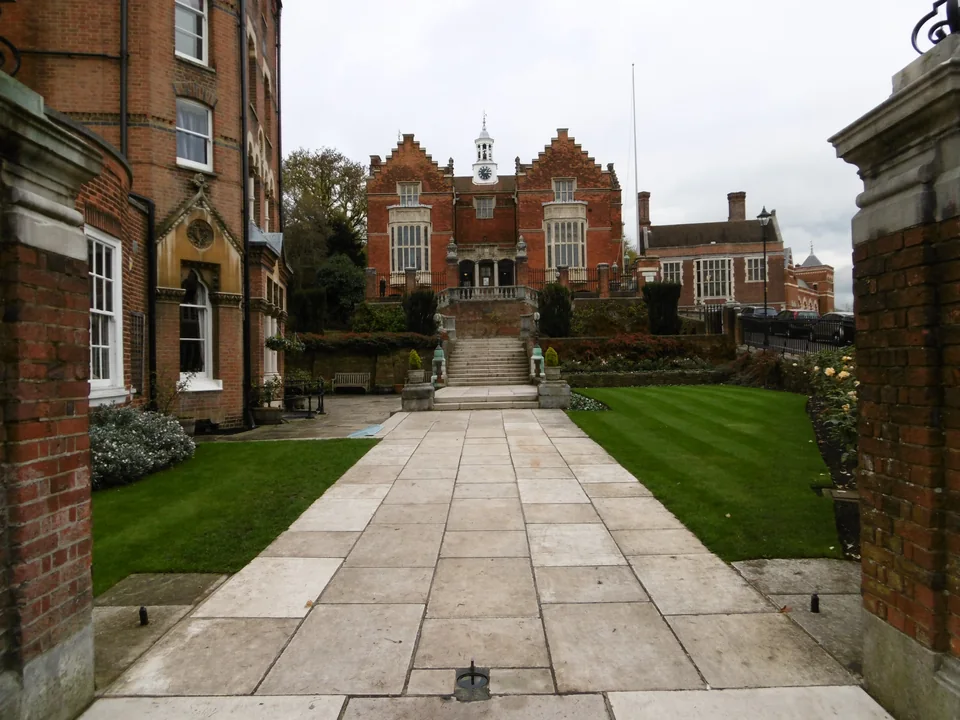
Which schools an international child can attend
The vocabulary is the first trap. In England a "public school" is an old private school such as Rugby; state-funded schools are "state schools". The Child Student visa explicitly bars study at academies and at schools funded by a local authority, so the realistic options are independent schools that hold a Home Office student sponsor licence and can issue a Confirmation of Acceptance for Studies (CAS).
Independent schools differ mainly in how pupils live:
- Full boarding. The pupil lives in a boarding house for the whole term and goes home for holidays. This is the standard choice when the family stays abroad.
- Weekly or flexi boarding. Two to six nights a week at school, weekends with relatives or a guardian. Practical only if a close relative lives in England.
- Day school. The child lives with a parent, a foster carer or a close relative. Tuition is lower, but the visa funds and accommodation rules are stricter.
- International sixth form colleges. Private schools that take pupils from 15–16, mostly international, and focus on A-levels. Despite the name they are schools, not vocational colleges.
Many historically single-sex schools now admit both boys and girls at least into the sixth form, so check the rules for the specific year of entry.
Which year group after grade 8 or 9
English schools count years rather than grades. The last stages are the two-year GCSE course (Years 10–11, exams at 16) and the two-year A-level course in the sixth form (Years 12–13). The school sets the final year group after its own tests, but a realistic map looks like this:
| Pupil's current stage | Age in September | Typical entry | Qualification at the end |
|---|---|---|---|
| Finished grade 8 | 14–15 | Year 10, two-year GCSE | GCSE, then A-level |
| Finished grade 9 | 15–16 | Year 11, One-Year GCSE | GCSE after one year, then A-level |
| Finished grade 9 with strong English and maths | 16 | Year 12, straight to A-level | A-level after two years |
| Finished grade 10 | 16–17 | Year 12, A-level | A-level |
A One-Year GCSE is a format built for international pupils: five to seven subjects including English in a single year, followed by A-levels at the same school. Oakham, for example, runs one. If English and the chosen subjects are already strong, a school may admit the pupil directly into Year 12, which brings university entry at 18.
Subject choice follows the intended degree: medicine needs chemistry and usually biology, economics needs mathematics.
Some schools also run the International Baccalaureate in the sixth form. The IB organisation is designated "undesirable" in Russia, so for Russian citizens we only consider schools with a full A-level route and recommend stating A-levels explicitly in the application and contract.
What a boarding year costs: three official 2026/27 fee lists
Since 1 January 2025 education and boarding services supplied by UK private schools are subject to VAT at the standard rate of 20%. Compare figures on the same basis: some schools publish the VAT-inclusive total, others show the base fee and the VAT separately.
| School | Boarding per term, incl. VAT | Per year (3 terms) | Day pupil per term | Worth knowing |
|---|---|---|---|---|
| Oakham School, Rutland | $25,782 (£19,482) | $77,346 (£58,446) | $15,229 (£11,508) | Years 9–13; meals, laundry and medical centre included; One-Year GCSE available |
| Millfield, Somerset | $26,739 (£20,205) | $80,216 (£60,615) | $17,409 (£13,155) | Year 9 to Upper Sixth; one-to-one EAL lessons cost $105 (£79) each |
| Rugby School, Warwickshire | $27,288 (£20,620) | $81,864 (£61,860) | $17,296 (£13,070) | 2026/27, VAT included; scholarships are honorary, fee reductions are means-tested |
Expect separate charges for:
- registration and acceptance fees and, for overseas families, often an extra deposit. Millfield, for example, charges $331 (£250) to register and $2,521 (£1,905) on acceptance (£320 of it non-refundable), plus an additional deposit equal to one term's fees for families living outside the UK, credited to the final bill;
- CAS and visa paperwork handled by the school: $721 (£545) for a new pupil at Millfield;
- GCSE and A-level exam entries and some books or materials;
- English as an Additional Language (EAL) lessons;
- uniform, trips, music tuition and sports tours;
- guardianship, flights home and half-term arrangements when boarding houses close;
- the visa, the health surcharge and the tuberculosis test.
Fees are charged termly in advance and are due by the first day of term, and withdrawing a pupil usually needs a full term's notice or a term's fees in lieu (Millfield's terms). Oakham also offers monthly instalments within a term through UK direct debit. Families paying from Russia should plan the transfer route early; our guide to paying for studies abroad from Russia covers the legal options.
How independent schools select international pupils
Oakham's published process is typical of selective schools:
- First contact. Email or video call with admissions, a visit or open event if possible.
- Registration. Form and fee; the school proposes the right year group.
- Assessment. An online CAT4 reasoning test and the Password English test; other schools set their own maths and English papers. Most can be taken remotely.
- School reports. The two most recent reports plus a reference from the current school, translated into English.
- Interview. Online or in person, focused on interests, ambitions and fit.
- Offer. After the contract and deposit, the school issues the CAS for the visa.
International pupils can compete for academic, music, art, drama and sport scholarships, but at several schools a scholarship is an honour rather than a discount: at Rugby it opens access to means-tested support. Budget for the full fee. Sixth form and One-Year GCSE places fill early, so apply 12–18 months before September; the school alone decides whether to offer a place.
The Child Student visa
GOV.UK sets four core conditions: an unconditional offer from an independent school, suitable accommodation, enough money and parental consent.
Consent. Written consent from both parents (or one parent with sole responsibility) or the legal guardian, covering the application, travel and the living and care arrangements. The arrangement must be one of: living with a parent or legal guardian, boarding at an independent school, living independently at 16 or 17, or living with a foster carer or close relative.
Money.
| Where the pupil lives | What must be shown |
|---|---|
| Boarding (full or part-time) | Course and boarding fees for one academic year (up to 9 months) |
| With a foster carer or close relative | Course fees for one year; the carer confirms at least $754 (£570) a month |
| With a parent or legal guardian | Course fees plus $2,064 (£1,560) a month for pupil and parent, +$827 (£625) per additional sibling |
| Independently, aged 16–17 | Course fees plus $1,765 (£1,334) a month in London or $1,354 (£1,023) elsewhere |
Funds must be held for 28 consecutive days, ending no more than 31 days before the application. Kazakhstan is on the differential evidence list, so Kazakh applicants usually do not submit bank statements upfront, although UKVI may ask for them; Russian applicants must provide the evidence.
Other documents. Passport, the CAS, a birth certificate proving the relationship, any qualifications the school relied on, and a tuberculosis certificate from a clinic approved by the Home Office (GOV.UK publishes the list for Russia).
Timing. Apply from outside the UK no earlier than 6 months before the course; decisions usually take 3 weeks. Pupils under 16 on the application date get leave for the course length up to 6 years plus 4 months; pupils aged 16–17 get up to 3 years plus 4 months. Travel is allowed up to one month before the course starts. Successful applicants receive an eVisa linked to the passport they will travel on. Our UK student visa guide explains where applicants from Russia and Kazakhstan give biometrics. UK Visas and Immigration makes the visa decision; a school letter or CAS does not replace it.
Guardians and living arrangements
The visa itself does not require a guardian for a boarder, but nearly every school's contract asks parents to appoint a UK guardian for exeats, half terms, parent meetings and emergencies, and the family pays for this separately.
If the child lives with a family friend rather than at school, English law on private fostering applies: a child under 16 (under 18 if disabled) cared for by someone other than a parent or close relative for 28 days or more is privately fostered, and the local authority must be notified. For the visa, a nominated guardian writes a letter with contact details, the UK address, confirmation that it is a private home rather than a business, and the names of any other children in their care. If an agency will appoint the guardian later, an agency officer writes the letter and confirms that all guardians are background-checked.
Documents from Russia: travel consent and recognition
Leaving Russia. Under Article 20 of Federal Law 114-FZ, a minor travelling without a parent needs a passport and a notarised consent from one legal representative. Russia's Consular Department notes that the consent can run for any period up to adulthood and must list the destination countries, and that some countries require consent from both parents. The UK visa always needs both parents' consent, so prepare two documents: the notarised travel consent for the Russian border and the study-and-care consent for UKVI.
Recognition in Russia. Russia and the UK have no agreement on mutual recognition of education documents, so a British school certificate is recognised for Russian university entry through Rosobrnadzor's procedure under Article 107 of the Russian Education Law. Families who may return can keep the child in the Russian system through family education; see our overview of studying abroad after grade 9.
What an English school gives for university entry
A-level students apply through UCAS on the same footing as British pupils and skip the foundation year that most Russian school leavers need; compare the routes in UK university entry after 11 years of school and foundation years in the UK. School years in England cost more than one foundation year, so the decision depends on the budget for the next two or three years. For universities, costs and visas see studying in the UK; families comparing countries can read our guide to private schools in Switzerland.
How to check a school before applying
- Inspection report. Schools in the sector associations are inspected by the Independent Schools Inspectorate (ISI), approved by the Secretary of State for Education; other independent schools are inspected by Ofsted. Reports cover safeguarding and boarding.
- Sponsor licence. The school must be on the Home Office register of student sponsors, otherwise there is no CAS.
- Current fee list. Look for the year (2026/27) and the VAT note; agency catalogues often lag by a year or two.
- Sixth form route. Confirm A-levels in the subjects your child needs.
- English support. How many EAL hours are included and what extra lessons cost.
Timeline: 12–18 months before September
- 18 months out. Decide between One-Year GCSE and A-level entry; shortlist 4–6 schools with current fee lists.
- 12–15 months out. Registration, tests and interviews; keep working on English.
- 8–10 months out. Offers, contract and deposit; arrange a guardian.
- 3–6 months out. Funds held for 28 days (a full year of fees for boarders), TB test, parental consents, CAS, visa application.
- 1 month out. Notarised travel consent, flights, travel insurance, contact with the guardian.
Common mistakes
- Looking for a free state school. A Child Student visa covers independent schools only.
- Comparing fees with and without VAT. The difference is 20%.
- Treating a scholarship as a discount. Many schools reduce fees only after a means test.
- Choosing by exam league tables alone. For an international pupil, a One-Year GCSE, EAL support and the right A-level subjects matter more.
- Preparing one consent instead of two. The Russian border and the UK visa need different documents.
- Moving money into the account at the last minute. Funds must be held for 28 consecutive days.
FAQ
Not on a Child Student visa, which allows study only at an independent school with a sponsor licence and explicitly excludes academies and local-authority schools. A state school is possible only for a child living in the UK with parents on another lawful basis; UK Visas and Immigration decides on any visa.
Published 2026/27 fees including VAT are $77,346 (£58,446) a year at Oakham, $80,216 (£60,615) at Millfield and $81,864 (£61,860) at Rugby for full boarding. Add the deposit, exams, EAL lessons, uniform, guardianship, flights, the visa and the health surcharge. Each school decides on its own scholarships and bursaries.
The visa does not require one for a pupil boarding at an independent school, but most schools make a UK guardian a contract condition for weekends and holidays. If a child under 16 lives with a family friend for 28 days or more, English law treats it as private fostering and the local authority must be told.
Yes, if the school's tests show that English and subject knowledge are strong enough for Year 12. More often a grade 9 leaver joins a One-Year GCSE course first and then the two-year A-level course. The school decides on the year group after assessment and interview.
There is no UK–Russia recognition agreement, so for entry to a Russian university the certificate goes through Rosobrnadzor's recognition procedure under Article 107 of the Education Law, and Rosobrnadzor decides on each document. UK universities accept A-levels directly, with no foundation year.
From outside the UK a decision usually takes 3 weeks, and you can apply up to 6 months before the course. Before applying you need the CAS, funds held for 28 days, consent from both parents and a TB certificate. UK Visas and Immigration makes the decision.
Sources
- GOV.UK: Child Student visa — overview, fee, timing, restrictions, money, documents and parental consent
- GOV.UK: Immigration Health Surcharge
- GOV.UK: TB test clinics in Russia
- HMRC: VAT on private school fees from 1 January 2025
- Children Act 1989, section 66: private fostering
- Independent Schools Inspectorate: remit
- Oakham School: 2026/27 fees, international entry
- Millfield: fees from September 2026
- Rugby School: fees and support
- Russian MFA Consular Department: consent for a minor's travel
- Federal Law 114-FZ, Article 20, Russian Education Law, Article 107
- Russian Ministry of Science and Higher Education: recognition agreements
Sources checked on 2 October 2026. Currency converted at the ECB reference rate of 1 October 2026: €1 = $1.1298 and €1 = £0.85373 (£1 ≈ $1.3234); dollar figures rounded.
If you want to work through your route, send a request: document preparation and submission are provided under an agreement with StudyU; the school makes the enrolment decision and UK Visas and Immigration (UKVI) decides on the visa.
During the free initial consultation, we clarify your goal, profile, timing, and budget and identify the next realistic step.
Next steps
- Edinburgh Napier University: Admission After School, Fees and Housing
- Solent University, Southampton: Admission, Fees and Foundation Route
- Studying in the UK for international applicants
- Studying Abroad After 9th Grade: Routes, Visas and the Path to University
- UK Student Visa in 2026: CAS, 28-Day Funds, TB Test, Fees and Applying from Russia, Kazakhstan and Central Asia
- UK University After 11 Years of School: Entry Routes That Actually Work
