
English-taught master's study in Malta is dominated by the public University of Malta (UM), which offers dozens of full-time, on-campus master's programmes in 2026/27, from economics and law to artificial intelligence and digital games. A typical full-time programme is 90 ECTS over three semesters, and the non-EU fee is quoted for the whole course, most often $12,260 (€10,800) or $15,220 (€13,400). You need a relevant bachelor's degree with at least Second Class Honours or Category II and IELTS Academic 6.5. For October 2026 entry, applicants who needed a visa had to apply by 1 July.
Below: which programmes qualify for a student visa, what the course and living costs add up to, how UM assesses a Russian or other CIS degree, how taught and research master's differ, and what exists beyond UM. For a broader overview of Maltese institutions, see universities in Malta.
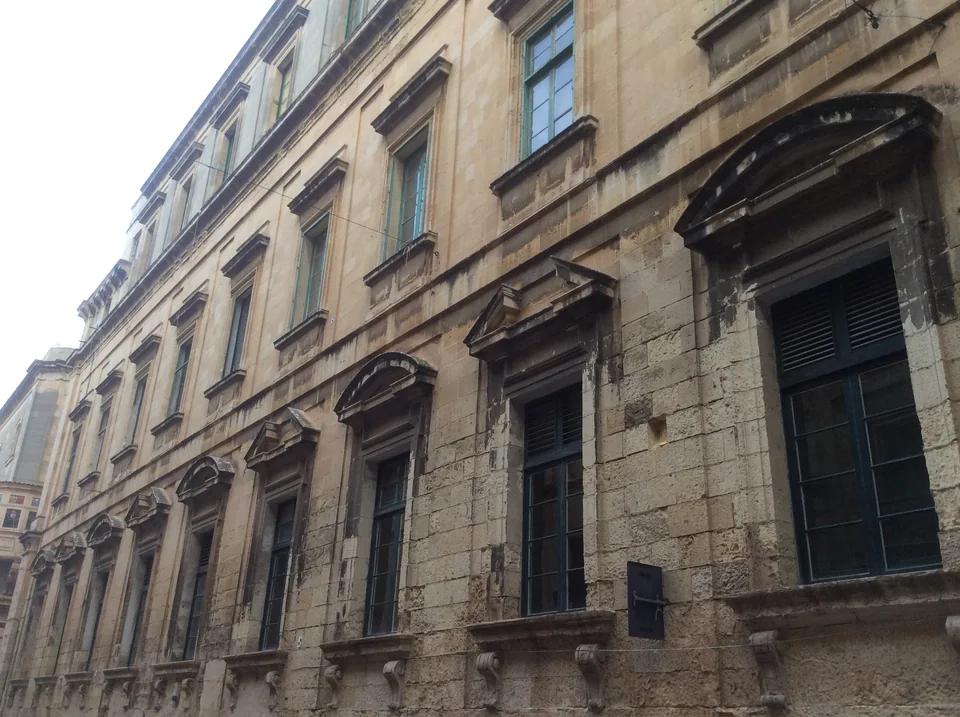
What kinds of master's does the University of Malta offer?
UM classifies master's programmes by mode and by the balance of teaching and research. These decide the length, the price and whether the course supports a visa.
| Mode | How it works | Supports a student visa |
|---|---|---|
| Full-time, taught (mainly taught) | daytime lectures and seminars, dissertation at the end; usually 3 semesters, 90 ECTS | yes |
| Full-time, by research | an individual supervised project over 3 semesters | yes, if the university confirms a full-time load |
| Part-time evening or part-time day | 4–6 semesters of evening or daytime classes | no: the residence permit requires a full-time course of more than 15 hours a week |
| Full-time distance learning or online | remote study | no, since you do not need to relocate |
Three semesters do not mean one calendar year. The M.Sc. in Economics page, for example, says dissertation work starts in semester 1 of 2026/27 and runs until the end of semester 1 of 2027/28. Plan for about 16 months of study and living in Malta, not 12.
2026/27 programmes and non-EU fees
All figures come from UM's 2026/27 programme pages and refer to full-time study. The fee covers the whole course; for most programmes below it is invoiced in year one.
| Programme | Mode | Course fee |
|---|---|---|
| M.Sc. Economics | full-time, mainly taught | $12,260 (€10,800) |
| M.A. Banking, Investments and Finance | full-time, mainly taught | $12,260 (€10,800) |
| M.A. Diplomatic Studies | full-time, mainly taught | $12,260 (€10,800) |
| LL.M. European Business Law | full-time, mainly taught | $12,260 (€10,800) |
| M.Sc. Strategic Management and Digital Marketing | full-time, mainly taught | $12,260 (€10,800) |
| M.Sc. Strategic Management and Tourism | full-time, mainly taught | $12,260 (€10,800) |
| M.Sc. Information Systems | full-time, mainly taught | $15,220 (€13,400) |
| M.Sc. Digital Games | full-time, mainly taught | $15,220 (€13,400) |
| M.Sc. Sustainable Energy | full-time, mainly taught | $15,220 (€13,400) |
| M.Sc. Digital Health | full-time, mainly taught | $15,220 (€13,400) |
| M.Sc. Artificial Intelligence | full-time, mainly by research | $15,220 (€13,400) |
| M.Sc. Bioinformatics | full-time, mainly by research, max. 10 students | $15,220 (€13,400) |
| M.A. Conflict Resolution and Mediterranean Security | full-time, mainly taught | $16,460 (€14,500) |
The conflict resolution programme has its own payment plan: a $1,140 (€1,000) deposit on acceptance, then three instalments. Its $2,270 (€2,000) early-bird discount for this intake required the deposit by 15 May 2026. The International MBA costs $15,900 (€14,000) but is part-time and does not support a student visa.
On top of tuition, some technical and research programmes charge bench fees for lab consumables and equipment. UM only publishes indicative historical ranges, so get the figure for your programme in writing before you accept.
Entry requirements
Degree. Almost every programme asks for a bachelor's degree in the same or a related field with at least Second Class (Honours) or Category II. On this British and Maltese scale, Second Class covers average to above-average results, and Third Class is the lower end. UM does not publish a conversion table for Russian grade averages: its Russia page only says that a degree with a certain classification or GPA is needed and that every master's application is assessed individually. In practice the admissions board looks at the subjects studied, the grades and the course volume.
Extra conditions vary by programme:
- M.Sc. Economics and M.A. Banking, Investments and Finance may add supplementary units of up to 12 ECTS for applicants from other fields; the finance programme may interview.
- M.A. Diplomatic Studies accepts graduates in international relations, law, history, economics, political science and European studies; Category II holders take a preparatory programme.
- M.Sc. Digital Games requires a portfolio of recent work and a motivation letter.
- M.Sc. Sustainable Energy expects engineering, science or architecture graduates; others may be interviewed.
- M.Sc. Information Systems can weigh post-degree work experience against a lower classification and may interview.
English. For master's study UM requires IELTS Academic 6.5 with no component below 6.0, TOEFL iBT 95 with writing 24 on the pre-2026 scale (or 5 and 5 on the scale introduced in January 2026), Cambridge Advanced at grade C or better, or PTE Academic 71. Results must be no older than two years.
Documents. Certified copies of your degree and transcript with English translations, the test result, a CV and whatever the programme asks for, such as a motivation letter, a portfolio or references. The application fee for applicants with overseas qualifications is $110 (€100).
Taught or research master's?
A taught master's suits applicants who want to deepen or change their field through a structured programme with exams. Applications follow the standard admissions calendar.
A research master's is an independent project with a supervisor. According to UM, most of these have several entry points, and you can apply at any time of year. The application includes a research proposal: topic, question, methods and plan. Before applying, find a faculty member whose interests match your topic. These programmes suit future PhD candidates, but bench fees are more common.
Application deadlines
| Event | October 2026 intake |
|---|---|
| Applications open | November 2025 |
| Non-EU applicants needing a visa | by 1 July 2026, 14:00 |
| Main deadline | by 22 July 2026, 14:00 |
| Late applications | by 15 September 2026, 14:00, except programmes marked "No late" |
| Individual programmes | e.g. M.A. in International Humanitarian Action by 15 June 2026 |
Some programmes cap numbers, and some did not open this cycle: UM runs a course only if enough qualified applicants apply. The late window is effectively closed to visa applicants, because anything after 1 July moves to the next intake. For October 2027, expect the same pattern with applications opening in November 2026, and check exact dates on UM's Dates and deadlines page.
A smaller February intake also exists; visa applicants for February must submit their English result by 10 November.
What a master's in Malta costs in total
Tuition is only part of the budget. Living costs are the bigger variable: UM's own guide puts a month in a shared flat at $1,540–1,850 (€1,360–1,630). Over 16 months of study:
| Scenario | Tuition | Living, 16 months | Total before flights and insurance |
|---|---|---|---|
| Economics, finance, diplomacy, law, management | $12,260 (€10,800) | $24,710–29,610 (€21,760–26,080) | $36,970–41,880 (€32,560–36,880) |
| IT, AI, digital health, energy | $15,220 (€13,400) | $24,710–29,610 (€21,760–26,080) | $39,920–44,830 (€35,160–39,480) |
| Conflict Resolution and Mediterranean Security | $16,460 (€14,500) | $24,710–29,610 (€21,760–26,080) | $41,170–46,080 (€36,260–40,580) |
Add the application, visa and residence permit fees and any bench fees. An item-by-item budget, the minimum funds for the visa and ways to save are in our guide to the cost of studying in Malta.
Scholarships. UM has no dedicated master's scholarships for nationals of Russia, Kazakhstan or Uzbekistan: its scholarship page lists schemes for Tunisian and Palestinian nationals and Islands and Small States Institute scholarships. Research programmes occasionally offer funded places through research projects. Other funding routes are collected in our guide to scholarships abroad in 2026.
Beyond the University of Malta
MCAST runs applied master's programmes at MQF level 7. Its latest published non-EU fee table, for 2024/25, listed an 18-month programme at $8,970 (€7,900) and a two-year programme at $11,360 (€10,000). The college gives 30 June as its deadline for international applicants; request current fees before applying.
Private providers in Malta also offer master's degrees, including some awarded by UK universities. Before paying, check three things in the MFHEA register: the institution's licence, accreditation of the specific programme and its MQF level. Your enrolment letter must match that register, because the Central Visa Unit compares the two. Private-institution students also need health insurance of at least $113,550 (€100,000) for their whole stay to obtain a residence permit, while UM, MCAST and ITS students are exempt.
Visa, work and what comes next
A full-time master's requires a national D visa and, after arrival, a study residence permit renewed every year. Because the programme runs for about 16 months, you will go through the permit process twice. Documents and timing are covered in our Malta student visa guide.
Master's students may work up to 20 hours a week under a Jobsplus licence requested by the employer; do not count on earnings in the first three months. After graduating from an MQF 5+ programme, you can, once, obtain a permit to stay up to nine months to look for work; it does not itself allow employment.
A Maltese master's is a second-cycle Bologna degree. Working in a regulated profession in another country requires separate recognition by that profession's regulator, and in Russia a foreign degree goes through the standard recognition procedure.
Planning your application
| When | What to do |
|---|---|
| 12–14 months before | shortlist 2–3 programmes, compare requirements and mode; for a research master's, find a supervisor |
| 10–12 months before | take IELTS or TOEFL, order translations of your degree and transcript, prepare the portfolio and letters |
| From November | apply; the form allows two programmes in order of preference |
| Spring | receive the decision, accept, pay the first instalment, book housing |
| By late July | book the visa centre; UM advises doing so by 31 July |
| September–October | arrive, have original documents verified, apply for the residence permit within 90 days |
Common mistakes
- Choosing an evening or part-time programme. It does not qualify for a study residence permit, however convenient it looks.
- Budgeting for 12 months. A three-semester full-time programme usually means about 16 months on the island.
- Applying in July. The deadline for visa applicants was 1 July, and some programmes close earlier.
- Ignoring the fit of your first degree. Switching fields is possible, but UM may add supplementary units or a preparatory programme, which extends the course.
- Not asking about bench fees. On research and lab-based programmes they can add significantly to costs.
FAQ
A full-time University of Malta programme is usually three semesters and 90 ECTS. In practice that is about 16 months: two semesters in the first year and the first semester of the next, which often covers the dissertation.
Yes. UM assesses overseas degrees individually. You need a relevant bachelor's with a strong grade average, IELTS Academic 6.5 and the documents listed for the programme. A five-year specialist diploma is assessed under the same rules, and the admissions board makes the decision.
For non-EU nationals, UM's full-time programmes for 2026/27 mostly cost $12,260 (€10,800) or $15,220 (€13,400) for the whole course, with some at $16,460 (€14,500). With about 16 months of living costs, the total comes to roughly $36,970–46,080 (€32,560–40,580) before flights and insurance.
Only if you are a national of one of the English-speaking countries on UM's list (the UK, Ireland, the USA, Canada, Australia and others) and completed school there, or hold a degree from a university in one of those countries. A Russian degree does not exempt you, even if it was taught partly in English. Besides IELTS, TOEFL, Cambridge and PTE, UM accepts its own ISET test at level 6 for master's study.
No. A study residence permit requires a full-time course with more than 15 hours of tuition a week. Evening, part-time and distance programmes suit only people already living in Malta on another basis.
Yes, up to 20 hours a week under a Jobsplus licence requested by the employer. Minimum-wage earnings will not cover rent and food, so leave them out of your budget.
Sources
- University of Malta 2026/27 programme pages with non-EU fees: Economics, Banking, Investments and Finance, Diplomatic Studies, European Business Law, Strategic Management and Digital Marketing, Strategic Management and Tourism, Information Systems, Digital Games, Sustainable Energy, Digital Health, Artificial Intelligence, Bioinformatics, Conflict Resolution and Mediterranean Security, International MBA — checked 29.09.2026
- UM dates and deadlines and UM October 2026 course list (PDF) — checked 29.09.2026
- University of Malta: requirements for Russia, English language requirements and exemptions — checked 29.09.2026
- University of Malta: fees and funding, scholarships, living costs — checked 29.09.2026
- MCAST: fees for non-EU candidates and 2024/25 schedule, international students — checked 29.09.2026
- Identità study permit FAQ and application Form N.01 (PDF) — checked 29.09.2026
- ECB rate of 29.09.2026: €1 = $1.1355. Rounding step: $1 below $100, otherwise $10.
Master's programme selection for your degree, requirement checks, document preparation and application submission are provided under an agreement with StudyU. Admission decisions are made by the University of Malta or the institution you apply to; visa and residence permit decisions are made by Identità.
Next steps
- Cost of Studying in Malta in 2026/27: University Fees, Living Costs and a First-Year Budget
- Malta Student Visa for University Study: D Visa, Residence Permit and Work Rights
- Universities in Malta for International Students: Which Institutions Exist and Where You Can Realistically Apply
- Scholarships abroad 2026: where international students study for free
- Applying to Maltese Universities: Routes After School and After a Degree, Documents, English and Deadlines
- University of Malta: Admission, Fees and Student Life for International Applicants
