
Malta has one comprehensive university, the public University of Malta (UM) in Msida. Two other public institutions accredit their own programmes: the applied college MCAST and the Institute of Tourism Studies (ITS). A handful of private providers work under a licence from the regulator MFHEA. Students from outside the EU pay $9,650–12,260 (€8,500–10,800) a year for most UM bachelor's degrees in 2026/27, and medicine costs $29,520 (€26,000) a year. If your school-leaving certificate comes from Russia, Kazakhstan, Uzbekistan or a similar 11-year system, UM routes you through a one-year Foundation programme rather than straight into the first year.
This guide maps the Maltese higher-education landscape with verified 2026/27 fees, explains the difference between an institutional licence and programme accreditation, and gives decision criteria for choosing between the university, the applied college and private campuses. For a short country overview, see studying in Malta.
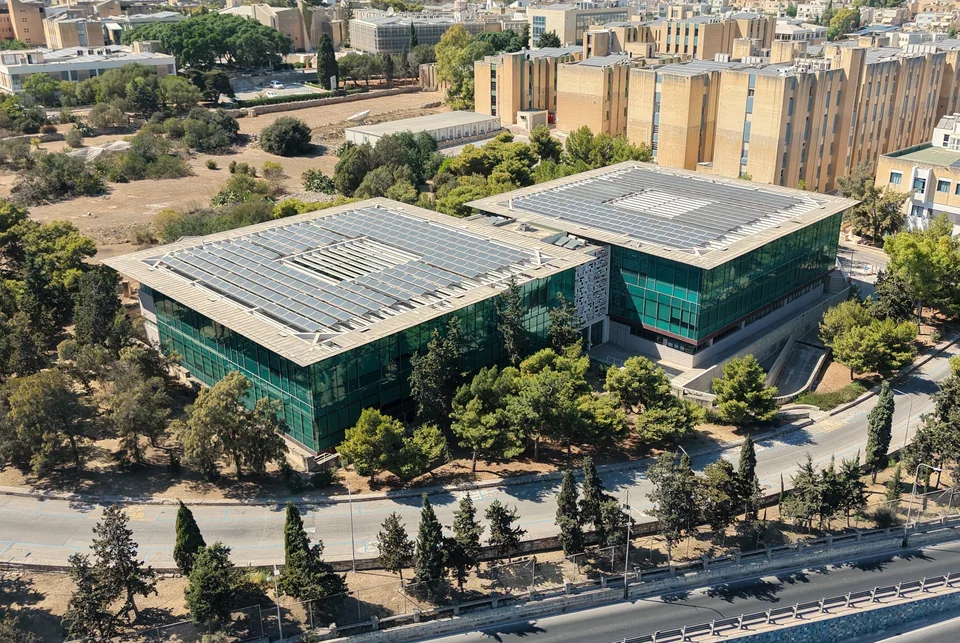
Malta's higher-education institutions at a glance
| Institution | Status | What it offers | Non-EU fee | Entry with an 11-year school certificate |
|---|---|---|---|---|
| University of Malta (UM), Msida | public university, self-accrediting | bachelor's, master's, PhD, medicine, dentistry | bachelor's $9,650–12,260 (€8,500–10,800) a year; MD $29,520 (€26,000) a year | via Foundation: $7,490 (€6,600), or $18,170 (€16,000) for the medical stream |
| MCAST, Paola and other campuses | public college, self-accrediting | applied programmes from certificates up to bachelor's and master's | latest published table covers 2024/25 | set per programme |
| Institute of Tourism Studies (ITS) | public, self-accrediting; MFHEA licence 2017-008 | tourism, hospitality, culinary arts | not published openly | set per programme |
| Queen Mary University of London in Malta (Gozo) | campus of a UK university | five-year MBBS medicine only | $44,850 (€39,500) a year for September 2026 entrants | national qualifications such as the Russian attestat are not accepted |
Eurydice, the European Commission's education information network, lists four publicly funded higher-education bodies: UM, MCAST, ITS and the Institute for Education (IFE). IFE focuses on educator training and is rarely relevant to international applicants.
How the system works and what an "MFHEA licence" means
Every Maltese qualification sits on the Malta Qualifications Framework (MQF). A bachelor's degree is level 6, a master's level 7 and a doctorate level 8; UM's Foundation certificate is level 4. The level matters in practice because it decides whether you qualify for a student residence permit and whether you may work.
The Malta Further and Higher Education Authority (MFHEA) oversees the sector. UM, MCAST and ITS accredit their own programmes within set limits, while a private provider needs an MFHEA licence plus accreditation for each programme. Three consequences follow:
- A licensed institution does not automatically mean an accredited course. Check the programme title, MQF level and ECTS credits in the MFHEA qualifications register.
- Identità grants a study residence permit only for full-time courses at MQF level 5 or above. The provider must be licensed, and the qualification must be recognised by MQRIC (the Malta Qualifications Recognition Information Centre). A preparatory programme leading to such a qualification can count, but part-time work under a study permit is allowed only at level 5 and above.
- The Central Visa Unit checks your enrolment letter against the register. It must show the institution name as registered with MFHEA, the full course title as listed by MFHEA, the MQF level and the ECTS total.
If a private school cannot point you to its programme in the register, stop before you pay anything.
University of Malta: the national university
UM traces its roots to the Jesuit Collegium Melitense, founded in 1592, and became a public university by decree of Grand Master Pinto in 1769. Today it has 14 faculties, 16 institutes, 12 centres and three schools. According to UM, around 12,000 students are registered, including roughly 2,800 international students from more than 144 countries. The main campus is in Msida, with further campuses in Valletta, Marsaxlokk and on Gozo, and teaching is in English.
Rankings. UM ranked 696th in the QS World University Rankings 2027, published in June 2026, up from the 741–750 band a year earlier. In the Times Higher Education 2026 table it sits in the 801–1000 band. Think of it as a solid mid-ranking European university rather than a global brand name.
Subjects. The faculties cover arts, the built environment, dental surgery, economics and management, education, engineering, health sciences, ICT, law, media and knowledge sciences, medicine, science, social wellbeing and theology. Its institutes include the Institute of Digital Games, the Institute for European Studies, the Institute for Climate Change and Sustainable Development and the Institute of Aerospace Technologies.
Sample 2026/27 fees for non-EU/EEA students:
| UM programme | Length | Fee |
|---|---|---|
| Bachelor of European Studies and International Relations | 3 years, 180 ECTS | $9,650 (€8,500) a year |
| Bachelor of Commerce: management and marketing | 3 years, 180 ECTS | $9,650 (€8,500) a year |
| B.Sc. IT (Honours) Software Development | 3 years, 180 ECTS | $12,260 (€10,800) a year |
| Bachelor of Psychology (Honours) | 3 years, 180 ECTS | $12,260 (€10,800) a year |
| B.Sc. (Honours) Physiotherapy | 4 years, 240 ECTS | $12,260 (€10,800) a year |
| Doctor of Medicine and Surgery (MD) | 5 years, 300 ECTS | $29,520 (€26,000) a year |
| Master of Dental Surgery | 5 years, 300 ECTS | $29,520 (€26,000) a year |
Entry requirements, deadlines and housing are covered in our University of Malta profile.
MCAST: the applied route
The Malta College of Arts, Science and Technology is the second-largest public provider. It holds self-accrediting status and awards qualifications aligned with the European framework, from vocational diplomas to bachelor's and master's degrees. It suits students who want hands-on training and placements in engineering, ICT, design, business, agriculture or maritime fields more than an academic degree.
From MCAST's own pages:
- Deadline. International applicants for the October 2026 full-time intake had to apply by 30 June 2026.
- Fees. The only table on the site is for 2024/25. It listed a three-year level-6 bachelor's at $22,140 (€19,500), of which $14,760 (€13,000) was payable because the final year was free. Confirm the current figure with MCAST before budgeting.
- Final-year scholarship. MCAST waives the final-year fee on three- and four-year bachelor's degrees; the waiver is lost if a student fails modules and resits and has to extend the course.
- Visa. Visa documents are issued after the first instalment is paid, and MCAST advises applying for the visa at least 75 days before the course starts. Late arrivals are not accepted.
ITS: tourism and hospitality
The Institute of Tourism Studies is licensed by MFHEA (licence 2017-008) as a higher-education institution and, according to Eurydice, also accredits its own programmes within set limits. It focuses on tourism, hospitality, events and culinary arts. Its international fees are not published openly, so request them directly.
Private providers and foreign campuses
The best-known private option is Queen Mary University of London's campus on Gozo, which runs a single five-year MBBS medical degree awarded by the UK university. Conditions are demanding:
- the fee for all students starting from September 2026 is $44,850 (€39,500) a year, increased annually in line with inflation or policy;
- all candidates must sit the UCAT and score in the third decile or above;
- Russian national qualifications are not accepted on their own; applicants need A-levels (AAA including biology or chemistry and a second science) or another recognised international diploma.
- from Kazakhstan, only the Grade 12 certificate of the Nazarbayev Intellectual Schools with AAA in the required sciences is listed; a standard Kazakh school certificate does not qualify.
Smaller private universities and business or IT colleges also operate on the island. Before paying any of them, verify three things: the institutional licence, accreditation of the specific programme and its MQF level. MFHEA publishes a list of licensed institutions and accredited programmes, and the institution and course names on your enrolment letter must match it. Health insurance is another difference. UM, MCAST and ITS students are exempt from Identità's requirement for private cover of at least $113,550 (€100,000), while students at private institutions must buy such a policy for their whole stay.
Choosing between the university, the college and a private campus
| Your goal | Sensible choice | Why |
|---|---|---|
| Academic bachelor's after an 11-year school system | UM via Foundation | clear route, published fees, exemption from private insurance |
| Applied career-focused degree | MCAST | practical orientation, free final bachelor's year |
| Tourism, hospitality, culinary arts | ITS or relevant UM degrees | public status and the same insurance exemption |
| Medicine in English | UM (MD) or QMUL Malta (MBBS) | attestat holders take UM's medical Foundation stream, which includes a Medical Maltese unit; QMUL requires A-levels and UCAT |
| Affordable English-taught master's in the EU | UM | full-time 90-ECTS programmes at $12,260–15,220 (€10,800–13,400) for the whole course in our examples |
| A niche subject UM does not teach | private provider | only after checking licence, accreditation and MQF level |
Formats, fees and admission for postgraduate study are compared in our guide to a master's in Malta.
What this means for applicants from Russia, Kazakhstan and Uzbekistan
After school. UM's country pages for all three countries say the same thing: holders of the national school certificate are offered a pathway through the International School for Foundation Studies, which decides on admission itself. The programme lasts one academic year in Msida and costs $7,490 (€6,600) in 2026/27, except the medical and dental stream at $18,170 (€16,000). Plan for four years to a bachelor's degree instead of three, and for an extra year of living costs.
After a bachelor's degree. UM assesses master's applications individually; most courses expect a first-cycle degree with a set classification or grade average in a relevant field, plus IELTS Academic 6.5.
English. Anyone who studied outside Malta must show an approved English test score: IELTS Academic 6.0 with 6.0 in writing for bachelor's courses and 6.5 for postgraduate study.
Payment. All fees are in euros. If you pay from Russia, check the route before you apply; legal options are covered in our guide on how to pay for studies abroad from Russia.
Degree recognition
Malta is part of the Bologna Process, so a UM degree reads across Europe as a standard first- or second-cycle qualification. Regulated professions are different: the right to practise medicine, law or architecture is granted by the professional regulator of the country where you intend to work. A foreign degree used in Russia or another CIS country normally goes through that country's recognition procedure, so check the rules for your field before enrolling.
The same logic applies on the way in: UM takes an MQRIC statement about your school certificate into account but makes its own admission decision.
Common mistakes when choosing a Maltese institution
- Confusing a language school with a university. On a language course or programme below MQF 5 different rules apply: on a course longer than 90 days you may work only after the first three months, up to 20 hours a week and with a Jobsplus permit.
- Expecting direct first-year entry to UM with an 11-year certificate. The university's stated route is Foundation.
- Budgeting only for tuition. UM's published monthly costs with shared housing add up to $1,540–1,850 (€1,360–1,630) before fees; see our cost of studying in Malta guide.
- Paying a private provider before checking the MFHEA register. The institution name on your enrolment letter must match the register or the visa unit will refuse it.
- Applying late. For October 2026, UM's deadline for applicants needing a visa was 1 July 2026; later applications were deferred to the next intake.
FAQ
There is one comprehensive university, the University of Malta. MCAST, ITS and the Institute for Education are also public higher-education bodies, and several private providers hold MFHEA licences. Most international students end up choosing between UM and MCAST.
UM offers holders of Russian, Kazakh and Uzbek certificates a one-year Foundation programme rather than first-year entry. Completing it earns the Certificate in Foundation Studies, which you then use to apply for a bachelor's degree.
No: at public institutions non-EU/EEA nationals pay tuition. UM's funded places are mostly tied to research projects and doctoral study, and Malta's government scholarships target local students.
UM runs a five-year Doctor of Medicine and Surgery at $29,520 (€26,000) a year. Clinical training takes place in Maltese hospitals, so non-Maltese applicants need the Medical Maltese Proficiency Certificate or a pass in the Medical Maltese unit of the medical Foundation programme. The Queen Mary campus on Gozo awards a UK MBBS at $44,850 (€39,500) a year but requires A-levels and the UCAT.
The D visa requires a policy covering at least $34,070 (€30,000). For the residence permit, Identità requires cover of at least $113,550 (€100,000), but students at UM, MCAST and ITS are exempt from that requirement; private-institution students need a policy for their whole stay.
On a full-time course at MQF 5 or above you may work up to 20 hours a week, but only with an employment licence that your employer requests from Jobsplus. Identità's pages link the start of this right either to the issue of the residence permit or to the end of your first 90 days in Malta, so do not count on earnings in the first three months. Details are in our Malta student visa guide.
Sources
- University of Malta: history, facts and figures, about UM — checked 29.09.2026
- University of Malta: QS World University Rankings 2027 and UM in international rankings — checked 29.09.2026
- University of Malta 2026/27 course pages with non-EU fees: European Studies and International Relations, Commerce, IT Software Development, Psychology, Physiotherapy, MD, Dental Surgery, Foundation (Humanities), Foundation (Medical and Dental Sciences) — checked 29.09.2026
- University of Malta: Russian qualifications and English language requirements — checked 29.09.2026
- Eurydice: higher education in Malta and types of institutions — checked 29.09.2026
- MCAST: fees for non-EU candidates, 2024/25 payment schedule (PDF), international students — checked 29.09.2026
- Institute of Tourism Studies — MFHEA licence 2017-008, checked 29.09.2026
- Queen Mary in Malta: programme costs, entry requirements, FAQs — checked 29.09.2026
- Identità: study permit FAQ and student D visa checklist (PDF) — checked 29.09.2026
- University of Malta: living costs — checked 29.09.2026
- ECB rate of 29.09.2026: €1 = $1.1355. Rounding step: $1 below $100, otherwise $10.
Programme selection for your profile, checks of private providers' licences and accreditation, document preparation and application support are provided under an agreement with StudyU. Admission decisions are made by the institution; visa and residence decisions are made by Identità.
Next steps
- Master's Degrees in Malta for International Students: Programmes, 2026/27 Fees, Entry Requirements and Deadlines
- Cost of Studying in Malta in 2026/27: University Fees, Living Costs and a First-Year Budget
- Malta Student Visa for University Study: D Visa, Residence Permit and Work Rights
- How to Pay for Studies Abroad from Russia: What Works in 2026
- Studying in Malta for international applicants
- University of Malta: Admission, Fees and Student Life for International Applicants
