
The University of Szeged (SZTE) is a large comprehensive university in southern Hungary with about 24,000 students, nearly 5,000 of them international from more than 130 countries, across 12 faculties. Two Nobel laureates in physiology or medicine are part of its story: Albert Szent-Györgyi and Katalin Karikó. Most international applicants come for English-taught medicine, dentistry and pharmacy, but SZTE also teaches bachelor's degrees in computer science, business, psychology, engineering and languages. Medicine for students starting in 2026/27 costs $17,940 (€15,800) a year including basic health insurance, and computer science $3,630 (€3,200) a semester. Medical entrance exams run online from late February to late June, and applications go through DreamApply.
| At a glance | Details |
|---|---|
| City | Szeged, southern Hungary, close to the Serbian and Romanian borders |
| Students | about 24,000, nearly 5,000 international from 130+ countries |
| Faculties | 12, including the Albert Szent-Györgyi Medical School, Dentistry and Pharmacy |
| One-tier programmes | medicine in English and in German, dentistry, pharmacy |
| Medicine in English | $17,940 (€15,800) a year for 2026/27 starters |
| Dentistry / pharmacy | $9,080 (€8,000) / $6,150 (€5,420) a semester |
| Bachelor's | $2,040 (€1,800) to $3,970 (€3,500) a semester |
| Health-science application fee | $340 (€300), including up to two exam attempts |
| Medical foundation year | $7,720 (€6,800), no entrance exam |
| Application portal | DreamApply (apply.u-szeged.hu) |
Who SZTE suits
Szeged is a strong option if you want English-taught medicine and would rather take the entrance exam from home. The written test runs on the Coospace platform with Zoom proctoring and the interview with a professor is also online, so there is no need to travel before admission. The medical school admits about 250 students a year to the English programme, and the fee already includes basic Hungarian health insurance.
The Foundation Year is the second reason. If your school biology and chemistry are not yet exam-ready, the medical school's Foundation Year accepts students without an entrance exam on an English certificate from IELTS 4.5, and the university says that students who complete it well can be admitted to their chosen programme without another exam.
Szeged also offers some of the lower bachelor's fees in Hungary outside the capital: English and American Studies at $2,040 (€1,800) a semester, Business Administration at $3,070 (€2,700), Computer Science at $3,630 (€3,200).
Consider other options if:
- you need a broad engineering choice — SZTE's English engineering bachelor's are limited to agricultural and biochemical engineering, while Debrecen and the Budapest University of Technology and Economics cover the full range;
- you want to study in Budapest — compare ELTE and Semmelweis;
- you will be under 18 on 31 December of your application year, which rules out the MD.
Medicine, dentistry and pharmacy
| Programme | Length | Fee | Worth knowing |
|---|---|---|---|
| General Medicine (MD), English | 12 semesters | $8,970 (€7,900) a semester, $17,940 (€15,800) a year | first semester is $8,060 (€7,100) tuition plus a $910 (€800) deposit |
| General Medicine, German | 12 semesters | $8,630 (€7,600) a semester | separate German-taught programme |
| Dental Medicine (DMD) | 10 semesters | $9,080 (€8,000) a semester | Faculty of Dentistry |
| Pharmacy (DPharm) | 10 semesters | $6,150 (€5,420) a semester | Faculty of Pharmacy |
| Foundation Year | 8 months | $7,720 (€6,800) in total | $2,950 (€2,600) plus a $910 (€800) deposit, then $3,860 (€3,400) |
Figures come from the university's March 2026 fee summary and the medical school's table for students starting in 2026/27; the following year's fees appear in the admission bulletin.
How the MD is structured. Years one and two cover the basic medical sciences; regular clinical practice in the university clinics starts in year three. The final two semesters are an internship of 40 weeks of clinical rotations. The sixth year costs $8,970 (€7,900) if half of the practice takes place in university hospitals; spending more of it in Szeged is charged pro rata. Summer placements done in Szeged are billed separately: nursing practice after year one $570 (€500), internal medicine after year three and surgery after year four $1,140 (€1,000) each.
Medical school discounts. Students admitted by 30 April get $340 (€300) off the first semester, and Foundation Year students receive it automatically. A further $340 (€300) per semester applies when a sibling studies at the same faculty or when a parent graduated from Szeged's English medical programme.
Other English-taught programmes
| Programme | Level | Fee per semester |
|---|---|---|
| Computer Science | bachelor's | $3,630 (€3,200) |
| Business Administration and Management | bachelor's | $3,070 (€2,700) |
| Tourism and Catering | bachelor's | $3,070 (€2,700) |
| Psychology | bachelor's | $3,970 (€3,500) |
| Nurse, Physiotherapist | bachelor's | $3,970 (€3,500) |
| Biochemical Engineering | bachelor's | $3,630 (€3,200) |
| Agricultural Engineering | bachelor's | $2,840 (€2,500) |
| English and American Studies | bachelor's | $2,040 (€1,800) |
| Computer Science | master's | $4,660 (€4,100) |
| International Economy and Business | master's | $3,410 (€3,000) |
| Biology / Chemistry | master's | $3,410 (€3,000) / $4,090 (€3,600) |
| International Relations in English | master's | $2,610 (€2,300) |
| Human Resource Counselling | master's | $4,540 (€4,000) |
| Doctoral programmes | PhD | $3,970–5,680 (€3,500–5,000) |
Programmes in other languages include bachelor's in French, German, Italian and Spanish studies and an International Relations master's in French. Russian speakers may note the Russian Studies MA, taught in Russian for $2,500 (€2,200) a semester, and doctoral programmes in linguistics and literary studies where Russian is one of the teaching languages.
Non-medical preparation. The English Preparatory Program costs $3,290 (€2,900) a semester, the Hungarian preparatory course $2,500 (€2,200), and a dedicated preparatory course for pharmacy $7,380 (€6,500) for the programme.
How to apply
Health-science programmes
- Register on DreamApply. Choose your programme at apply.u-szeged.hu and open a single account. Enter your official representative's code if you use one, or "No Representative".
- Upload documents in English or with certified translation: photo, school certificate with grades (final-year students upload proof of enrolment), passport, CV with photo, a medical certificate on the new university form issued within the last year, a birth certificate (can follow after admission) and an 800–4,000-character motivation letter typed into the system. References are optional.
- Pay $340 (€300). This combined application and exam fee covers up to three health-science programmes and up to two exam attempts in one cycle. Card payment is available in DreamApply; bank charges are yours.
- Book the exam. After your documents are checked you receive an invitation and choose a date in the system; changes go through the admissions office by email.
- Decision. The medical school's admission board decides, the Letter of Admission arrives in DreamApply, and hard copies of your documents are posted after acceptance.
Who is not eligible. Applicants who failed biology, chemistry, physics, mathematics or English in their final school year, and anyone under 18 on 31 December of the application year.
Exam exemptions. Three A2 levels with an A in two sciences; an International Baccalaureate Diploma with grade 5 in two Higher Level sciences (the IB organisation is designated undesirable in Russia); or a First Class Honours science degree. Standard school certificates from Russia and the CIS do not qualify for exemption, so their holders sit the exam.
What the exam looks like
Exams run online every second week from late February to late June. The written part is 60 questions in 60 minutes on Coospace: 20 each in biology, chemistry (organic, inorganic and biochemistry) and English (general and medical). Questions appear one at a time, you cannot go back, and wrong answers are not penalised. Have a periodic table and calculator ready. At exams run by the university's own Admissions Office, physics can replace chemistry, except for Stipendium Hungaricum applicants.
You need two devices: one for the test and a second one on Zoom showing both you and the first screen. Headphones, smart watches and other devices are banned, and you must be alone in the room. The oral is about 20 minutes on Zoom with a professor — a general conversation followed by two biology and two chemistry questions in English. Missing a booked exam without withdrawing counts as a used attempt.
Bachelor's and master's
Non-medical applications also go through DreamApply. The fee, test format and deadline are set in each programme description, and the university notes that some programmes charge only tuition plus an application fee. Nursing and physiotherapy applicants who apply only to those programmes take an English and motivation interview rather than the full exam.
Transferring from another university
Students on English-taught medical programmes at accredited universities can transfer without the entrance exam if at least 75% of their subjects match and were completed within the last five years. Because at least half of the programme credits must be earned in Szeged, transfers go up to year three at most. The evaluation exam costs $230 (€200) and the credit transfer committee takes up to three weeks.
What a year in Szeged costs
| Item | Medicine, year one | Business Administration, year one |
|---|---|---|
| Application fee | $340 (€300) | as stated in the programme description |
| Tuition | $17,940 (€15,800), insurance included | $6,130 (€5,400) |
| Room in a shared flat, 10 months | about $2,480 (HUF 800,000) | about $2,480 (HUF 800,000) |
The government's Study in Hungary portal puts a room in a shared flat in Szeged at $250 (HUF 80,000) a month on average and a private flat at $420 (HUF 135,000). The same table lists an average dormitory price of $40 (HUF 13,000), but that is an average across several dormitories, and prices for fee-paying international students need to be confirmed with the university. Add food, transport and books; our guide to the cost of studying in Hungary has a full budget.
Payment schedule. The medical school's first semester is paid in one amount within 14 days of the Letter of Admission; the second semester by the deadlines in the academic system, in up to three instalments. Applicants from countries with visa restrictions are asked to pay the first and second semesters up front; your Letter of Admission states which schedule applies. The $910 (€800) deposit is part of the first-semester fee and is non-refundable if you cancel your place before the end of the first-semester course registration period.
Scholarships
- Stipendium Hungaricum. SZTE hosts government scholarship holders. In the 2026/27 round Russia was a sending partner for all levels and fields, with applications routed through Interobrazovanie; Kazakhstan, Uzbekistan, Kyrgyzstan and other CIS states are also on the list. Terms for 2027/28 will appear on the programme's website.
- Hungarian Diaspora Scholarship for applicants of Hungarian descent.
Living in Szeged
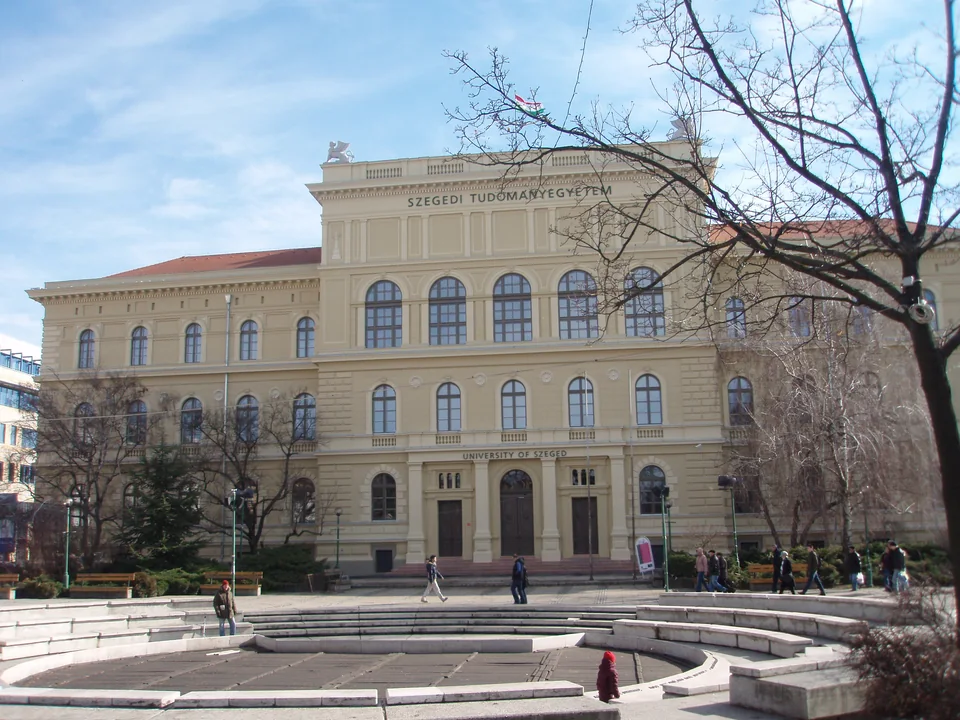
The university describes Szeged as Hungary's sunniest city and one of its liveliest student towns. The medical school is on Tisza Lajos körút and the main university building on Dugonics Square. Rents are well below Budapest levels: the same Study in Hungary table puts a shared-flat room in the capital at around $430 (HUF 140,000).
Visa and residence permit
Citizens of Russia and most CIS countries need a residence permit for study for stays over 90 days. You apply at a Hungarian consulate before travelling, and the immigration authority decides within 60 days. Expect to provide the Letter of Admission, proof of payment, proof of funds and a Hungarian address. Our Hungary student visa guide covers the process step by step.
Degree recognition
Hungary is part of the European Higher Education Area, and SZTE degrees follow the European level framework. Russia and Hungary have an agreement on mutual recognition of education and qualifications dated 22 November 2018. For regulated professions this is not enough on its own: a doctor needs a licence to practise in the country where they plan to work. For a comparison of the four medical schools, see medicine in Hungary.
Planning a 2027/28 start
| When | Step |
|---|---|
| November 2026 | the medical school publishes its 2027/28 admission bulletin: check fees and dates |
| December–February | prepare documents, the new-form medical certificate and the motivation letter |
| From late February 2027 | book an exam; get admitted by 30 April to qualify for the $340 (€300) discount |
| Within 14 days of admission | pay the first semester |
| Summer 2027 | consulate appointment, housing, bank statements for the permit |
Mistakes to avoid
- Studying only biology. A third of the written test is English, part of it medical vocabulary.
- Using a single device. Without a second camera device on Zoom, your result can be cancelled.
- Leaving it until June. Exams continue to late June, but the early-bird discount requires admission by 30 April, and the visa needs lead time.
- Mixing up semester and annual fees. SZTE quotes fees per semester, and the first medical semester is split into tuition and deposit.
- Budgeting a $40 (HUF 13,000) dorm. That is the portal's average across several dormitories, not a rate for fee-paying international students; each dormitory sets its own price.
Szeged compared with other Hungarian medical schools
| Criterion | Szeged | Debrecen | Semmelweis |
|---|---|---|---|
| Medicine, per year | $17,940 (€15,800), 2026/27, insurance included | $16,900 (2026/27, paid annually) | $21,210 (€18,680), 2027 intake |
| Exam | online: 60 questions in one hour plus Zoom interview | written and oral, biology plus chemistry or physics | online tests in Moodle plus interview |
| Preparatory route | Foundation Year without exam, $7,720 (€6,800) | Basic Medicine Course, $7,500 | none required |
| Application fee | $340 (€300), including two exam attempts | $150 plus $350 exam fee | $400 (2027 intake) |
See the profiles of the University of Debrecen, Semmelweis University and the University of Pécs, our overview of universities in Hungary and the guide to applying to Hungarian universities.
How StudyU can help
Programme choice, preparation for the online exam format, document checks and the DreamApply submission are provided under an agreement with StudyU. Admission is decided by the admission board of Szeged's medical school, and the residence permit by the Hungarian immigration authority.
FAQ
What are the tuition fees at the University of Szeged?
Medicine for 2026/27 starters is $17,940 (€15,800) a year; dentistry costs $9,080 (€8,000) and pharmacy $6,150 (€5,420) a semester. Bachelor's programmes range from $2,040 (€1,800) to $3,970 (€3,500) a semester depending on the subject.
Can I take the Szeged entrance exam from abroad?
Yes. The health-science exams are held online: a written test on Coospace proctored via Zoom, followed by an interview with a professor, also on Zoom. You need two devices, a stable connection and a room to yourself.
Do I need IELTS for medicine in Szeged?
For medicine, dentistry and pharmacy your English is tested within the entrance exam. A certificate is needed for the Foundation Year: IELTS 4.5 with at least 4.5 in each component, TOEFL iBT 51 or TOEIC 490.
What is the Foundation Year?
An eight-month course in biology, chemistry, physics, mathematics and English for applicants not yet ready for the exam. There is no entrance test, and the university says students who finish it well can be admitted to one of five health-science programmes without a new exam.
When is the application deadline for medicine?
Exams run every second week from late February to late June, and you can use two attempts per cycle. The exact 2027/28 calendar will be published in the medical school's admission bulletin by the end of November 2026.
Are any programmes taught in Russian?
There is no bachelor's or medical programme in Russian. The Russian Studies MA is taught in Russian at $2,500 (€2,200) per semester, and doctoral programmes in linguistics and literary studies list Russian among their teaching languages.
Sources
- University of Szeged, international programme fee summary (March 2026, PDF): u-szeged.hu/prospective-students/tuition-other-fees/tuition-and-fees-2026-03
- Medical school fees for 2026/27 starters and discounts: med.u-szeged.hu/english/fees-and-discounts/tuition-fees
- Application steps and $340 (€300) fee: med.u-szeged.hu/general-medicine/degree-programmes-first; MD entry requirements: med.u-szeged.hu/english/prospective-students/medical-programme-md
- Entrance exam: med.u-szeged.hu/english/prospective-students/entrance-evaluation; Foundation Year: med.u-szeged.hu/english/prospective-students/foundation-year; 2027/28 bulletin notice: med.u-szeged.hu/english/admission-academic-bullettin
- University facts: u-szeged.hu/english/facts; general fee page: u-szeged.hu/prospective-students/fooldal-csempek/tuition-fees
- Study in Hungary, living costs by city: studyinhungary.hu/living-in-hungary/menu/your-costs-of-living.html
- Semmelweis medicine (comparison table): semmelweis.hu/admission/programs/medicine/
- Stipendium Hungaricum partners: stipendiumhungaricum.hu/partners; OIF study residence permit: oif.gov.hu/tajekoztatok/a-hallgato-tanulo-tartozkodasa
- Recognition treaties listed by Russia's Ministry of Science and Higher Education: minobrnauki.gov.ru/action/foreign_scientists/contracts/
Dollar amounts use the ECB reference rates of 29 September 2026: EUR 1 = USD 1.1355 = HUF 366.38. Information checked on 30 September 2026. For other options in the country, see studying in Hungary.
If you want to compare Szeged's exam with Debrecen and Pécs against your level of biology and English, send us an application.
During the free initial consultation, we clarify your goal, profile, timing, and budget and identify the next realistic step.
