
Slovenia has three large public universities (Ljubljana, Maribor and Primorska in Koper), four further universities that take part in the national admissions call and run some programmes under a state concession (Nova Gorica, Novo mesto, Nova univerza and Alma Mater Europaea), and a few dozen independent institutions such as GEA College. Students from outside the EU pay tuition at all of them: for 2026/27 a typical annual fee is $2,380–7,720 (€2,100–6,800), with medicine and pharmacy higher. The deciding factor is usually language, because most bachelor's programmes are taught in Slovene and only a handful run fully in English.
Read on for how the universities compare, where English-taught degrees actually exist, what changed in admission for 2026/27 and how to narrow the list to two or three realistic options.
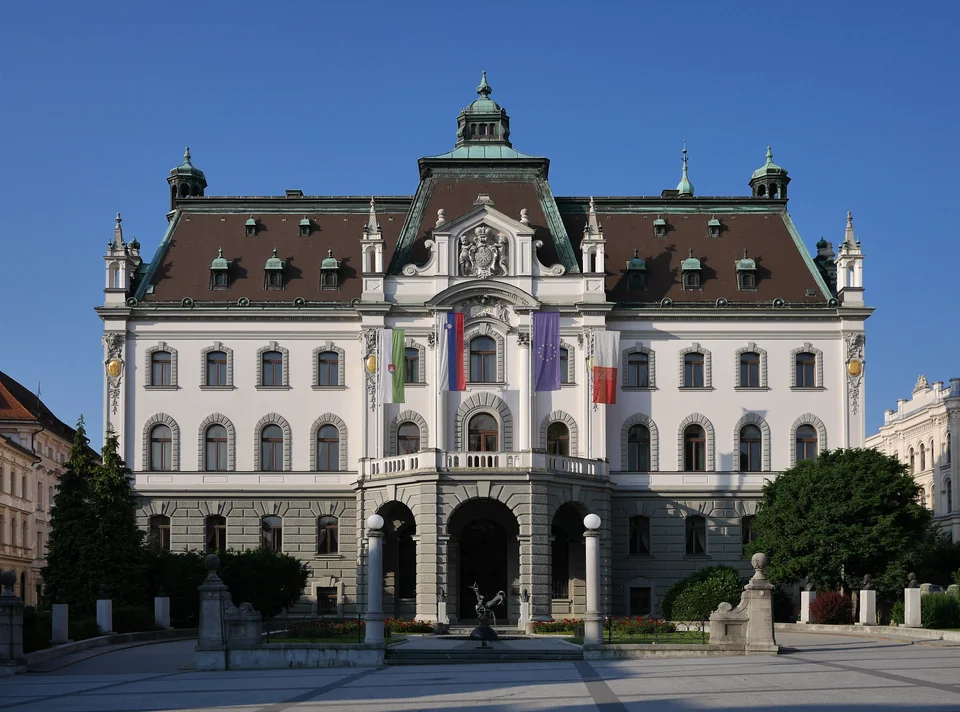
The universities at a glance
It helps to think of Slovenian higher education in three groups: public universities, the other universities, and independent institutions. The group affects fees, language and programme range more than the value of the degree.
| University | Where you study | Size and focus | What matters for international applicants |
|---|---|---|---|
| University of Ljubljana (UL) | Ljubljana | 23 faculties and 3 art academies, from medicine and law to engineering and business | the widest choice; bachelor's teaching is mostly in Slovene, while the School of Economics and Business also offers International Business, Marketing and Tourism in English |
| University of Maribor (UM) | Maribor, plus Celje, Kranj, Brežice, Krško and Ljubljana | 17 faculties; Slovenia's second-largest and second-oldest university, founded in 1975 | lower fees and living costs than the capital; most English-taught bachelor's options in 2026/27 are part-time |
| University of Primorska (UP) | Koper, Izola, Portorož | sciences, mathematics and IT, humanities, tourism, management | a noticeable share of English-taught degrees at FAMNIT and in tourism |
| University of Nova Gorica (UNG) | Nova Gorica, Ajdovščina | small research-led university: physics, environment, engineering, viticulture, arts | non-EU bachelor's fees from $3,180 (€2,800) a year |
| University of Novo mesto | Novo mesto | economics, informatics, mechanical engineering, health | Slovene-taught; applicants are expected to have Slovene at B2 |
| Nova univerza, Alma Mater Europaea | several cities, including Maribor and Nova Gorica | law, public administration, humanities, health | check language, study mode and whether the concession covers the programme |
| Independent institutions | mostly Ljubljana | business, design, media, applied management; for example GEA College | narrow profile, small groups, strong practical focus |
Every programme you can apply to through the national eVŠ portal is accredited. For a non-EU student, the main practical difference between public and private is price: at a public university you pay the international rate, while at a private institution without a concession every student pays, Slovenians included.
Who studies for free and who pays
Full-time first- and second-cycle study is tuition-free for Slovenian and EU citizens. Five Western Balkan countries enjoy the same terms for 2026/27 under education cooperation protocols. A further exemption covers students who, or whose parent, combine permanent residence with Slovenian tax residence.
Citizens of Russia, Belarus, Kazakhstan, Central Asian states and most other non-EU countries do not fall into these groups and pay the international fee set by each university. Maribor, for example, links its international fee to what Slovenians pay for part-time study. For a full breakdown, see our guide to the cost of studying in Slovenia.
| Institution and programme, 2026/27 | Bachelor's, per year | Master's, per year |
|---|---|---|
| UL, School of Economics and Business | $3,860 (€3,400) | $5,340 (€4,700) |
| UM, most faculties | $2,380–6,680 (€2,100–5,880) | $2,840–7,720 (€2,505–6,800) |
| UM, General Medicine | $10,400 (€9,160) | — |
| UNG, most programmes | $3,180–3,970 (€2,800–3,500) | $3,180–6,810 (€2,800–6,000) |
Figures are rounded. The University of Ljubljana also charges an annual student-services contribution, which is $70 (€61.60) at the School of Economics and Business for 2026/27.
Where you can actually study in English
English-taught bachelor's degrees exist but are scarce and unevenly spread. The 2026/27 national call for first-year places lists, among others:
- University of Primorska, FAMNIT (Koper): Computer Science and Informatics, Mathematics and Bioinformatics, taught in English in all three years; two further programmes run only their first year in English.
- University of Primorska, other faculties: Anthropology and Cultural Heritage (12 English-track places each as double-major options) and Tourism Business Management in Portorož.
- University of Maribor: Logistics of Systems in Celje as full-time study, plus three part-time English programmes in economics, crisis management and tourism.
- University of Ljubljana: at the School of Economics and Business, non-EU applicants to full-time study can choose the English version of International Business, Marketing or Tourism.
- University of Nova Gorica: Physics and Astrophysics runs in Slovene and English.
- GEA College: Entrepreneurship in English, part-time only, 50 places, with a selection interview in English.
Master's options are broader. Maribor alone announced 54 master's programmes for 2026/27, some of them in English; each university's call states the language of every programme.
Many English tracks only start if enough students enrol, typically 10–20. If the group is too small, the programme may not run that year, so read the minimum-enrolment clause before ranking a programme first.
Slovene: needed at once, by year two, or not at all
The Slovene requirement depends on the programme, not the university. There are three patterns.
- Required at application. Medicine and Pharmacy at Maribor require Slovene at C2; teacher-training programmes and Nursing require B2.
- Required before year two. Many Slovene-taught programmes admit you without a certificate but expect B2 (sometimes B1) before you enrol in the second year.
- Not required. English-taught programmes ask for English at B2, for example IELTS 5.5–6.5, TOEFL iBT 72–94, or secondary schooling completed in English.
Slovene is a Slavic language, so speakers of Russian, Ukrainian or other Slavic languages usually progress faster than they would in German or French. Still, if your chosen field is only taught in Slovene, plan a year of intensive language study.
New since 2026/27: a mandatory suitability interview
Slovenia's new Higher Education Act (ZViS-1) requires universities to interview applicants who are nationals of countries on the EU visa-required list before their application is processed. This covers citizens of Russia, Belarus, Kazakhstan, Uzbekistan, Kyrgyzstan, Tajikistan and many other countries. The faculty listed as your first choice runs the interview, usually online and in the language of the programme.
The interview is paid, and missing or failing it leads to a rejection with no appeal. For 2026/27 entry, Maribor's Faculty of Law charged $280 (€244) and the University of Primorska $230 (€200). The fee is not refunded after a negative result. Preparation tips are in our admissions guide.
Ljubljana, Maribor or the coast: how the city shapes your budget
Tuition differs between universities by hundreds of euros a year; housing can differ by thousands. Study in Slovenia gives these average dormitory prices: Ljubljana $140–280 (€120–250) a month, Maribor $110–190 (€100–170). Private housing in Ljubljana costs $230–570 (€200–500) a month according to the University of Ljubljana, depending on size, location and whether you share a room.
Non-EU degree students often pay the market rate in dormitories. Maribor's dormitory price list for international students starts at $180 (€157.50) a month for a shared double room; see our University of Maribor profile.
A quick way to shortlist
| Your situation | Where to start |
|---|---|
| Ready to spend a year on Slovene and want the widest range of subjects | University of Ljubljana or Maribor, Slovene-taught programmes |
| Need an English-taught bachelor's in IT or mathematics | University of Primorska, FAMNIT |
| Tight budget, living costs matter most | University of Maribor or Nova Gorica |
| Logistics, economics or tourism in English | Maribor (Celje) or Primorska (Portorož); check whether study is full- or part-time |
| Business degree with practical projects and small groups | independent institutions such as GEA College |
| Medicine, pharmacy or teaching | plan for Slovene at B2–C2 before you apply |
Common mistakes
- Choosing by reputation without checking the teaching language. A well-known name will not help if the whole bachelor's is in Slovene.
- Missing that an English track is part-time. Part-time study has its own schedule and fee; ask the faculty before applying whether the format suits your residence plans.
- Assuming private institutions have lighter paperwork. Recognition, the interview and the residence permit work the same way everywhere.
- Missing the first application window. For 2026/27 it ran from 18 February to 18 March for non-EU citizens at Ljubljana, Maribor, Primorska and Nova Gorica. Later rounds exist but come with limits: Ljubljana's second round, for example, is open only to applicants who already hold a recognition decision.
- Forgetting the interview fee and the time needed for court-certified translations.
FAQ
The University of Ljubljana is the largest and oldest, with 23 faculties and three art academies. The University of Maribor, founded in 1975 with 17 faculties, is second in both size and age. The third public university is the University of Primorska, based in Koper on the coast.
Usually not. Slovenian and EU citizens study full-time without fees, as do nationals of five Western Balkan states and foreigners whose family combines permanent residence with Slovenian tax residence. Everyone else pays the international rate each university publishes for the entry year.
Yes, but only a limited number. For 2026/27, fully English-taught bachelor's programmes include Computer Science, Mathematics and Bioinformatics at FAMNIT (University of Primorska) and Logistics of Systems at Maribor's faculty in Celje. Several other English options exist only as part-time study, so read their conditions carefully.
For a non-EU applicant the difference is mainly price and profile. Public universities charge the international rate, while private institutions without a concession charge every student. Applying through eVŠ, recognition of your school certificate and the grounds for a residence permit are the same for any accredited programme.
It depends on the programme. The strictest rules apply to Medicine and Pharmacy at Maribor (C2) and to teacher training (B2 when you apply). Many Slovene-taught programmes let you start without a certificate but require B2 or B1 before year two. English-taught programmes ask for English at B2.
The university decides, and it also runs the recognition of your foreign school certificate as part of the eVŠ application. For nationals of visa-required countries the faculty first holds a mandatory interview whose outcome cannot be appealed. The residence permit is a separate decision made by a Slovenian administrative unit, not by the university.
Sources
- Study in Slovenia (CMEPIUS): universities and institutions, tuition and exemptions, cost of living — checked 29 September 2026.
- Ministry of Higher Education, Science and Innovation: 2026/27 national call, general provisions and programmes — checked 29 September 2026.
- University of Maribor: 2026/27 tuition fees, dormitory prices for international students, history — checked 29 September 2026.
- University of Ljubljana: faculties and academies, accommodation and cost of living; School of Economics and Business: 2026/27 fees — checked 29 September 2026.
- University of Nova Gorica: price list — checked 29 September 2026.
- Interview for applicants from visa-required countries: UM Faculty of Law, University of Primorska — checked 29 September 2026.
- Dollar amounts use the ECB reference rate of 29 September 2026: €1 = $1.1355 (ECB).
University shortlisting, a check of language requirements and preparation of your application are provided under an agreement with StudyU; the admission decision rests with the university. Send an enquiry.
During the free initial consultation, we clarify your goal, profile, timing, and budget and identify the next realistic step.
Next steps
- Cost of Studying in Slovenia for International Students, 2026/27
- Applying to Slovenian Universities: Deadlines, Documents and the Interview
- University of Maribor: Programmes, Fees and Admission for International Students
- GEA College
- University of Ljubljana
- Student Residence Permit in Slovenia: Where to Apply, Documents and Funds
