
If you do not hold an EU or EEA passport, you can study at Portugal's public universities, polytechnic institutes and private institutions, but you enter a bachelor's degree through a special competition for international students rather than the national access system. Each institution runs that competition itself and sets its own places, entry tests, language rules and deadlines. For 2026/27, public universities charge international students from $1,700 (€1,500) a year for law at the University of Lisbon to $20,440 (€18,000) for medicine, with most programmes between $3,970 and $7,950 (€3,500–7,000). Nearly all bachelor's teaching is in Portuguese; English-taught bachelor's options are mostly in economics and management (ISEG, Nova SBE, Católica-Lisbon, FEP in Porto), and the choice is far wider at master's level. For a country overview, see studying in Portugal.
| At a glance | Details |
|---|---|
| Who counts as an international student | no Portuguese, EU or EEA nationality and none of the legal exceptions (such as more than two years of legal residence in Portugal) |
| Bachelor's admission route | special competition for international students, applying directly to the institution |
| Public university fees, 2026/27 | usually $3,970–7,950 (€3,500–7,000) a year; medicine $18,740–20,440 (€16,500–18,000) |
| Bachelor's teaching language | mostly Portuguese: U.Porto asks for independent-user level, the University of Lisbon for B1, Coimbra for B2 |
| Where English is realistic | master's programmes; economics and management bachelor's degrees at ISEG, Nova SBE, Católica-Lisbon and FEP |
| How to check a programme | DGES registration and A3ES accreditation, usually shown on the course page |
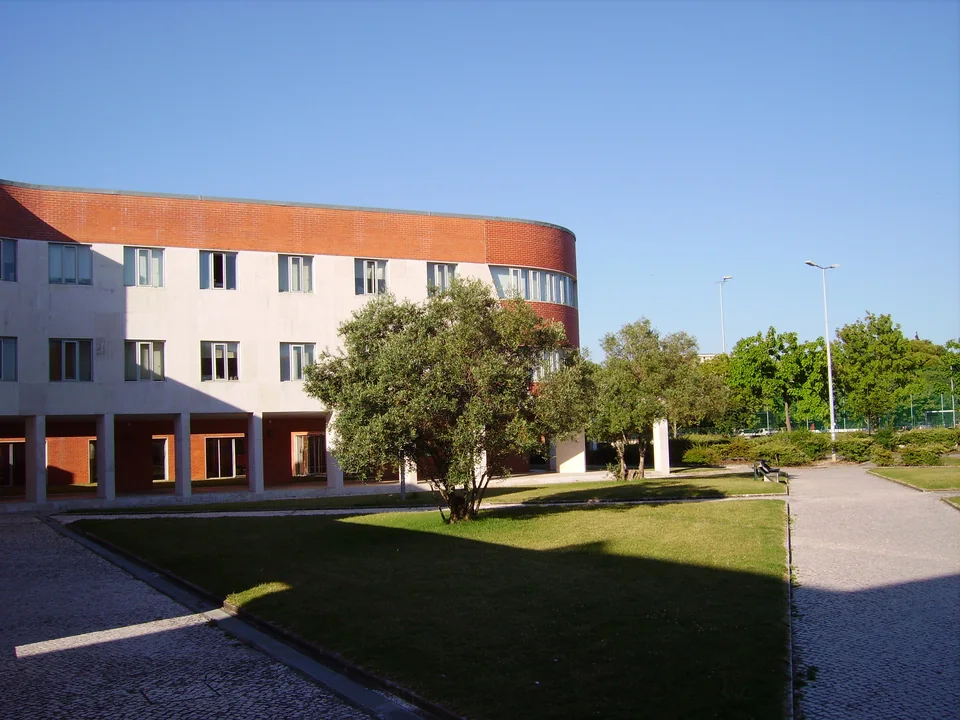
Types of higher education institutions
Portuguese higher education has two branches, universities and polytechnic institutes, and each includes public and private institutions. For a non-EU applicant the distinction matters for three reasons: who sets the fee, what the degree prepares you for, and whether English-taught study is realistic.
Public universities award the licenciatura (bachelor's), mestrado (master's) and doutoramento (doctorate). Some professions are taught as a single mestrado integrado lasting five or six years, including medicine, dentistry, pharmacy and architecture. Each university sets its own international fee, and the law says it cannot be lower than the maximum fee for Portuguese students. That domestic fee was $790 (€697) in 2025/26, so it is not a benchmark for international applicants.
Polytechnic institutes focus on applied programmes: bachelor's and master's degrees plus short professional CTeSP courses. They also admit international students through the special competition and suit applicants who want a practical route into a specific occupation.
Private institutions, including the Catholic University of Portugal and its Católica-Lisbon business school, follow the same legal framework for international admission but set their own prices and payment plans.
Every institution except the Open University and military and police schools may open the special competition. The full admission procedure is covered in our guide to applying to Portuguese universities.
Comparing the main public universities
The figures below are the annual international fees for 2026/27 published by each institution.
| University | City | International fee per year, 2026/27 | Bachelor's language | Worth knowing |
|---|---|---|---|---|
| University of Lisbon (ULisboa) | Lisbon | law $1,700 (€1,500); sciences, arts and humanities $3,970 (€3,500); psychology $5,680 (€5,000); engineering at Técnico $7,950 (€7,000); economics and management at ISEG $8,520 (€7,500); medicine $20,440 (€18,000) | Portuguese, at least B1; ISEG offers English-taught bachelor's degrees | 18 schools, each with its own entry tests and criteria |
| University of Porto (U.Porto) | Porto | most faculties $3,970 (€3,500); sciences $4,330 (€3,810); engineering at FEUP $6,810 (€6,000); dentistry $9,650 (€8,500); medicine $18,740 (€16,500) | Portuguese; FEP offers economics and business administration in English | 712 places for international students in 2026/27 across three phases |
| University of Coimbra | Coimbra | $7,950 (€7,000) under UC's academic regulations (summary fee table: from $3,410); medicine $20,440 (€18,000) | Portuguese at B2, or B1 plus a year-long language course | runs its own entry exams and a preparatory Ano Zero |
| NOVA University Lisbon | Lisbon, Carcavelos | Nova SBE English-taught bachelor's $8,520 (€7,500) | English at Nova SBE; mostly Portuguese elsewhere | SUPERNOVA pre-university programme for applicants who do not meet direct-entry rules |
| University of Minho | Braga, Guimarães | listed on each course page | Portuguese | the university estimates student living costs at $450–570 (€400–500) a month |
Three points stand out. Fee differences inside one university are larger than differences between universities, so compare programmes, not brands. Universities review international fees every year, so check the figure for your faculty in the institution's own document before paying; in May 2026 the University of Lisbon proposed keeping every international fee unchanged for 2027/28. And medicine costs four to five times more than humanities while taking six years.
Detailed profiles: University of Lisbon, University of Porto, University of Coimbra.
English-taught bachelor's: economics and management
Applicants without Portuguese who do not want a preparatory language year are mostly looking at economics and management: business schools plus a few English-taught programmes at public universities.
- ISEG (the University of Lisbon's School of Economics and Management). English-taught bachelor's degrees in economics, finance and management cost international students $8,520 (€7,500) a year; ISEG is public, so admission runs through the same special competition with January–May phases.
- Nova SBE (NOVA School of Business and Economics). English-taught management and economics bachelor's degrees cost $8,520 (€7,500) a year for international students (the school notes fees may be revised), with a $79 (€70) application fee and a $850 (€750) enrolment payment deducted from tuition. Applicants need an English certificate such as TOEFL iBT 80 or Cambridge C1 Advanced. Applications for the spring 2027 intake run from 10 November to 4 December 2026, and the school replies within eight weeks.
- Católica-Lisbon. The international bachelor's costs $970 (€858) a month over ten monthly payments, roughly $9,740 (€8,580) a year, and the school notes the amount may be updated for 2026/27. It says more than half of its bachelor's students hold merit scholarships.
- U.Porto School of Economics and Management (FEP). Economics and Business Administration taught in English cost $3,970 (€3,500) a year, about half the Lisbon options.
To compare with a neighbouring market, see universities in Spain for international students.
How much teaching is really in English
U.Porto's 2026/27 catalogue shows the pattern clearly. Of 64 bachelor's and integrated master's programmes, two are fully English-taught and 12 are taught in Portuguese with the label "suitable for English-speaking students"; ask the faculty what the label covers, whether support, materials or exams in English. At master's level, 17 of 195 programmes are in English, five are bilingual and 22 are Portuguese-taught with support for English speakers.
In practice, a bachelor's degree at a public university means Portuguese. Minimum levels differ:
| University | Portuguese needed for a bachelor's | If you fall short |
|---|---|---|
| University of Lisbon | B1 (DEPLE certificate, a ULisboa school certificate or the university's own test) | commit to a year-long language and culture course alongside the first year |
| University of Coimbra | B2 (DIPLE or a Faculty of Letters certificate) | with B1, a year-long language course; below B1, the preparatory Ano Zero at $7,950 (€7,000) |
| University of Porto | independent user | an oral test by video call may be arranged if you have no certificate |
How to check that a programme is recognised
A degree carries weight only if the programme is registered with the Directorate-General for Higher Education (DGES) and accredited by the national agency A3ES. U.Porto shows both on each course page: the FEUP master's in Informatics and Computing Engineering, for example, lists its DGES registration number, the date of the A3ES decision and a six-year accreditation period. If a course page gives neither, ask the institution before you apply.
Matching a university to your situation
| Your situation | Where to look first |
|---|---|
| Tuition budget up to $4,540 (€4,000) a year and willing to learn Portuguese | arts, humanities and science faculties at ULisboa and U.Porto; universities outside Lisbon |
| You need an English-taught bachelor's | ISEG, Nova SBE, Católica-Lisbon, FEP's English-taught programmes in Porto |
| Engineering | Técnico (ULisboa) at $7,950 (€7,000) or FEUP (U.Porto) at $6,810 (€6,000) |
| Medicine | six-year integrated master's in Portuguese at $18,740–20,440 (€16,500–18,000) a year, with demanding entry grades |
| Lower living costs | Braga and Guimarães (University of Minho) or Porto; Lisbon is the most expensive option |
| An English-taught master's later | master's catalogues at ULisboa, U.Porto and NOVA; see master's degrees in Portugal |
A full budget including housing and visa costs is in the cost of studying in Portugal; the route from school is in bachelor's degrees in Portugal.
Common mistakes
- Comparing universities by one number. At ULisboa, law costs $1,700 (€1,500) while economics at ISEG costs $8,520 (€7,500).
- Confusing domestic and international fees. $790 (€697) applies to Portuguese and EU students; international students pay from $1,700 (€1,500) upwards.
- Assuming a public bachelor's will be in English. "Suitable for English-speaking students" does not mean English-taught.
- Skipping the accreditation check. An unaccredited programme is a real risk, especially for regulated professions.
- Choosing a city on holiday impressions. Housing drives the budget: universities' own estimates put a student month at $650–1,260 (€570–1,110) in Lisbon and $450–570 (€400–500) in Braga.
FAQ
Not for non-EU students in practice. Public universities may not charge international students less than the maximum domestic fee, and state need-based grants are not available to them. Merit scholarships from institutions and Erasmus Mundus programmes are the realistic ways to reduce costs.
On tuition alone, several University of Lisbon faculties: law costs $1,700 (€1,500) a year and sciences, arts and humanities $3,970 (€3,500). Those programmes are taught in Portuguese, and each faculty sets its own entry tests and minimum grades.
Yes, but almost only in economics and management: ISEG at the University of Lisbon, Nova SBE, Católica-Lisbon and the English-taught Economics and Business Administration programmes at U.Porto's FEP. Most other public bachelor's degrees are Portuguese-taught, sometimes with support for English speakers.
Universities build programmes around academic and research training, while polytechnic institutes focus on applied professions, practical placements and links with employers. Both admit international students through the same special competition.
The law requires a qualification that gives access to higher education in the country that issued it, which a standard school-leaving certificate does. Each faculty then checks your knowledge of the subjects it examines, through exam results, documents or its own tests.
It depends on the programme, since each faculty sets its international places, minimum grades and subjects. On Coimbra's own entry exams for international applicants you need at least 10 out of 20 in each subject, and at least 14 for medicine and dentistry.
Sources
- DGES: special competition for international students
- Decree-Law 36/2014 on international student status (consolidated text hosted by ULisboa) and Decree-Law 20/2025
- ULisboa: international student competition and Rector's fee proposal to the General Council (approved 2026/27 international fees and proposed 2027/28 fees, 28 May 2026)
- U.Porto: special call for international students 2026/27 and general information and tuition fees
- University of Coimbra: bachelor's and integrated master's for international students
- ISEG: English-taught bachelor's in Economics
- Nova SBE: international bachelor's applicants and bachelor's fees
- Católica-Lisbon: bachelor's fees and scholarships
- University of Minho: cost of living
- U.Porto: FEUP master's in Informatics and Computing Engineering (DGES registration and A3ES accreditation)
ECB rate of 29.09.2026: €1 = $1.1355. Rounding step: $1 below $100, otherwise $10. Facts checked on 29 September 2026.
Comparing universities against your profile, requirement checks, an agreed shortlist, documents, applications and support are provided under an agreement with StudyU. The university makes the admission decision; the consular or migration authority decides on visas and residence. If you would like to compare two or three specific Portuguese universities against your budget and language, send an application.
During the free initial consultation, we clarify your goal, profile, timing, and budget and identify the next realistic step.
Next steps
- Bachelor's Degrees in Portugal: Studying After School in Portuguese or English
- Master's Degrees in Portugal for International Students: English-Taught Programmes, Fees and Admission
- Applying to Portuguese Universities: How the International Student Competition Works
- Cost of Studying in Portugal for International Students: Tuition, Housing and a First-Year Budget
- Universities in Spain for International Students: How to Choose, What It Costs and How to Apply for 2027
- Studying in Portugal for international applicants
