
To study at an Australian university you need a Student visa (subclass 500). You apply online through ImmiAccount, the Department of Home Affairs portal, after enrolling in a full-time course registered on CRICOS. The application needs a Confirmation of Enrolment (CoE), health cover under the Overseas Student Health Cover (OSHC) scheme lasting your entire stay, English at the visa minimum, answers to the Genuine Student questions and, if requested, evidence of funds: at least A$29,710 (≈ $20,870) for a year of living costs plus first-year tuition and travel. The visa charge starts from A$2,500 (≈ $1,760). If biometrics are required, you give them at an Australian Biometrics Collection Centre, including several in Russia and one in Kazakhstan.
Below you will find each requirement, the English score table, the funds you may need to show, what the Genuine Student questions ask, a step-by-step timeline and how processing priorities work. Conversions use the ECB rate of 28 September 2026 (A$1 ≈ US$0.7024). For a wider overview, see studying in Australia.
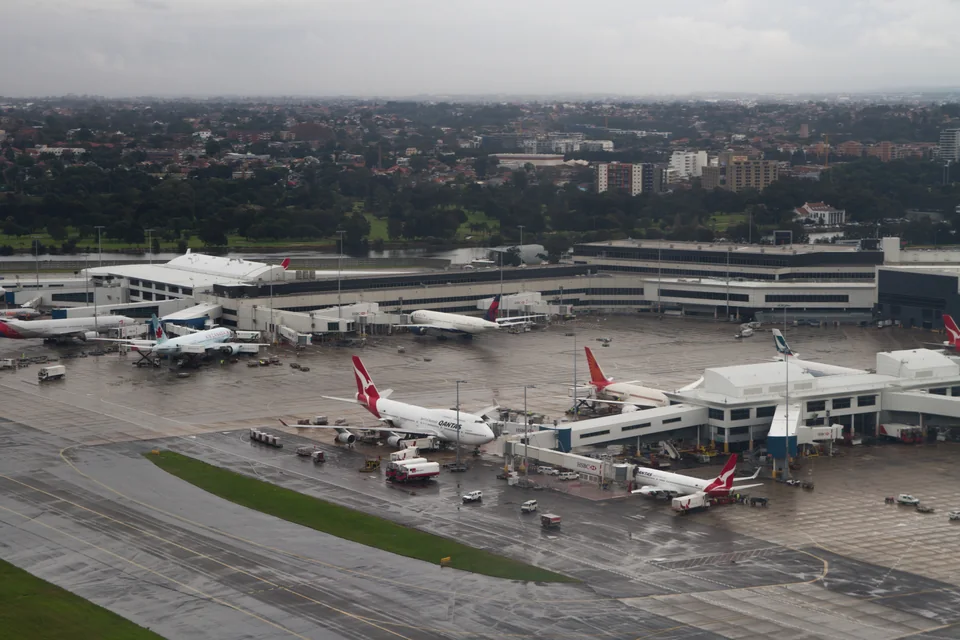
What the subclass 500 visa allows
- Study in a full-time CRICOS-registered course. The visa follows your enrolment: generally up to 6 years, and usually no more than 5 years for tertiary students unless they package several linked courses.
- Unlimited travel in and out of Australia while the visa is valid; time abroad does not extend it.
- Paid work capped at 48 hours in each fortnight while your course is in session; research master's and PhD students have no limit.
- The option to include a partner and children under 18.
- No visa label: the visa is linked to your passport electronically.
The visa usually runs beyond the course end. For a course of 10 months or more that finishes in November or December, the stay is normally granted to 15 March of the following year; for one ending between January and October, two months beyond the course. Research students get an extra 6 months for thesis marking. The final date also depends on your OSHC end date.
Requirements checked by Home Affairs
| Requirement | What to provide | Watch out for |
|---|---|---|
| Enrolment | a CoE for every course in the package | without a CoE the application is invalid; it must still be valid when the decision is made |
| Health insurance | OSHC from an approved Australian insurer for the whole visa period | cover must start on your arrival date, not the course start date |
| English | an approved test result or evidence of an exemption | the test must be taken within 2 years before lodgement |
| Funds | savings, loan, scholarship or parental income evidence if the checklist or an officer asks | you must show where the money came from, not just the balance |
| Genuine Student | answers in English in the form plus supporting documents | 150-word limit per answer |
| Health | medical examinations if required | depends on your country and length of stay |
| Character | police certificates if requested | applies to applicants and family members aged 16 and over |
| Under-18 students | welfare arrangements and parental consent | a CAAW letter from the provider or a relative as guardian |
| Values statement | signed Australian Values Statement | applicants aged 18 and over |
Home Affairs' Document Checklist Tool generates the exact list for your passport and provider. It is updated twice a year, on 31 March and 30 September, so re-run it just before you lodge.
English language: visa minimums
For tests taken on or after 7 August 2025, the minimum overall scores are:
| Test | Minimum | With at least 10 weeks of ELICOS, a Foundation or an eligible pathway | With at least 20 weeks of ELICOS |
|---|---|---|---|
| IELTS Academic / General Training | 6.0 | 5.5 | 5.0 |
| PTE Academic | 47 | 39 | 31 |
| TOEFL iBT | 67 | 51 | 37 |
| C1 Advanced | 161 | not accepted | not accepted |
| LANGUAGECERT Academic | 61 | 54 | 46 |
| OET | 1210 | 1090 | 1020 |
| CELPIP General | 7 | 6 | 5 |
| MET | 53 | 49 | 44 |
Key details:
- Fully online, at-home tests are not accepted, including IELTS Online, TOEFL iBT Home Edition and LANGUAGECERT Academic Online.
- From 21 January 2026, TOEFL iBT candidates must select "Taking TOEFL for Australia" when registering, or the result will not count for the visa.
- LANGUAGECERT Academic applicants must upload both the certificate and the score report.
- The visa minimum is not the university's entry requirement. Universities usually ask for more, especially in medicine, law and teaching.
You are exempt from the test if you hold a UK, US, Canadian, New Zealand or Irish passport, if your principal course is postgraduate research, a school course or standalone English, or if you studied in English for at least five years in a country on the Home Affairs list (the UK, the USA, Canada, New Zealand, South Africa, Ireland or Australia).
Funds you may need to show
| Item | 12-month amount |
|---|---|
| Student living costs | A$29,710 (≈ $20,870) |
| Partner | A$10,394 (≈ $7,300) |
| Child | A$4,449 (≈ $3,120) |
| Schooling for each school-age child | at least A$13,502 (≈ $9,480) |
| Travel when applying from outside Australia (except Africa) | A$2,000 (≈ $1,400) |
| Tuition | the first 12 months of fees minus any amount already paid |
Alternatively, you can show that your parents or partner earned at least A$87,856 (≈ $61,710) in the previous 12 months, or A$102,500 (≈ $71,990) with family members, using official tax documents; bank statements and employer letters are not accepted for this route.
For savings, a balance certificate is not enough. Provide transaction history, explain large deposits and, if a relative is funding you, show proof of the relationship and their identity documents. Even when the checklist does not ask for financial evidence at lodgement, an officer can still request it, so keep it ready. Budgeting is covered in our guide to the cost of studying in Australia.
The Genuine Student requirement
Since 23 March 2024, the Genuine Student (GS) requirement has replaced the Genuine Temporary Entrant (GTE) test. The officer checks that study is the main purpose of your stay; an intention to apply for permanent residence later does not count against you.
In ImmiAccount you answer in English, up to 150 words each:
- Your current circumstances: family, community, employment and economic situation.
- Why this course, with this provider, in Australia, and what you understand about the course requirements and living in Australia.
- How the course will benefit you.
- Any other relevant information.
There is an extra question if you have held a Student visa before or are applying in Australia from another visa type. Home Affairs prefers answers in the form rather than a separate statement and gives more weight to claims backed by documents.
| What is assessed | Supporting evidence |
|---|---|
| Previous study | certificates, transcripts, provider names and dates |
| Employment | employer letter with address, role, dates and a contact who can confirm it |
| Links to your country of residence | family, work and commitments; why a similar course at home does not suit you |
| Economic circumstances | work or business records for the 12 months before lodging, tax returns or bank statements, potential job offers after the course |
| Value of the course | how it builds on your previous study or work and your expected career outcomes |
| Immigration history | previous visas, travel, refusals and cancellations |
Home Affairs also considers military service commitments and political or civil unrest in your home country; if either applies, give reasons and supporting evidence in your answers. Strong answers rest on facts from your own background and the specifics of the course.
Health checks, biometrics and police certificates
Health. For temporary visas, the examinations you need depend on the tuberculosis risk of your country and how long you will stay. Russia, Belarus and Armenia are on the low-risk list, so no examinations are normally needed. Kazakhstan, Uzbekistan and Kyrgyzstan are not on that list, so a stay of 6 months or more requires a medical examination and chest x-ray (age 11+), plus a serum creatinine test from age 15. People training as doctors, nurses, dentists or paramedics face extra tests regardless of country. Examinations are done only by Home Affairs panel physicians.
Biometrics. After you apply, Home Affairs tells you whether to attend an Australian Biometrics Collection Centre (ABCC) or use the Australian Immi App. Centres are run by VFS Global and charge a service fee. According to the Home Affairs list as of March 2026, there are centres in Moscow, St Petersburg, Ekaterinburg, Novosibirsk, Rostov-on-Don and Vladivostok, and in Almaty in Kazakhstan. Bring the passport used in your application.
Character. You and family members aged 16 and over must meet the character requirement; if an officer requests police certificates, you will need to obtain and translate them.
Translations. Documents not in English must be translated. Translators outside Australia do not need accreditation, but each translation must show, in English, their full name, address, phone number, qualifications and experience. Certified copies are not required: scan everything in colour, with multi-page documents saved as one file.
Step-by-step timeline
| Step | What happens | Suggested timing |
|---|---|---|
| 1. Offer | conditional or unconditional offer from the university | 6–9 months before the start |
| 2. Accept and pay | first tuition instalment, sometimes with OSHC | once offer conditions are met |
| 3. CoE | the university issues your electronic CoE | usually soon after payment |
| 4. OSHC | policy for the whole visa period, starting on your arrival date | before lodging |
| 5. Documents | passport, translations, English, funds, GS answers | alongside steps 2–4 |
| 6. Lodge in ImmiAccount | complete the form, upload files, pay the charge | at least 3 months before the start |
| 7. Biometrics and health | if Home Affairs asks | by the deadline in the request |
| 8. Decision | grant letter with visa conditions | before you book flights |
The timing column is our working guide, not a Home Affairs rule. Home Affairs itself advises lodging well ahead, not booking travel before a decision and replying promptly to requests in ImmiAccount. If someone gives you immigration assistance, Home Affairs requires them to be a registered migration agent, a legal practitioner or an exempt person; anyone can be appointed simply to receive correspondence. For the university application itself, see our guide to universities in Australia and, for school leavers, studying in Australia after 11 years of school.
Processing priorities and enrolment limits
Applications lodged outside Australia on or after 14 November 2025 are processed under Ministerial Direction 115. It is not a visa cap and not a refusal criterion; it sets the order of processing according to how many new international students your provider has already enrolled.
| Priority | Who | When Home Affairs aims to start processing |
|---|---|---|
| 1 | school students, standalone English, TAFE, PhD, and students of providers below 80% of their new overseas student allocation | within 1–4 weeks of lodgement |
| 2 | students of providers that have reached 80% of their allocation | within 5–8 weeks |
| 3 | students of providers more than 15% over their allocation | within 9–12 weeks |
Allocations sit under the National Planning Level, set at 295,000 new international students for both 2026 and 2027. Check your university's status on the Department of Education's Visa Prioritisation Status page on the day you lodge: that status fixes your priority and does not change afterwards. For packaged courses, the provider of the main (final) course sets the priority.
After the visa is granted
- Keep OSHC until you leave Australia and do not arrive before your policy starts.
- Keep your CoE valid: changing course or provider, withdrawing or taking breaks affects your visa.
- Keep paid work within the 48-hour fortnightly cap during study periods; official breaks have no cap.
- Your conditions are listed in your grant letter and in VEVO.
Work rules, tax and the 485 graduate visa are explained in our guide to working while studying and the 485 visa.
Common mistakes
- Lodging without a CoE, which makes the application invalid.
- Buying OSHC from the course start date instead of the arrival date, or for too short a period.
- Sitting an at-home online English test, which is not accepted for the visa whatever the score.
- Moving a lump sum into the account a week before applying without explaining where it came from.
- Writing generic Genuine Student answers unrelated to your background and course.
- Travelling as a visitor to apply onshore: holders of a Visitor visa (subclass 600) or an ETA cannot lodge a Student visa in Australia.
- Leaving family members out of the application because they are not travelling yet; they then cannot later obtain a Student visa as your dependants.
FAQ
From A$2,500 (≈ $1,760) for the main applicant since 1 July 2026, with a separate charge for each family member. Biometrics, health checks and police certificates, if required, cost extra.
Online in ImmiAccount, from Russia or anywhere else. You attend in person only for biometrics, if requested; Russia has collection centres in six cities, including Moscow and St Petersburg.
There is no fixed time. For offshore applications, Home Affairs aims to start processing within 1–4, 5–8 or 9–12 weeks depending on your provider's priority; the rest depends on completeness and checks. The official visa processing time guide shows recent decisions.
Not a separate one. Home Affairs asks you to answer the Genuine Student questions in the form, up to 150 words each, and attach documents that support your answers.
The visa minimum is IELTS 6.0, or 5.5 with at least 10 weeks of ELICOS or a Foundation, and 5.0 with at least 20 weeks of ELICOS. Universities almost always require more, so follow your course's requirement.
Yes. A partner and children under 18 can be listed in your own application or apply later as subsequent entrants. You need to show funds for each of them, OSHC and, for school-age children, proof of school enrolment.
Sources
- Home Affairs: Student visa (subclass 500) — requirements, English, funds, OSHC, documents — checked 28.09.2026
- Home Affairs: Genuine Student requirement — checked 28.09.2026
- Home Affairs: length of stay for Student visas — checked 28.09.2026
- Home Affairs: Student visa processing priorities — checked 28.09.2026
- Home Affairs: biometrics and collection centres — checked 28.09.2026
- Home Affairs: health examinations you need — checked 28.09.2026
- Department of Education: National Planning Level for 2027 — checked 28.09.2026
- Department of Education: Visa Prioritisation Status — checked 28.09.2026
- RMIT: visa charge from 1 July 2026 and work in study breaks — checked 28.09.2026
- US dollar conversions use the ECB reference rate of 28.09.2026: EUR/USD 1.1378 and EUR/AUD 1.6199, so A$1 ≈ US$0.7024.
Course selection, requirement checks and document preparation for admission and the visa are provided under an agreement with StudyU. Visa decisions are made by Home Affairs, and nobody can guarantee them.
Next steps
- Australian University Entry After 11 Years of School: Foundation, Diploma or a Year at a Home University
- Working While Studying in Australia and the 485 Graduate Visa in 2026: Hours, Pay, Tax and Post-Study Stay
- Cost of Studying in Australia in 2026–2027: University Fees, Living Costs, Visa and a First-Year Budget
- Studying in Australia for international applicants
- Universities in Australia for International Students: How to Choose, 2027 Costs and Entry Routes
- Bachelor's Degrees in Australia: How the Degree Works, 2027 Costs and Entry for International Students
