
To study at a Bulgarian university, a non-EU citizen needs a national D visa and, after arrival, a long-stay residence permit from the Migration Directorate of the Ministry of Interior. Applicants resident in Russia apply for the D visa at the consular section of the Bulgarian embassy in Moscow by appointment; the student fee is $110 (€100). For students applying under Article 24v of the Foreigners Act, the embassy gives a decision period of up to 15 calendar days. The visa rests on an electronic Ministry of Education and Science certificate that your university requests after admitting you, so there is no point applying without it.
This guide covers the sequence of steps, documents for the visa and the residence permit, requirements for funds, housing and insurance, the right to work, and what happens after graduation. Admission itself is covered in applying to Bulgarian universities.
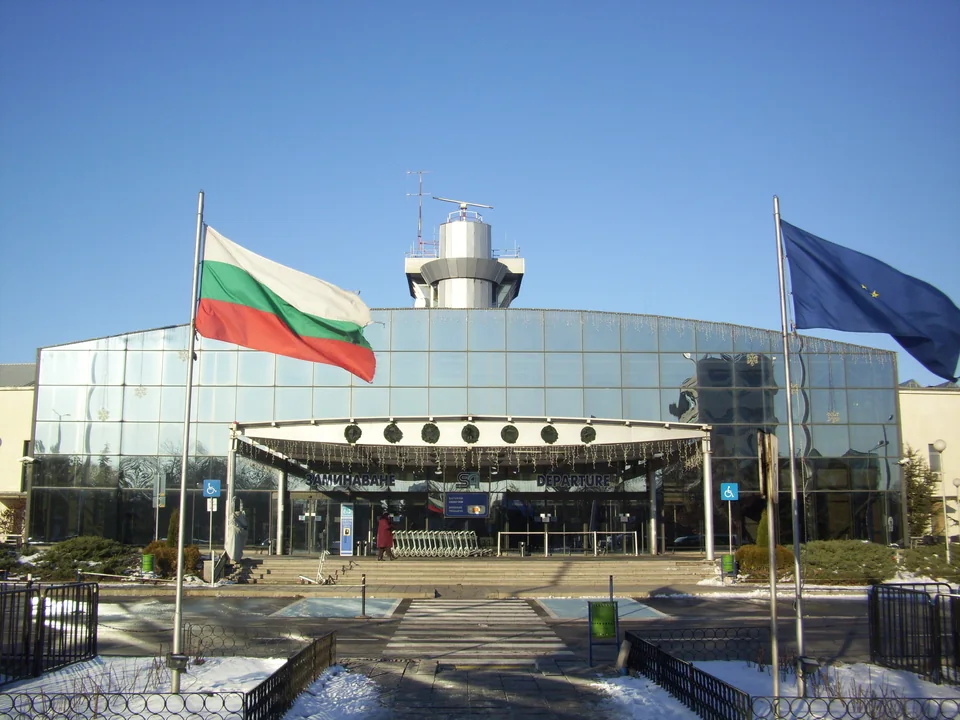
How the student immigration route works
A full degree in Bulgaria involves two separate procedures run by different authorities:
| Stage | What it is | Who decides | Validity |
|---|---|---|---|
| D visa | national long-stay visa | Bulgarian consulate | up to six months, stay of up to 180 days, multiple entry |
| Long-stay residence permit | student residence permit | Migration Directorate of the Ministry of Interior or its regional units | up to one year, renewable; 18 months for the final year of study |
The D visa is national, not a Schengen visa. Bulgaria has been a full Schengen member since 1 January 2025, but study visas and residence permits are issued under Bulgaria's own Foreigners Act. A short trip before you enrol, for instance to file documents in person, requires a separate short-stay C visa. Russian citizens get it under the general EU Visa Code rules: the EU–Russia visa facilitation agreement has been fully suspended by Council Decision (EU) 2022/1500 of 9 September 2022, and since November 2025 a Commission decision has limited when Russians can be given a visa valid for several entries. Both measures concern C visas only and do not change how the national D visa is issued.
EU, EEA and Swiss citizens do not need a D visa. People of Bulgarian origin admitted to full-time study can obtain the residence permit without a D visa if they prove their origin.
Where to apply for the D visa
Residents of Russia. D-visa applications are accepted at the consular section of the Bulgarian embassy in Moscow. Book a date in advance by email at VisaD_Moscow@mfa.bg; phone advice is available on +7 (499) 143-62-30 on working days from 3 to 5 pm. Russian citizens and other nationals with permanent residence in Russia may apply there.
Residents of other countries. Under Bulgarian Foreign Ministry rules you apply at the Bulgarian embassy or consulate in your country of permanent residence, or at the mission accredited for it. If you live legally in a third country, you may apply there only as an exception, explaining why and showing that your return to your country of residence is assured.
An interview is mandatory for every D-visa application, with no exceptions.
Documents for the D visa
| Document | Notes |
|---|---|
| D-visa application form | available on the embassy page |
| Passport and copies of the pages with personal data, visas and residence permits | original and copies |
| Colour passport-style photo | to the embassy's photo specifications |
| Ministry of Education and Science certificate of admission | electronic; your university requests it through the NACID system |
| Proof of funds | bank statements or sponsorship documents, originals and copies |
| Proof of housing | a lease of at least one year with the owner's declaration certified by a Bulgarian notary; for a university hostel, ask the consulate which confirmation it accepts |
| Health insurance | a condition for the residence permit |
| For minors | both parents sign the form for applicants under 14; applicants aged 14–18 sign together with both parents; if the child travels with one parent or a third person, notarised consent from the other parent or both is required |
The consulate may ask for more documents or call you for another interview. You collect the visa yourself or send someone with a notarised proxy.
Proof of funds for your stay
You must show a stable, sufficient income covering your whole stay. The law gives three benchmarks: Bulgaria's minimum monthly wage, its minimum scholarship or its minimum pension. The wage floor in 2026 is $700 (€620.20) a month, and twelve of those add up to $8,450 (€7,442.40).
The Moscow embassy page does not publish a separate figure for students. Living funds do not replace tuition: the university expects payment, while the consulate and the Migration Directorate want evidence that you can live without social assistance. For the full budget, see how much studying in Bulgaria costs.
Visa fee and processing time
- Consular fee. $110 (€100) for a D visa under Article 15(1) of the Foreigners Act, the basis for students on full degree programmes. $230 (€200) applies under Article 15(2), for example for study programmes of up to one academic year. Payment is in cash, in euros, on the day you apply. D visas for children under six are free.
- Processing time. The general deadline is up to 35 working days, but for applications under Article 24v of the Foreigners Act, the basis for full-time students, the Moscow embassy states up to 15 calendar days from submission.
- Refusal. You receive an official notice, can appeal under Bulgarian law or reapply after fixing the reason for refusal. The fee is not refunded.
The 15 days run from submission, and the submission date itself has to be agreed with the consulate. If classes start in mid-October, aim to apply in late August or early September, which means the Ministry of Education certificate should be ready in August.
First steps after arrival
- Address. Register your address within five days of arrival.
- Tuition payment. The residence permit file needs proof that you have paid the university; you submit it after entering on the D visa.
- Residence permit. Apply in person at the Migration Directorate in Sofia or the migration unit of the regional police directorate where you live. As a rule, apply no later than 14 days before your D visa expires.
Documents for the residence permit
Under Article 24v of the Foreigners Act, a full-time student attaches to the application:
- a copy of the passport pages with personal data, the D visa and the last entry stamp, plus the original for comparison;
- proof of housing;
- compulsory health insurance valid in Bulgaria if you are not insured under the Bulgarian Health Insurance Act;
- proof of funds for the whole stay against one of the three legal benchmarks described above;
- a criminal record certificate from your country of nationality or habitual residence, for the first application;
- the Ministry of Education admission certificate and a university certificate confirming you are studying that year;
- proof of payment to the university.
A student permit of up to one year carries a state fee of 100 leva (roughly $58 (€51) converted at 1.95583); confirm the euro amount when you pay. The Migration Directorate normally decides within 14 days, extendable by a month in complex cases. A refusal can be appealed within 14 days.
Permits are issued for up to a year and renewed while you study; for the final year the permit runs for 18 months. You cannot switch programmes on the same permit: a change of studies requires a new application.
Can you work while studying?
Yes. A full-time student holding an Article 24v residence permit may work without a work permit once the employer has registered the job with the Employment Agency. The conditions:
- up to 20 hours a week during the academic year;
- work is also allowed during the university's official holidays (Article 38 of the Labour Migration and Labour Mobility Act);
- an employment contract under Bulgarian law with a local employer, for a term consistent with your studies and permit.
Part-time work helps with living costs but not with tuition: twenty hours a week paid at the 2026 hourly minimum of $4 (€3.74) comes to roughly $370 (€324) a month gross.
After graduation
After completing a full-time degree, you can apply for a residence permit of up to nine months to job-hunt or set up a business. File that application at least 30 days before your student permit expires, and register with the Employment Agency as a jobseeker within seven working days of finishing; the Migration Directorate checks this itself. Longer-term employment then requires a work permit on the same terms as for other non-EU nationals.
Travel within Schengen
Bulgaria has been a full Schengen member since 1 January 2025. Under general Schengen rules, a valid residence permit from a member state allows short trips to other Schengen countries of up to 90 days in any 180-day period. Border guards may ask about the purpose of the trip and your funds, and your studies and residence remain in Bulgaria.
Common mistakes
- Applying without the Ministry of Education certificate. The consulate will not process a study visa without it, and the university orders it only after approving you.
- Submitting a lease without the owner's notarised declaration. The embassy has required it since 2018, and the lease must run for at least a year.
- Buying tickets before the decision. Even with a 15-day deadline, the consulate may ask for more documents or call you for another interview.
- Delaying the residence permit. Apply while the D visa is valid, normally no later than 14 days before it expires.
- Forgetting the criminal record certificate. It is required for the first permit application, so get it apostilled and translated before you leave.
- Changing programme without telling the Migration Directorate. A change of studies requires a new application.
FAQ
Yes. To study for more than 90 days, a Russian citizen needs a national D visa and, after arrival, a long-stay residence permit. Residents of Russia apply for the D visa at the consular section of the Bulgarian embassy in Moscow.
The Moscow embassy page states that D-visa applications go to the consular section by appointment via VisaD_Moscow@mfa.bg. The visa centre mentioned on the same site belongs to the short-stay C visa section.
For a full-degree student the consulate charges $110 (€100), paid in cash in euros when you apply. The residence permit costs a further 100 leva, about $58 (€51), on top of insurance and document translations.
For full-time students the embassy states a decision period of up to 15 calendar days from submission; for other grounds the general limit is 35 working days. The consulate can ask for more documents or an interview, so build in a margin before your course starts.
Yes, without a separate work permit: up to 20 hours a week during the academic year, and also during the university's official holidays. The employer must register the job with the Employment Agency.
A full-time graduate can apply for a permit of up to nine months to find a job. After that, employment requires a work permit on the general terms for non-EU nationals.
People of Bulgarian origin admitted to full-time study can obtain a residence permit without a D visa. They attach a birth certificate or a certificate of Bulgarian origin from the Executive Agency for Bulgarians Abroad.
Sources
- Embassy of Bulgaria in Russia: D visa, where to apply, fees, processing, minors; checked 29 Sept 2026
- Bulgarian Foreign Ministry: D-visa guidance (PDF), visa validity, where to apply, interview, funds; checked 29 Sept 2026
- IISDA: long-stay residence permit, Article 24v documents, fees and deadlines; checked 29 Sept 2026
- Employment Agency: employment of non-EU students and Article 38 of the Labour Migration and Labour Mobility Act; checked 29 Sept 2026
- Council Decision (EU) 2022/1500 suspending the EU–Russia visa facilitation agreement and European Commission: rules on multiple-entry visas for Russian nationals (2025); checked 29 Sept 2026
- European Commission, EU Immigration Portal: student in Bulgaria, address registration and change of studies; checked 29 Sept 2026
- NACID: D-visa certificate register; checked 29 Sept 2026
- Executive Agency for Bulgarians Abroad: residence permits for students of Bulgarian origin; checked 29 Sept 2026
- Council of the EU: land border controls with Bulgaria and Romania lifted from 1 January 2025; checked 29 Sept 2026
- Ministry of Labour and Social Policy: 2026 minimum wage, adopted by Decree No. 243 of 13 Nov 2025, State Gazette No. 98; checked 29 Sept 2026
- ECB rate of 29.09.2026: €1 = $1.1355. Rounding step: $1 below $100, otherwise $10.
Preparing the visa package and checking your residence permit documents are provided under an agreement with StudyU. The Bulgarian consulate decides on the visa and the Migration Directorate on the permit; StudyU cannot influence either decision.
Next steps
- Applying to Bulgarian Universities: Documents, Recognition, Exams and Deadlines
- Cost of Studying in Bulgaria: Tuition, Living Costs and a First-Year Budget
- Free Education in Bulgaria for International Students: Who Qualifies for Lower Fees
- Medicine in Bulgaria: Medical Universities, English-Taught Programmes, Fees and Exams
- Universities in Bulgaria for International Students: Which to Choose, Language and Fees
- Medical University of Sofia (MU-Sofia): Admission for International Students
